How Next-Gen Robots are Getting Human-Level Precision
Robots are gaining a sense of touch, more joints and smarter software. The question is that how close are they to matching human manual dexterity?
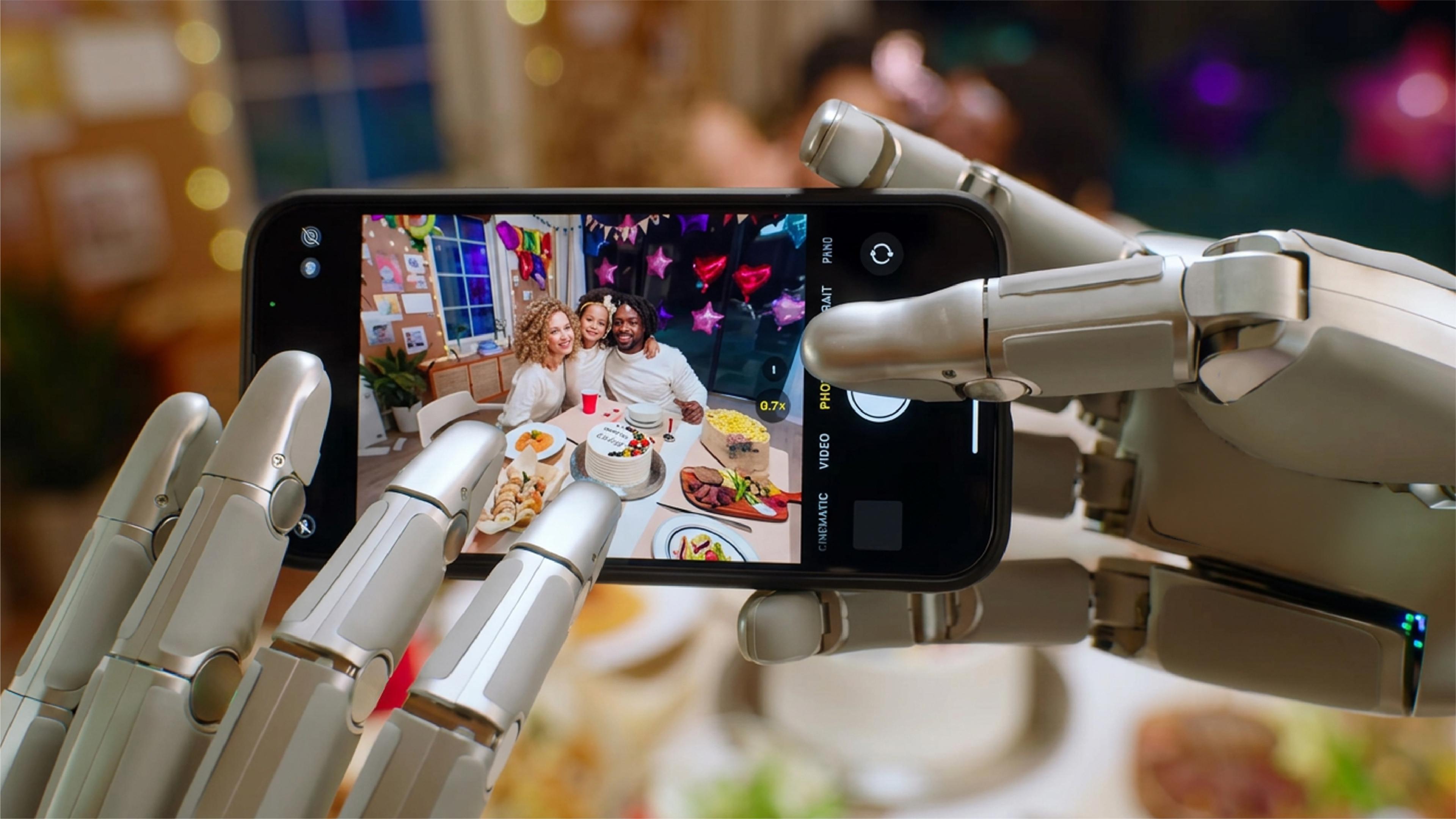
Do you ever think of the ease of pouring a cup of tea, threading a needle or picking up an egg without cracking it? These are the tasks most people never think twice about. But, for robots, they have long been challenging and hardest things to get right.
The reason is the mechanism and shape of a human hand and wrist itself. It packs 27 bones, 34 muscles and more than 17,000 tactile receptors! All work together with the mighty brain in a way machines have always struggled to imitate. That’s why, a humanoid that easily walks across a factory floor but cannot work with a screwdriver or handle a fragile object has limited commercial value. Hence, dexterous excellency is largely considered as the hardest unsolved problem in robotics.
The good news is that it is now starting to change.
So, what exactly is helping robots close the gap? Let’s find out.
Giving robots a sense of touch
Vision alone only gets a robot so far. Without feeling pressure, texture and slip, it has to guess how firmly it is gripping something.
Recent advances in tactile sensing are addressing this. Systems developed by Sharpa in collaboration with NVIDIA can let robot fingers detect slip, estimate how hard an object is and adjust grip force in real time. Singapore-based Sharpa's SharpaWave hand, for example, sends pressure, texture and force readings to its AI up to 180 times per second.
Chipmaker Analog Devices has argued that the next step is combining several sensing types in a single fingertip and palm. In an article published on April 30, 2026, the company described this approach, known as multimodal tactile sensing, as essential to building a precision robotic hand. Elsewhere, Meta AI worked with GelSight to create Digit 360, a fingertip-shaped sensor with more than 18 sensing features.
More joints means finer control
Better sensing also needs better hardware to act on it. Many of today's leading hands are built with around 22 degrees of freedom (DoF), a measure of how many independent ways a hand can move.
The SharpaWave has a reported 22 DoF, placing it in the upper tier of end effectors entering the market. China's DexRobot, meanwhile, says its DexHand021 Pro also offers 22 DoF, along with more than 400 tactile sensing units and 20 joint position sensors. According to the company, that combination allows sub-millimetre operational precision. Canadian firm Sanctuary AI takes a different route, using a proprietary hydraulic system to drive 20 to 21 DoF per hand on its Phoenix humanoid.
Smarter brains behind the fingers
A capable hand is only half of the equation. Software decides what it does.
In a noticeable event CES 2026, Sharpa's wheeled humanoid, North, caught everybody’s attention by autonomously assembling a paper windmill. This task involved more than 30 sequential manipulation steps. The company credits its own vision-tactile-language-action model, which was designed specifically for fine manipulation.
On the wider market, NVIDIA's GR00T N1.7 model, released in March 2026, includes dexterous control as a standard capability.
Now, training these systems is another thing. At ICRA 2026, visitors witnessed that several hand makers opined the same bottleneck: building accurate human demonstration data at scale. For instance, companies now use motion-capture gloves that record human hand movements, and then map that motion onto robotic ones.
Where the gaps remain
Despite the progress, human-level precision hasn’t become an everyday reality. Many of the headline figures including joint counts and precision claims come from the manufacturers themselves. On the other hand, independent benchmarks remain scarce.
Real-world deployment tells a more modest story too. Most of the commercial deployments reported in 2026 still rely on two/three-finger adaptive grippers with slightly soft fingertips rather than fully articulated hands. Moreover, complex hands cost more and break more easily. Top of it, they demand far more data to operate well.
So, what comes next?
The potential payoff is considerable. Smart devices in hospitals is one example, where tactile-sensing robots carry medicines throughout the facilities and free nurses to focus on patient care. Experts also opine that surgical assistance is now not a long-term possibility.
For now, the question is no longer whether a robot hand can perform an impressive task once on a show floor. It is whether that hand can do the same job reliably, thousands of times, at a cost that makes commercial sense. The hardware is advancing quickly, and the next test will be how well it holds up outside the demo.
More articles on this topic
188 articles ReportWhat it Really Costs to Own a Personal Assistant Robot at Home
 ReportNEURA Robotics Unveils AI System That Gives Robots Memory and Multiple Senses
 ReportFour Humanoids Designed To Tackle Danger Zones
 ReportWhy Google's AI Made Spot Practise Using a Bin
 ReportTwo Tiny Robots Taking Heart Treatment from the Inside Out
 ReportPhysical Intelligence Opens Its Robot AI Models to Developers
 ReportAbu Dhabi’s New Robot Cooks Dinner Within Four Minutes
 ReportTry Before You Buy: Five Places to Test-Drive a Robot
 ReportGoogle AI Teaches Humanoid Robot to Play Cornhole by Watching Human Videos
 ReportYour Old Smartphone Could Soon Get a New Robotic AvatarReportWhy Google's AI Made Spot Practise Using a Bin
 ReportHumanoid Robots Are Learning to Navigate Obstacles Like Humans
BUSINESS NEWS WEEKLY LETTER
The Weekly Letter for Robotics Professionals, Summarizing the Most Important Industry Moves, Launches, Deals and Signals.