How a Dutch Robot Can Draw Blood With No Human Touch
Vitestro developed the autonomous robotic phlebotomy device, called Aletta.

September 8, 2026 by Nisha
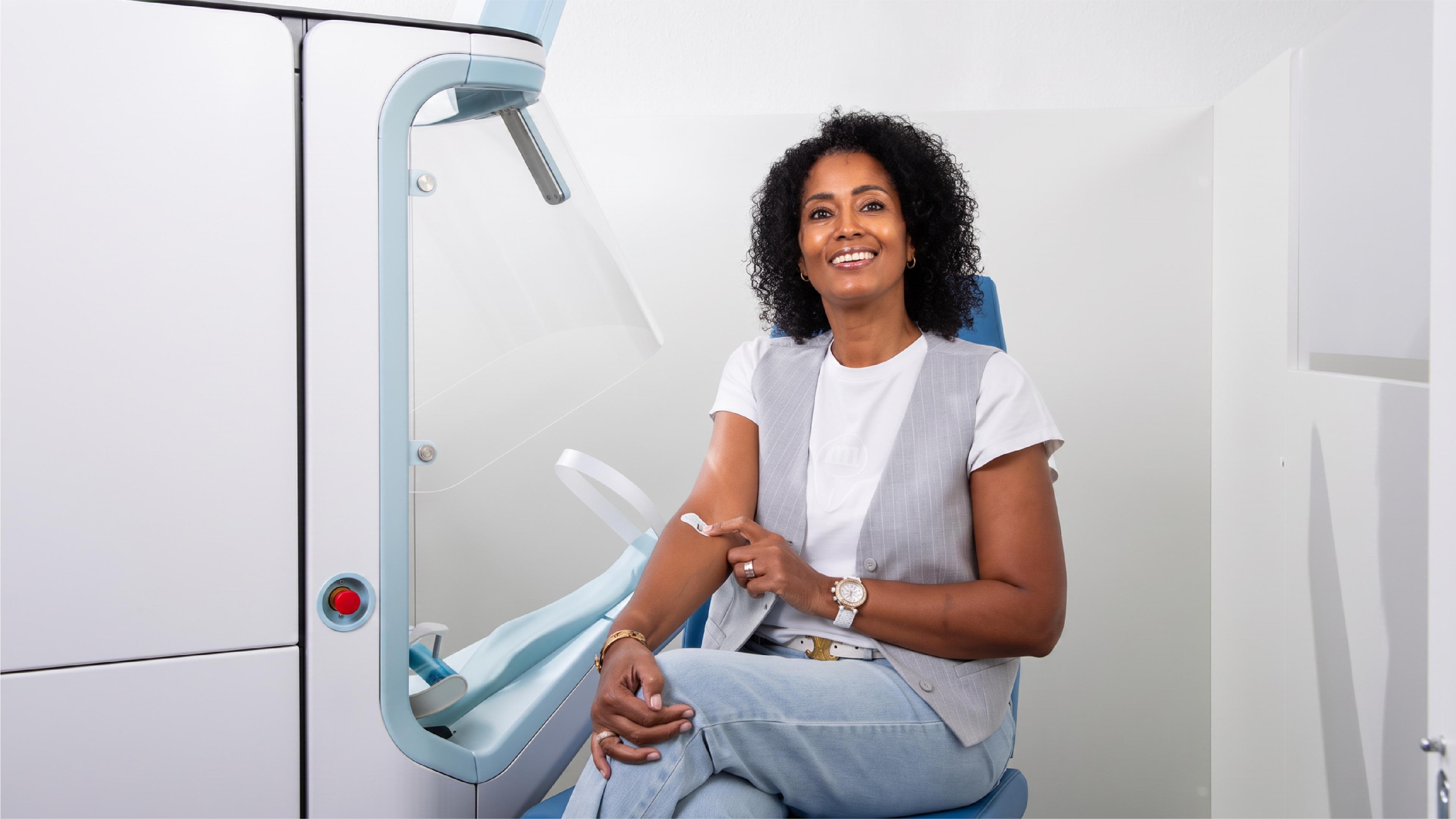
SILVER SPRING, Md. — Drawing blood in certain US clinics can now be carried out by robots who never attended a phlebotomy course.
The Food and Drug Administration authorized Aletta – a free-standing machine designed by Dutch company called Vitestro , to draw blood from a human without assistance. However, the machine still requires approval and assistance of skilled hospital personnel.
“This authorization reflects the FDA’s commitment to advancing innovative medical devices that help meet a critical public health need while maintaining the safety and effectiveness patients deserve,” said Michelle Tarver, M.D., Ph.D., Director of the FDA’s Center for Devices and Radiological Health.
“Blood draws are one of the most commonly performed medical procedures in the United States, yet patients may face delays due to a growing shortage of trained phlebotomists.
How does it work?
The FDA released a detailed explanation on how Aletta functions: The patients have to sit down in a chair and rest their arm; they, or a trained phlebotomist, could then push a button. Once it is pushed, Aletta will use some sort of near-infrared light, and Doppler ultrasounds to find and identify a proper vein, distinct from an artery. It doesn't start taking any action unless it has identified a vein accurately. If a blood draw is required, the device places a tourniquet around the patients' arm and begins disinfection of the skin.
Afterwards, the needle, in a sequential manner will automatically insert itself into the vein and take blood with an automatically changing vacuum, and in the last phase the needle gets automatically retracted while it disinfects and closes the vein with a bandage. All this procedure happens without any hands intervening! However, the skilled phlebotomist still does need to stay; all he needs to do is confirm that the tubes are getting filled properly in sequence and at the required rates, also, making sure they're full.
The FDA mentions that the machine would disengage if the patient moved uncontrollably, putting an automatic pause in the session. Unsafe conditions, movement of the patient's arm or other potential disturbances would result in a pause and immediate alert for the technician or operator's monitoring.
The Authority also states that the success of the procedure was also validated based on the study conducted by Vitestro-ADOPT clinical trial. Vitestro claims that 94.5% of the machines succeeded to collect blood in a single try and without failure (when a successful vein was identified) on the aforementioned study group, of which people under specific, challenging conditions contributed to data which was 97.4% when there was increased BMI, 93.4% with patients over 65 years of age and a remarkable 92.7% of patients who stated have had previously difficulty with venous access, and the device would still perform with reasonable efficiency.
Moreover, Vitestro says 90% of the patients declared that blood draw process was either less or equally painful; the pain equivalent is what you feel with manual phlebotomy. However, it states that 0.6% of patients experienced mildly adverse pain ..
Aletta is named after Aletta Jacobs, who was the first woman doctor in the Netherlands to receive a degree. Recently, the Utrecht based company obtained 70 million dollars from venture capitalists in May 2026. With major investors being the Mayo Clinic, Fred Moll and Labcorp Venture Fund.
Vitestro isn't alone in trying to automate the needle. Another California-based player, Veebot, has been working on developing an autonomous, image-guided robotic needle-insertion system. However, Aletta is now the first such device to reach FDA authorization on its own, without a human hand on the needle.
Vitestro has not disclosed U.S. pricing or named the clinics that will get the device first, and the company's own timeline points to Europe, not the U.S., where Aletta will operate at scale first.
More articles on this topic
223 articles ReportWhat it Really Costs to Own a Personal Assistant Robot at Home
 ReportHumanoids Struggle With Unfamiliar Chores, New Research Finds
 ReportQuadruped Solves Giant Rubik’s Cube Using Only Its Feet
 ReportNVIDIA Uses AI Agents to Teach Tiny Walking Robot to Navigate Obstacles
 ReportScientists Develop System to Help Robots Gesture Without Losing Balance
 ReportRobotic Fish Offer New Way to Track River Pollution
 ReportHigh Torque Robotics Partners With Sharebot to Expand Humanoid Access Across China
 ReportAudi Tests Agile Robots' Mobile Humanoids for Factory Logistics
 ReportFrom Flips to Dance Moves: New AI Trains Humanoid Robots in Record Time
 ReportHow a Tiny Robot Searches for Hidden Damage Inside the Wind Turbine Blades
 ReportRadioactive Mess? Better Call Spot
 ReportJapan's LOVOT Companion Robot Makes Abu Dhabi Healthcare Debut
BUSINESS NEWS WEEKLY LETTER
The Weekly Letter for Robotics Professionals, Summarizing the Most Important Industry Moves, Launches, Deals and Signals.