Cyan Orca vs. Booster K1
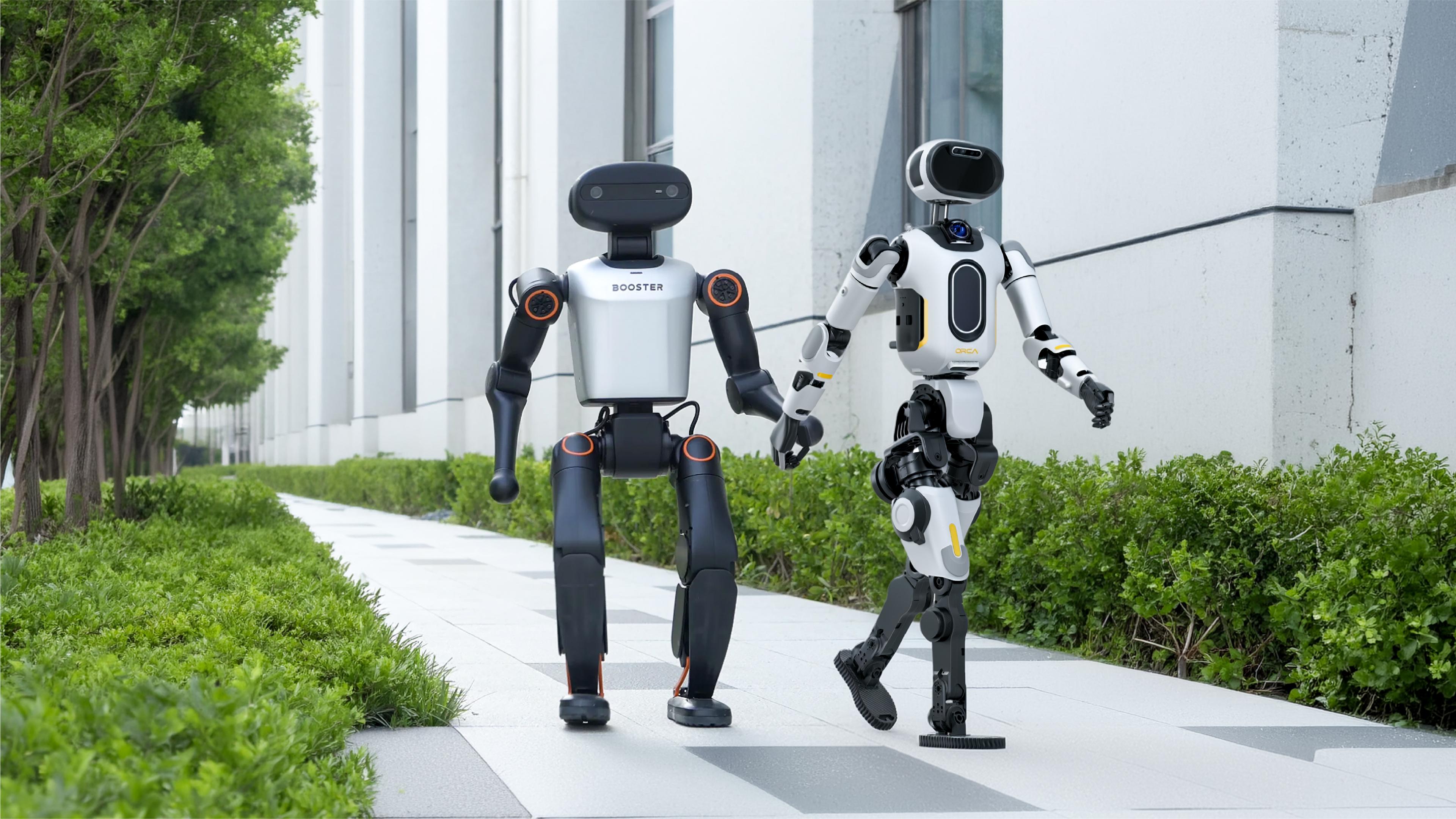
Cyan Orca and Booster K1 are bipedal humanoid research platforms targeting embodied AI, education and robotics development. Based on ROBOT24.com market-research data records, this comparison examines their differences in size, degrees of freedom, speed, runtime, payload, autonomy and perception.

October 6, 2026 by Business Desk Team
Introduction
Cyan Orca and Booster K1 are both represented in the ROBOT24.com market-research data records and are compared here using their recorded specifications and use cases.
Cyan Orca is recorded as a bipedal humanoid research platform, with use cases including embodied AI, humanoid robotics, motion planning and education. Booster K1 is recorded as a bipedal humanoid research robot, with use cases including education, research, embodied AI, reinforcement learning, locomotion and manipulation.
The main documented differences are in their physical configuration, performance figures, autonomy stack, payload capacity and the level of technical detail available in the ROBOT24.com market-research data records.
At a Glance
| Metric | Cyan Orca | Booster K1 |
|---|---|---|
| Robot type | Bipedal humanoid research platform | Bipedal humanoid research robot |
| Use cases | Embodied AI; humanoid robotics; motion planning; education | Education; research; embodied AI; reinforcement learning; locomotion; manipulation |
| Height / dimensions | 170 cm | ~ 132 cm tall |
| Weight | 65 kg | ~35 kg |
| Degrees of freedom | 55 DOF | 23-29 configuration dependent |
| Payload | ~5 kg | Approx. 3-5 kg |
| Maximum speed | 1 m/s walking; ~1.5 m/s max | Up to 1.5 m/s |
| Runtime | ~4 hours | 1-2 hours |
| Navigation | Autonomous navigation; dynamic balance; obstacle avoidance | Autonomous navigation; dynamic balance; whole-body motion planning |
| Sensors | RGB cameras; depth cameras; IMU; force/torque; navigation sensors | RGB cameras; depth camera; IMU; foot force sensors; microphones |
| Special capability | NVIDIA-based AI compute; ROS compatible; remote monitoring | ROS/ROS2 compatible; SDK; optional multi-finger hands |
| Availability | Prototype | Not recorded |
| Price | ~USD $55,000 | USD $25,000-50,000 |
How They Compare
Summary
More articles on this topic
83 articles ReportRichtech DUST-E S vs. Gausium Phantas
 ReportEngineAI SE01 vs. AGIBOT RAISE A1ReportRichtech DUST-E S vs. KEENON KLEENBOT C20
 ReportRobint Rhino vs. OrionStar CleaniBot S55 Pro
 ReportECOVACS DEEBOT X8 PRO OMNI vs. eufy X10 Pro Omni
 ReportUnitree R1 EDU vs. Booster K1
 ReportCleanfix S170 Navi vs. OrionStar CleaniBot K1
 ReportCleanfix S170 Navi vs. Nexaro NR 1700
 ReportReeman Nurse vs. Robotise JEEVES
 ReportBear Robotics Servi Plus vs. OrionStar LuckiBot Pro
 ReportBear Robotics Servi Plus vs. KEENON DINERBOT T10
 ReportUBTECH Cruzr 1S vs. Hantewin S30
BUSINESS NEWS WEEKLY LETTER
The Weekly Letter for Robotics Professionals, Summarizing the Most Important Industry Moves, Launches, Deals and Signals.