Bear Robotics Servi Plus vs. OrionStar LuckiBot Pro
Bear Robotics Servi Plus and OrionStar LuckiBot Pro are autonomous restaurant delivery robots designed to transport meals and support front-of-house operations. We compare their payload capacities, tray configurations, operating endurance and navigation capabilities to examine their suitability for different restaurant service requirements.

October 21, 2026 by Business Desk Team
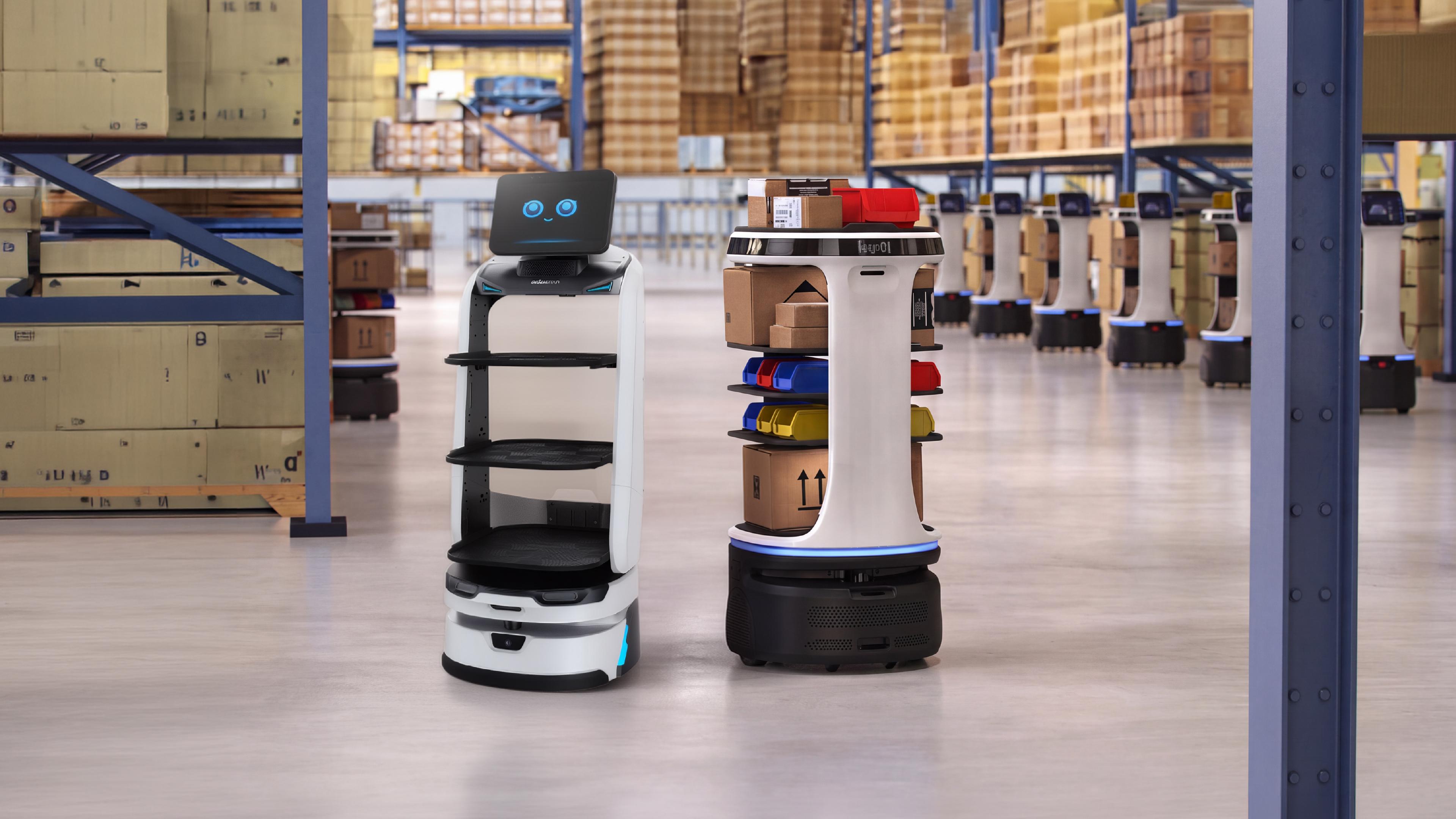
Delivery bots enable restaurant staff to carry food, pick up empty dishes and automate a work cycle between the kitchen and the table, but their feasibility is determined by factors beyond maximum payload. Trays, navigation, run times and how well the bot integrates into the workflow all matter.
Based on ROBOT24.com market-research data records, this comparison examines their physical specifications, carrying capacity, endurance, navigation and suitability for restaurant environments.
At a Glance
| Metric | Bear Robotics Servi Plus | OrionStar LuckiBot Pro |
|---|---|---|
| Robot type | Open-tray restaurant delivery AMR | Restaurant meal-delivery AMR |
| Best-fit use cases | Meal running, bussing and restaurant logistics | Meal delivery, return routes and guest-facing service |
| Dimensions | 584 × 533 × 1,219 mm (Airtable record; W × D × H) | 558 × 525 × 1,375 mm |
| Load / suction / capacity | 40 kg total; 2–4 configurable trays | 60 kg maximum total; 15 kg per tray; 3 or 4 trays |
| Runtime / charging | 8–12 h; approximately 4 h charge (Airtable) | 12 h typical cruising; 4.5 h charging (off) |
| Navigation / sensing | Dynamic obstacle detection and rerouting | Autonomous navigation; exact sensor configuration requires confirmation |
| Distinctive capabilities | Up to 40 kg; configurable trays/bus tubs; LiDAR, cameras, fleet management | OrionStar commercial restaurant-delivery platform; interactive service |
| Key limitation / caveat | Unenclosed trays; food-service workflow, not secure medical delivery | Confirm exact Pro version versus Pro Autodoor and regional technical sheet | Verification: OrionStar LuckiBot Pro is distinct from LuckiBot Pro Autodoor. Never reuse the Autodoor model’s enclosed-compartment capacities in this open-tray comparison. |
How They Compare
Restaurant delivery and operational role
Payload and tray layout
Runtime and charging
Navigation and obstacle avoidance
Features of Service and Integration into Workflow
Deployment and maintenance considerations
Summary
Bear Robotics Servi Plus and OrionStar LuckiBot Pro are designed for similar restaurant delivery tasks, but they differ in carrying capacity, tray flexibility and documented service features.
Servi Plus is worth considering for restaurants prioritizing flexible meal running, bussing and day-to-day logistics. Its two-to-four-tray configuration, bus-tub compatibility and fleet-management capabilities may be useful for establishments that alternate between delivering meals and collecting used dishes.
LuckiBot Pro may suit restaurants that require greater stated carrying capacity and tray-based food delivery. Its 60 kg total payload, three- or four-tray configurations and approximately 12-hour stated cruising duration are relevant to operations with frequent meal-transport requirements.
The choice depends on restaurant layout, order volume, tray requirements, staff workflows and available operating space. This comparison is based on ROBOT24.com market-research data records and manufacturer-reported specifications rather than controlled performance testing. Exact configurations, navigation reliability and operating endurance should be verified through manufacturer documentation and on-site trials.
More articles on this topic
83 articles ReportRichtech DUST-E S vs. Gausium Phantas
 ReportEngineAI SE01 vs. AGIBOT RAISE A1ReportRichtech DUST-E S vs. KEENON KLEENBOT C20
 ReportRobint Rhino vs. OrionStar CleaniBot S55 Pro
 ReportECOVACS DEEBOT X8 PRO OMNI vs. eufy X10 Pro Omni
 ReportUnitree R1 EDU vs. Booster K1
 ReportCleanfix S170 Navi vs. OrionStar CleaniBot K1
 ReportCleanfix S170 Navi vs. Nexaro NR 1700
 ReportReeman Nurse vs. Robotise JEEVES
 ReportBear Robotics Servi Plus vs. KEENON DINERBOT T10
 ReportUBTECH Cruzr 1S vs. Hantewin S30
 ReportECOVACS DEEBOT X8 PRO OMNI vs. eufy X10 Pro Omni
BUSINESS NEWS WEEKLY LETTER
The Weekly Letter for Robotics Professionals, Summarizing the Most Important Industry Moves, Launches, Deals and Signals.