Comparisons · Robot24.com Original
Reeman Nurse vs. Robotise JEEVES
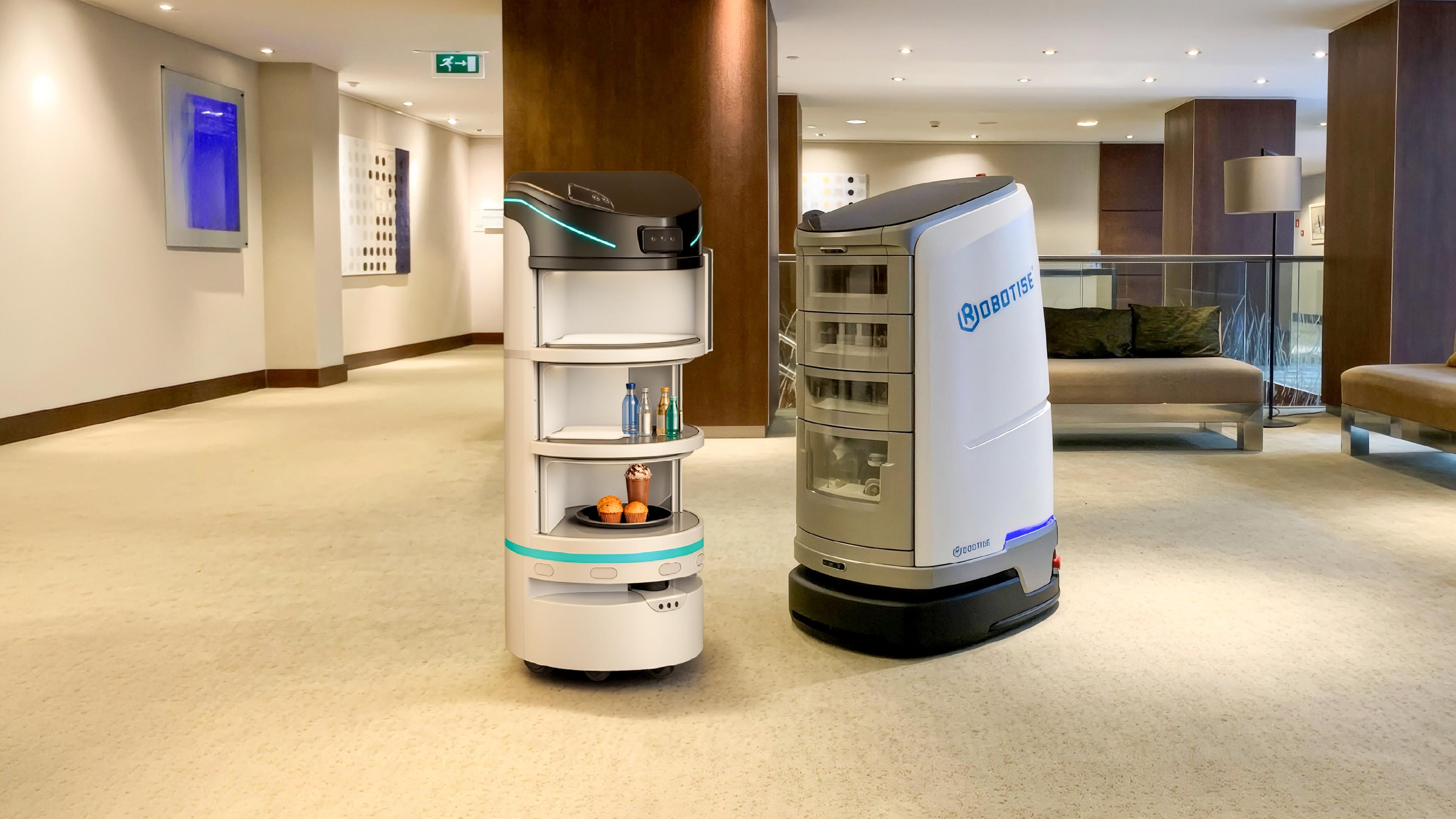
Reeman Nurse and Robotise JEEVES are autonomous delivery robots designed to transport supplies through indoor facilities, including hospitals. We compare their carrying capacity, compartment security, operating endurance, navigation and additional features to examine their suitability for medication transport, medical supplies and hospital logistics.

October 21, 2026 by Business Desk Team
Introduction
The daily transportation of medication, medical supplies, food, linens and other supplies from one department to another is a complex routine many hospitals are required to undertake. Delivery Robots can significantly reduce all the mundane and repetitious movement that does not include patient care.
But hospital delivery presents other factors beyond lift capacity. Secure access to compartments, navigating busy hallways, how well the robot interfaces with elevators and doors, and the ability to carry temperature sensitive items are all key issues affecting deployment decisions.
Reeman Nurse and Robotise JEEVES were built for autonomous indoor delivery but only Reeman Nurse documented capabilities are aligned with different needs of logistics.
Reeman Nurse is designed for safe hospital output that's independently controlleds, with multistorey capabilities. Robotise JEEVES combines modular enclosed storage, configurable drawers and the option to include cooling for temperature sensitive items.
At a Glance
| Metric | Reeman Nurse | Robotise JEEVES |
|---|---|---|
| Robot type | Secured hospital delivery AMR | Modular enclosed logistics AMR |
| Best-fit use cases | Medications, consumables, meals and linens | Healthcare and hospitality supplies; configurable chilled logistics |
| Dimensions | Not consistently published | 560 × 650 × 1,240 mm |
| Load / suction / capacity | Not consistently published | 45 kg; configurable 5 drawers |
| Runtime / charging | 15–20 h claimed; autonomous charging | Up to 8 h (Robotise healthcare page) |
| Navigation / sensing | LiDAR + 3D camera; mapped navigation; elevator/door integration | Indoor autonomous mobility and fleet management |
| Distinctive capabilities | Independent electrically controlled compartments; QR-code release; multistorey routing | Approximately 100 L modular body; optional cooling to 7 °C; 18.5-in screen |
| Key limitation / caveat | Verify compartment access controls and hospital IT integration in deployment | Confirm local hospital security and door/elevator interfaces; chilled volume up to 70 L | Verification: Robotise healthcare page confirms JEEVES 45 kg load, 5 configurable drawers, 100 L capacity, 1,240 × 560 × 650 mm, up to 8 h. Reeman Nurse comparison still needs verified version-specific maker sheet. |
How They Compare
Hospital delivery and operational role
Reeman Nurse is designed to deliver autonomously in hospitals for various applications including the transport of drugs, consumable materials, meals and linen.
Its independent compartments is suitable for supporting delivery with lock access, applicable to the hospital workflows where delivery items should be given to the specific recipient.
Robotise JEEVES the enclosed modular robot for the indoor delivery by robot in the Healthcare & Hospitality sector.
Features Optional cooling features enable a range of refrigerated or frozen supply transport capability. Configurable storage compartments allow facilities to carry various types of supplies.
The focus of both robots is on repetitive hospital transport, with Reeman Nurse concentrating on secure delivery within a locked compartment, and JEEVES on modular storage with configurable logistics.
Payload and storage capacity
The robot is said to offer a maximum payload of 45kg per robot system and has a storage capacity of around 100 L.
The cart offers five hanging drawers. Operators can allocate items to the drawers depending on size or destination.
A supplementary cooling section offers additional storage capacity of 70 L (fresh and chillers) with a maximum storage temperature of 7°C.
Reeman Nurse is equipped with stand alone electrically actuated compartments, but it is not always clearly stated what the exact payload is and how much storage space it has for a given information in the provided documentation.
Therefore it's not possible to make a direct numerical comparison of the carrying capacity.
Hospitals need to take the size and weight of the items being transported into consideration as well as the need to access the items, not solely the total payload weight.
Secure delivery and compartment access
The primary type of access into Reeman Nurse is via compartment.
The robot is said to feature 'independent electrically controlled compartments and QR-code release' enabling users to 'automate a procedure where items need to stay secure until required'.
These are potentially areas that might also apply to medication and medical-supply deliveries although a hospital will need to identify how they accommodate recipient authentication, access controls and delivery documentation.
Robotise JEEVES employs a protective modular storage concept with drawers that can be configured.
While its flexibility can perhaps assist in the movement of different types of supplies, the specifications provided do not guarantee that its access control system is up to the specific security requirements of a hospital's drug-control regime.
Again, neither robot should be taken to be compliant with hospital security nor with any applicable regulations without validation by the site.
Runtime and charging
Reeman Nurse has a quoted operating runtime of 15-20 hours and is capable of auto-recharge.
The tool can operate continuously for up to eight hours, according to the manufacturer.
The published numbers give a longer claimed running time for Reeman Nurse, but the running time is presently verified against a complete model-specific manufacturer specification.
Alternatively, the two figures are representing different payloads, operating conditions, or duty cycles.
Real-time endurance will vary depending on the length of the route, frequency of deliveries, the building setup and number of stops made during use.
Hospitals could see if either robot can perform scheduled deliveries while avoiding interference with vital processes.
Navigation and multistorey operation
Reeman Nurse is said to use LiDAR and a 3D camera for mapped autonomous navigation.
Its noted ability is Elevator and door integration so it can do lift to lift deliveries between floors if a compatible building interface is available.
Robotise JEEVES is relevant in facilities that provide delivery across mapped indoor environments and it supports autonomous indoor mobility and fleet management.
That's not to say that its precise abilities to integrate with hospital doors and elevators is known, but I'd imagine it will.
They should also be tested on whether they can operate in a crowded corridor, steering clear of patients and staff, and whether they can work successfully amidst beds, wheelchairs and other moving objects.
Never assume that building integration is a given and test those doors, elevators, access-control systems, etc.
Temperature-sensitive deliveries
The robotise JEEVES cooling option provides an achievable temperature of 7°C with 70 L of cooled storage available.
It differs from the traditional enclosed delivery arrangements and could be applicable to certain hospital products that are sensitive to temperature.
But the level of cooling performance does not make the box suitable for transporting vaccines, medicines or clinical samples that must be kept within the severe temperature guidelines.
The condition of product temperature should be validated, and temperature monitoring, recording and storage requirements should be established.
Reeman Nurse cannot be shown, with the records provided, to have an identical refrigerated delivery arrangement.
Deployment and hospital integration
Both robots need clear passageways, well-defined procedures for loading and removal, and dependable navigation.
Reeman Nurse is perhaps more suitable for facilities with recipient specific deliveries and admissions access. Controlled compartments for privacy QR-code release.
Configurable drawers, optional cooling and fleet-management features of Robotise JEEVES might help accommodate facilities with diversified supply classes.
Check before use the hospital has tested compatibility with other IT systems, door and lift communication systems, access control procedures and any other operational procedures.
Consideration should be given to local technical support, cleaning schedules and requirements, maintenance obligations and data-security arrangements.
More articles on this topic
83 articles ReportRichtech DUST-E S vs. Gausium Phantas
 ReportEngineAI SE01 vs. AGIBOT RAISE A1ReportRichtech DUST-E S vs. KEENON KLEENBOT C20
 ReportRobint Rhino vs. OrionStar CleaniBot S55 Pro
 ReportECOVACS DEEBOT X8 PRO OMNI vs. eufy X10 Pro Omni
 ReportUnitree R1 EDU vs. Booster K1
 ReportCleanfix S170 Navi vs. OrionStar CleaniBot K1
 ReportCleanfix S170 Navi vs. Nexaro NR 1700
 ReportBear Robotics Servi Plus vs. OrionStar LuckiBot Pro
 ReportBear Robotics Servi Plus vs. KEENON DINERBOT T10
 ReportUBTECH Cruzr 1S vs. Hantewin S30
 ReportECOVACS DEEBOT X8 PRO OMNI vs. eufy X10 Pro Omni
Free Weekly
BUSINESS NEWS WEEKLY LETTER
The Weekly Letter for Robotics Professionals, Summarizing the Most Important Industry Moves, Launches, Deals and Signals.
120,000+ robotics professionals follow Robot24.com