China Builds Humanoid For Crop Pollination
Armed with a tube and brush, GEAIR 2.0 can transfer pollen between flowers

September 10, 2026 by Vismay
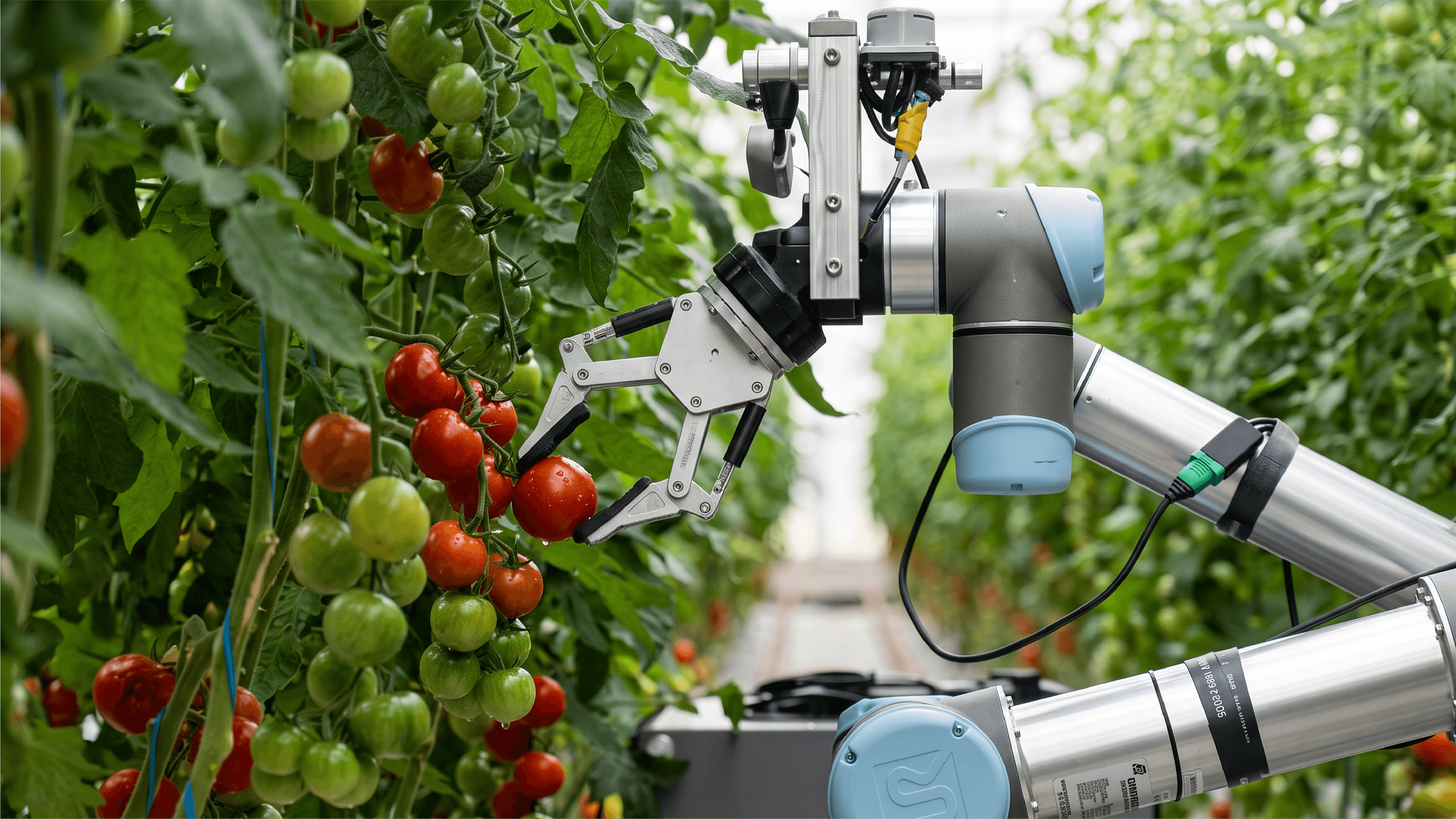
BEIJING: Chinese researchers have unveiled a humanoid robot designed to take over a delicate, repetitive job in crop breeding: transferring pollen between flowers.
Called GEAIR 2.0, the robot uses two arms to handle a pollen tube and brush. Its developers have also adapted the plants, using gene editing to make the flowers easier for a machine to reach.
During a tomato-pollination demonstration, the robot dipped its brush into pollen, then swept it across a flower stigma, the structure that receives pollen. The Global Times, citing CCTV News, reported that each operation took less than 10 seconds.
The two-arm design replaces an earlier, flexible single arm. Xu told Beijing Daily that the upgrade helps the robot work around leaves and branches, according to China Daily. The team also reported that stigma-recognition accuracy rose from 85% to 92.8%, a measure of how well the robot identifies its target, not how often pollination produces seeds.
The system appeared at the 33rd China Beijing Seed Industry Conference, according as per China Daily. It was developed by a team led by Xu Cao at the Chinese Academy of Sciences’ Institute of Genetics and Developmental Biology.
Making that target easier to reach is central to the project.
In its account of the underlying research, the academy said gene editing produced male-sterile plants with exposed stigmas. This removes the need for workers to strip away male flower parts before controlled cross-pollination and gives the robotic brush room to work.
Breeders cross different parent plants to combine desirable traits, but the small, enclosed structures of some flowers make the task difficult to automate.
The original GEAIR system was described in research published in Cell on Aug. 11, 2025, according to the academy. Research partnership CEPAMS said the team reported tomato cross-pollination efficiency comparable to skilled human technicians. Those results concern the earlier system and do not independently validate the new humanoid.
The team also created soybean plants with exposed stigmas, CEPAMS said, though that does not establish routine robotic pollination of the crop.
For GEAIR 2.0, the launch reports provide no price, commercial release date or named paying customer.
More articles on this topic
235 articles ReportRobots vs. Drones: What Is the Real Difference?
 ReportHow Animals Inspire Better Robots
 ReportFrom Toys to Tools: The Coolest Robots in Schools Today
 ReportWhat it Really Costs to Own a Personal Assistant Robot at Home
 ReportThis Tiny Robot Hops Like a Frog And Swims Using Elastic Limbs
 ReportJapan Tests Robot Bins at Tokyo’s Busiest Railway Station
 ReportA Little Company, Courtesy of a Robot
 ReportA Humanoid Walks into a New York Park
 ReportRailway Inspection Robots Search for Defects in Tracks
 ReportChina's Humanoid Supply Chain Moves Toward Industrial Production
 ReportCompanionship now comes with a Charging Cable
 ReportFormer OpenAI Executive Raises $215M for Robotic Labs
BUSINESS NEWS WEEKLY LETTER
The Weekly Letter for Robotics Professionals, Summarizing the Most Important Industry Moves, Launches, Deals and Signals.