Changi Airport Deploys Up to 18 Autonomous Wheelchairs After Year-Long Trial
The rollout follows a 10-unit trial and is meant to free ground staff for passengers who need hands-on help.

September 16, 2026 by Nisha
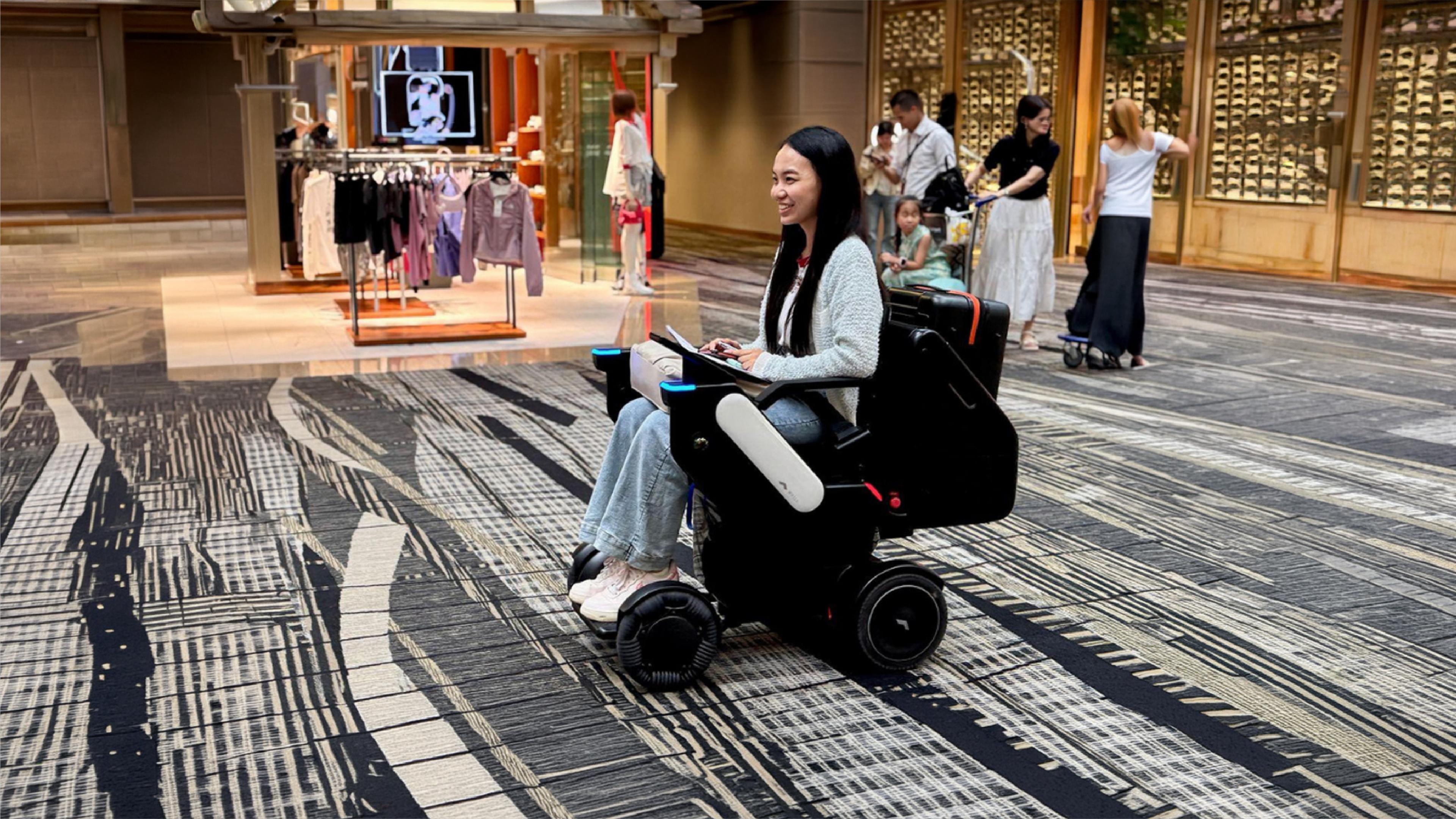
SINGAPORE — Changi Airport Group (CAG) and Singapore ground handler SATS Ltd has commenced deployment of autonomous wheelchairs to transport passengers with reduced mobility, transitioning from a trial of 10 wheelchairs to rolling out a fleet of up to 18 in the first phase for use at Terminals 2 and 3.
The 18 self-driving units, supplied by Japan's WHILL Inc and created through a joint development project with CAG, are intended to ease reliance on human escorts, saving ground staff to serve travelers that need face-to-face assistance, CAG said.
Only a handful of units are expected to be operational for now, with a timetable to be announced at a later date, the airport operator added. The wheelchairs shuttle travelers between an arrival gate and the Special Service Lounge for passengers with reduced mobility, and then continue on to the subsequent departure gate at the destination, with each unit avoiding obstacles and pedestrians while following an optimal route, WHILL said.
Under the service, ground operations staff dispatch a wheelchair to a specific arrival gate based on incoming flight schedules. The unit meets disembarking passengers and carries them autonomously to the Special Service Lounge for passengers with reduced mobility; connecting travelers are then taken onward to their next gate, WHILL added.
The wheelchairs use omnidirectional wheels to maneuver efficiently and are equipped with sensors that enable the driverless units to detect obstacles along their pathways, Aero Time reported.
CAG said wheelchair requests increased 20% between 2023 and 2025, driven by an aging population and higher traffic. The airport operator said the autonomous wheelchairs would supplement the current fleet of standard wheelchair escorts, allowing ground staff to deliver assistance to specific travel needs.
In addition to executing the wheelchairs, SATS manages e-Caddies and conventional manual wheelchairs through a centralized operations management system, as part of the company's "Hub Handler of the Future" vision.
CAG further said it expects the autonomous fleet to eventually handle about 10% of the airport's daily mobility assistance requests.
According to CAG and WHILL, safety evaluations assessed obstacle-detection capabilities, navigation precision and operational speed before introducing the wheelchairs into regular use.
WHILL said the CAG project is the largest deployment of autonomous wheelchairs at any airport and said it has clocked more than 1 million autonomous rides globally, including trials at London Heathrow and Rome-Fiumicino airports.
More articles on this topic
184 articles ReportWhat it Really Costs to Own a Personal Assistant Robot at Home
 ReportPhysical Intelligence Opens Its Robot AI Models to Developers
 ReportAbu Dhabi’s New Robot Cooks Dinner Within Four Minutes
 ReportTry Before You Buy: Five Places to Test-Drive a Robot
 ReportGoogle AI Teaches Humanoid Robot to Play Cornhole by Watching Human Videos
 ReportYour Old Smartphone Could Soon Get a New Robotic Avatar
 ReportWhy Google's AI Made Spot Practise Using a Bin
 ReportHumanoid Robots Are Learning to Navigate Obstacles Like Humans
 ReportWhat Happens When a Humanoid Robot Makes a Mistake?
 ReportFrom Factories to Homes: How Robots are Assisting at Construction Sites
 ReportHow Next-Gen Robots are Getting Human-Level Precision
 ReportSouth Korea Lets Humanoid Robots Work Alongside Factory Workers
BUSINESS NEWS WEEKLY LETTER
The Weekly Letter for Robotics Professionals, Summarizing the Most Important Industry Moves, Launches, Deals and Signals.