BMW Expands AI-Powered Manufacturing with Figure 03 Humanoid Robot at Spartanburg Plant
BMW is expanding its use of humanoid robots by deploying Figure AI’s latest Figure 03 robot at its manufacturing plant in Spartanburg.

June 30, 2026 by Carl
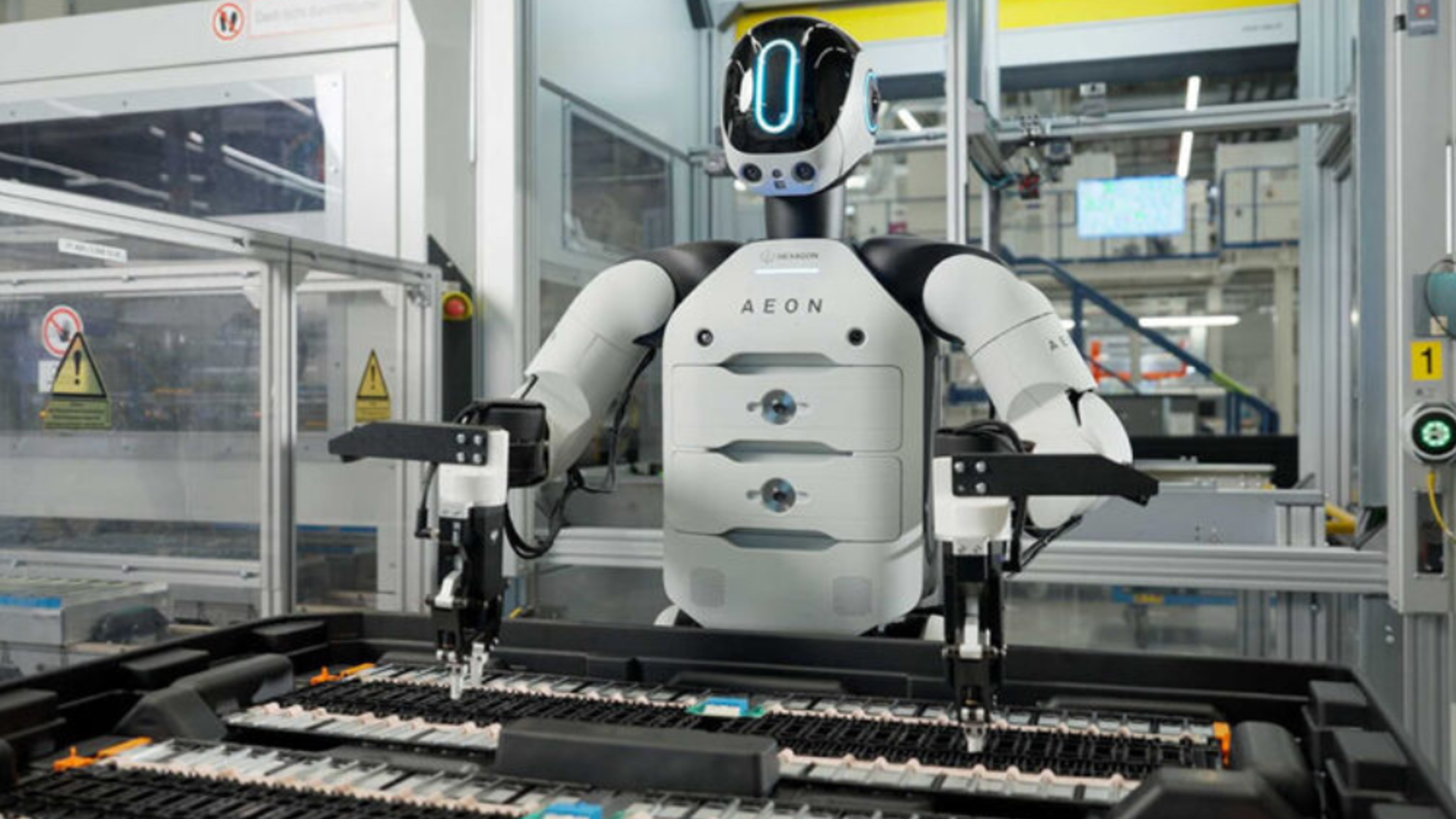
BMW Group is expanding its use of humanoid robots by deploying Figure AI’s latest Figure 03 robot at its manufacturing plant in Spartanburg, South Carolina. The automaker, as we all know, has deployed humanoid robots earlier, too. And this step proves to be another important part of the company’s long-term strategy of integrating Artificial Intelligence (AI) and advanced robotics into vehicle production. BMW’s deployment of the Figure 03 humanoid robot follows the successful pilot of the previous Figure 02 platform.
During an 11-month pilot program, Figure 02 worked inside the body shop at BMW’s Spartanburg facility, where it inserted sheet metal components into welding fixtures during production of more than 30,000 BMW X3 vehicles. There was a lot of precision and speed required in order to perform this task. And by deploying this humanoid robot, the company successfully achieved the desired result while reducing the workload of human workers.
As per BMW Manufacturing, the successful trial proved that humanoid robots can surely work safely with humans under one roof. Moreover, the automaker is of the view that these robots are being deployed as a step to improve automation and reduce human workers’ workload rather than replacing them.
“Plant Spartanburg is the birthplace of humanoid robotics in BMW Manufacturing’s operational day-to-day activities,” said Ulrich Wieland, Vice President of Production Control and Logistics at BMW Manufacturing. “Having already successfully completed a pilot with Figure 02 in our body shop, we are now looking forward to deploying Figure 03 for a sequencing use case in logistics.”
Figure 03 Takes on Logistics Operations
Unlike its predecessor, Figure 03 will begin its work in the plant’s logistics operations. The robot’s primary job is to handle sequencing tasks. This is a very important process in automotive manufacturing. And that’s because the process ensures that only correct components reach the assembly station at the right time.
Normally, what happens is that the parts that arrive at the logistics center are delivered in large and unsorted containers. This is where Figure 03 will make the difference. It will identify and pick individual components before placing them into sequencing trolleys. Once the components are sorted in trolleys, these trolleys will then be transported by automated tugger trains or Smart Transport Robots to the assembly line. This step ensures that workers receive the right parts at precisely the right time. BMW believes this “just-in-sequence” workflow offers significant opportunities for future automation and scalability.
Figure 03 is provided with soft exterior components that improve workplace safety. It also has wireless charging, which increases its operating time. The robot is also capable of speech-to-speech communication and features upgraded robotic hands equipped with tactile sensors and palm-mounted cameras. All these enhancements make the robot’s dexterity and precision even better. And because of that, it becomes capable of performing more advanced manufacturing and logistics tasks.
“Our 11-month deployment of Figure 02 proved that humanoids are no longer lab experiments—they can be a valuable asset in establishing a flexible, reliable manufacturing workforce,” said Brett Adcock, Founder and CEO of Figure AI. “We are excited to continue our work in Spartanburg as Figure tackles the complexity of the assembly and logistics hall.”
Part of BMW’s Broader AI Manufacturing Strategy
The deployment also supports BMW’s broader Physical AI strategy, which focuses on using intelligent robots for repetitive, ergonomically demanding, and safety-critical tasks. By assigning these responsibilities to humanoid robots, the automaker aims to improve workplace safety, reduce employee fatigue, and allow its workforce to concentrate on higher-value and more complex activities.
Figure 03’s arrival is closely aligned with BMW’s iFACTORY production strategy, which emphasizes digitalization, automation, and sustainability across its manufacturing network. Artificial intelligence also plays an increasing role in quality control. BMW’s AIQX (Artificial Intelligence Quality Next) system combines cameras, sensors, and acoustic analysis to detect production issues in real time and provide immediate feedback to workers. The company is also exploring opportunities to extend the technology to its suppliers.
With the deployment of Figure 03, BMW continues to demonstrate how humanoid robots are moving beyond experimental projects and becoming practical tools for modern manufacturing. As AI-powered automation evolves, the company’s latest investment offers a glimpse into how future vehicle production could combine human expertise with increasingly capable robotic co-workers.
More articles on this topic
223 articles ReportWhat it Really Costs to Own a Personal Assistant Robot at Home
 ReportHumanoids Struggle With Unfamiliar Chores, New Research Finds
 ReportQuadruped Solves Giant Rubik’s Cube Using Only Its Feet
 ReportNVIDIA Uses AI Agents to Teach Tiny Walking Robot to Navigate Obstacles
 ReportScientists Develop System to Help Robots Gesture Without Losing Balance
 ReportRobotic Fish Offer New Way to Track River Pollution
 ReportHigh Torque Robotics Partners With Sharebot to Expand Humanoid Access Across China
 ReportAudi Tests Agile Robots' Mobile Humanoids for Factory Logistics
 ReportFrom Flips to Dance Moves: New AI Trains Humanoid Robots in Record Time
 ReportHow a Tiny Robot Searches for Hidden Damage Inside the Wind Turbine Blades
 ReportRadioactive Mess? Better Call Spot
 ReportJapan's LOVOT Companion Robot Makes Abu Dhabi Healthcare Debut
BUSINESS NEWS WEEKLY LETTER
The Weekly Letter for Robotics Professionals, Summarizing the Most Important Industry Moves, Launches, Deals and Signals.