Why Robot Manufacturing Can Become a National Security Issue
If you think that robots are just part of the movies you used to watch, you are wrong. They are becoming part of warehouses, farms, hospitals, ports, and the battlefields.

August 19, 2026 by Carl

If you think that robots are just part of the movies you used to watch, you are wrong. Now they work in car factories. They are continuously becoming part of warehouses, farms, hospitals, ports, and even now the battlefields. This is making robot manufacturing more important than ever. This is especially useful for the countries that design and develop these robots all on their own. This gives them an edge over others not only in terms of business but also in defense and supply chains, along with national security.
This is the reason governments are now paying more attention to this industry. The US has already taken several steps to restrict foreign-made robots. On the other hand, China is dominating the industry with huge investment heavily in automation and humanoids. It is not about who is manufacturing how much. The real thing is who is behind all this. Because the countries that own them can get an advantage over others. And that, of course, can be a national security issue for others.
Robots Are Everywhere Now
Just go a few years back. Robots were limited to labs only. That has changed a lot now. In 2025 alone, around 15,000 robots were shipped all around the world. Robots are not just factory machines anymore. They can walk, sense, use their cameras, communicate, and do plenty of tasks that you could never have imagined before. You will see them in hospitals, homes, warehouses, and even military bases.
When a robot is inside a facility, it can see everything. Its cameras can map the layout. Its microphones can even hear and collect data related to your conversations. And above all, its sensors can map every corner of your home. Of course, that data has to go somewhere. And if this robot was built by a company with foreign ties, it raises a lot of questions. This is something that is happening now and not a theoretical worry anymore. Some companies openly admit that they collect data because they use this data to improve the performance of their robots. But do you think this statement justifies all this? Of course not.
One Country Controls Most of the Robot Supply Chain
Here is a fact that surprises people. China currently controls roughly 85% of the humanoid market. In 2025, nearly 90% of all humanoids sold were made by Chinese companies. Unitree and AgiBot shipped thousands of units each. Likewise, American competitors like Tesla and Figure AI shipped only a few hundred combined.
But it goes even deeper. China also controls much of the supply chain that makes robots possible:
- It dominates around 70% of the LiDAR sensor market
- It controls roughly 90% of rare-earth mineral refining. It includes the materials that go into batteries and motors used in robots
- It manufactures a large share of the actuators used in robots
- The Yangtze River Delta region in China is the most complete robotics supply cluster. It has manufacturers, component suppliers, and battery makers all within a short distance of each other
What this means is simple. If you want to build a robot, it is almost impossible, at least for now, to build it without getting parts from China. This control is exactly what worries national security experts.
Real Hacks Have Already Happened
This is not just about future risks. There have already been incidents that show how dangerous foreign robots can be.
In early 2026, a researcher discovered a vulnerability in a foreign robot. Through a single flaw, he was able to remotely access thousands of robots. He could see their live camera feeds and hear audio. It could even access detailed floor-plan maps of people’s homes. That is a serious privacy breach. And in the wrong hands, these robots can even be used for surveillance.
In another incident, a cybersecurity flaw was found in workplaces. Because of this flaw, a remote attacker could take control of the robots and even scan other nearby robots.
Experts described this situation as a “humanoid botnet.” In simple words, this means a network of hijacked robots. An attacker could remotely control these robots and spread the attack to others.
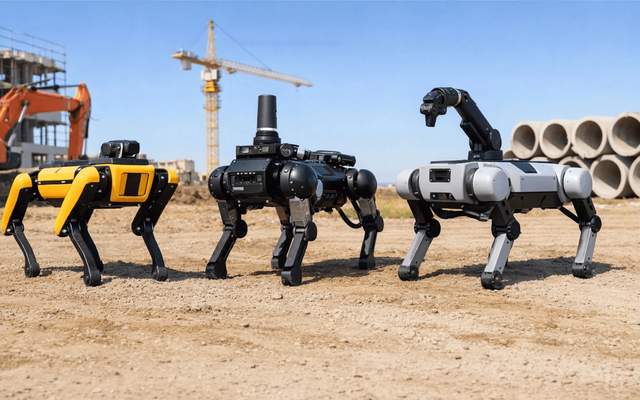
In April 2025, security researchers also discovered a pre-installed backdoor in some foreign-made four-legged robots. Because of this backdoor, an outsider could access the robot’s camera and even remotely control it.
These were not just normal software bugs or glitches. A pre-installed backdoor simply means there was already a hidden access point in the system. Through this, an unauthorized person could potentially gain access to the robot.
The FCC cited these specific incidents when it made its landmark ruling in July 2026.
The U.S. Government Draws a Line
In July 2026, the FCC took one of its most significant tech-security steps. It added foreign-made robotic devices to its official “Covered List.” This is the same list where Huawei and ZTE telecom equipment ended up after the government decided those companies posed a security risk.
What does being on the Covered List mean? Any new foreign-made robot that has not already received FCC approval cannot enter the U.S. market. The FCC chairman put it plainly. These devices could create supply chain vulnerabilities that could disrupt U.S. economic and national security, and could pose cybersecurity risks to American critical infrastructure.
The FCC also pointed out that advanced robots collect a huge amount of data. This can end up in the hands of malign actors. It can also be used to improve foreign intelligence services. And one of the biggest concerns is that someone can potentially gain remote control of the robots.
This wasn’t just a decision made by the FCC on its own. Before this, the White House carried out a formal interagency review. That means the government’s national security and intelligence agencies also reviewed the issue.
Just a few weeks before this decision, Congress also introduced the American Security Robotics Act of 2026. It’s a bipartisan bill. That means lawmakers from both major political parties are involved. The purpose of the bill is to make sure federal agencies cannot buy or use robotic vehicles made by adversarial countries like China.
Why Robots Are Different From Other Tech
You might be thinking: we already buy smartphones and electronics from China, why are robots different?
It is a fair question. The answer comes down to what robots do that other devices cannot.
A smartphone sits in your pocket. A robot moves through your space. It has arms, legs, or wheels. It picks things up and walks through hallways. A compromised smartphone can steal your data. A compromised robot in a factory or a military base could physically interfere with equipment or carry out sabotage.
Security experts describe this as the rise of “embodied AI” but as a physical presence. When that presence is in a defense facility, the stakes go up.
These robots are on networks. They communicate with servers and send data to the cloud. And just imagine if this data is sent to a company whose interests don’t match yours. What will be the consequences?
The Supply Chain Problem
The problem is not with the robots only. Even if you make sure that a robot is safe, the parts inside might still be dangerous. Experts call it supply chain vulnerability.
Even the robots that are made in the US often use components that come from China. This includes batteries, motors, sensors, actuators, circuit boards, etc. And just think about it: if a bad actor injects a minor vulnerability deep inside a component, that flaw will be invisible until it is activated.
The supply chains are long and complex. So it is not easy to track the exact source of the problem. This is the concern that drove the US earlier to crack down on Chinese-made vehicles and equipment. Robots are the next option on their list.
The Defense Side of the Problem
Robots are no longer being used only in factories and homes. They are increasingly becoming part of military strategy too. Four-legged robots are already patrolling some U.S. military bases. Autonomous ground vehicles are being tested for battlefield use. The U.S. Army has also explained how autonomous breaching systems can perform better than older methods in conflict situations.
At the same time, China’s military is also investing heavily in robotic and autonomous systems. Nearly 20% of robotics patents filed between 2020 and 2025 overlap with defense-related technologies. This shows how quickly robotics is developing as a dual-use technology. That means the same technology can be used for both civilian and military purposes.
Now imagine if a foreign adversary compromised the robots being used by U.S. troops, or American forces started depending on robotic systems that came from foreign countries and could potentially be remotely shut down. The problem would no longer be limited to a data breach. The consequences could extend to military operations and national security.
What Other Countries Are Doing
The U.S. is not the only country paying attention. The European Union has been working on AI and robotics regulations. Japan is ramping up domestic production. South Korea has its own humanoid programs in development.
But China’s head start is real and measurable. It has 140 active robot manufacturers. It unveiled roughly 330 new robot models in 2025 alone. Its government has a specific national plan targeting 100,000 deployed humanoids by 2027. Compare that to the U.S., where the biggest players are startups that are still in early production phases.
Whoever builds robots at scale first will collect more data, which trains better AI, which makes better robots. It is a feedback loop that compounds over time. Falling too far behind is not just an economic problem; it becomes a security one.
What Needs to Happen
Dealing with this problem isn’t as simple as it seems. However, experts and policymakers suggest some steps.
The first and foremost thing is that the US needs to strengthen its domestic supply chain. Important robot components must be made in the country or by trusted allies. This will help the US avoid being too dependent on any other country.
Then come the security standards. They must be strict. If a robot connects to a network, especially in a sensitive environment, it must meet strict cybersecurity requirements. All the foreign-made robots that are already being used in the US must go through a security review. FCC ban mainly applies to new models, but you can’t ignore the existing robots. That is why auditing and security checks are a must. This will definitely be a sensible approach.
And last but not least, supporting American robotics companies is also important. Companies need funding and research partnerships to compete fast. But this will require both long-term commitment and political will. So if the US really wants to cope with this situation fast and beat China and other competitors, it must have a strong plan.
More articles on this topic
59 articles ReportCounterpoint Expects Work Applications to Drive 90% of Humanoid Shipments by 2030
 ReportUS Department of War Awards its Innovation Unit $90 Million to Modernize Manufacturing
 ReportOTSAW O-R3 vs Robotnik RB-WATCHER: Robot Comparison
 ReportUnitree’s 'Superman' Robot Claims to Outrun Usain Bolt
 ReportAitan Raises $41 Million to Expand AI-Enabled Robotic Warfare Systems
 ReportForeign Investors And Tech Executives Pay Up To $15,000 To Tour China’s Factories
 ReportKnightscope K5 vs SMP Robotics Argus S5.2: Robot Comparison
 ReportCan Certified Robots Compete With China's Cheap Patrol Bots?
 ReportQuadruped Robots Are Becoming Big Business: Here’s Why The US Is Targeting Chinese Makers
 ReportHumanoid Robots Hit Mass Production
 ReportHow Robots Are Learning to Read Minds?
 ReportAre Humanoid Robot Videos Misleading Us?
BUSINESS NEWS WEEKLY LETTER
The Weekly Letter for Robotics Professionals, Summarizing the Most Important Industry Moves, Launches, Deals and Signals.