South Korean Hospital Demonstrates Humanoid Robots Assisting Surgeons in the Operating Room
Samsung Medical Center tested two humanoid robots assisting surgeons in a simulated operation, handling instruments and responding to voice commands.
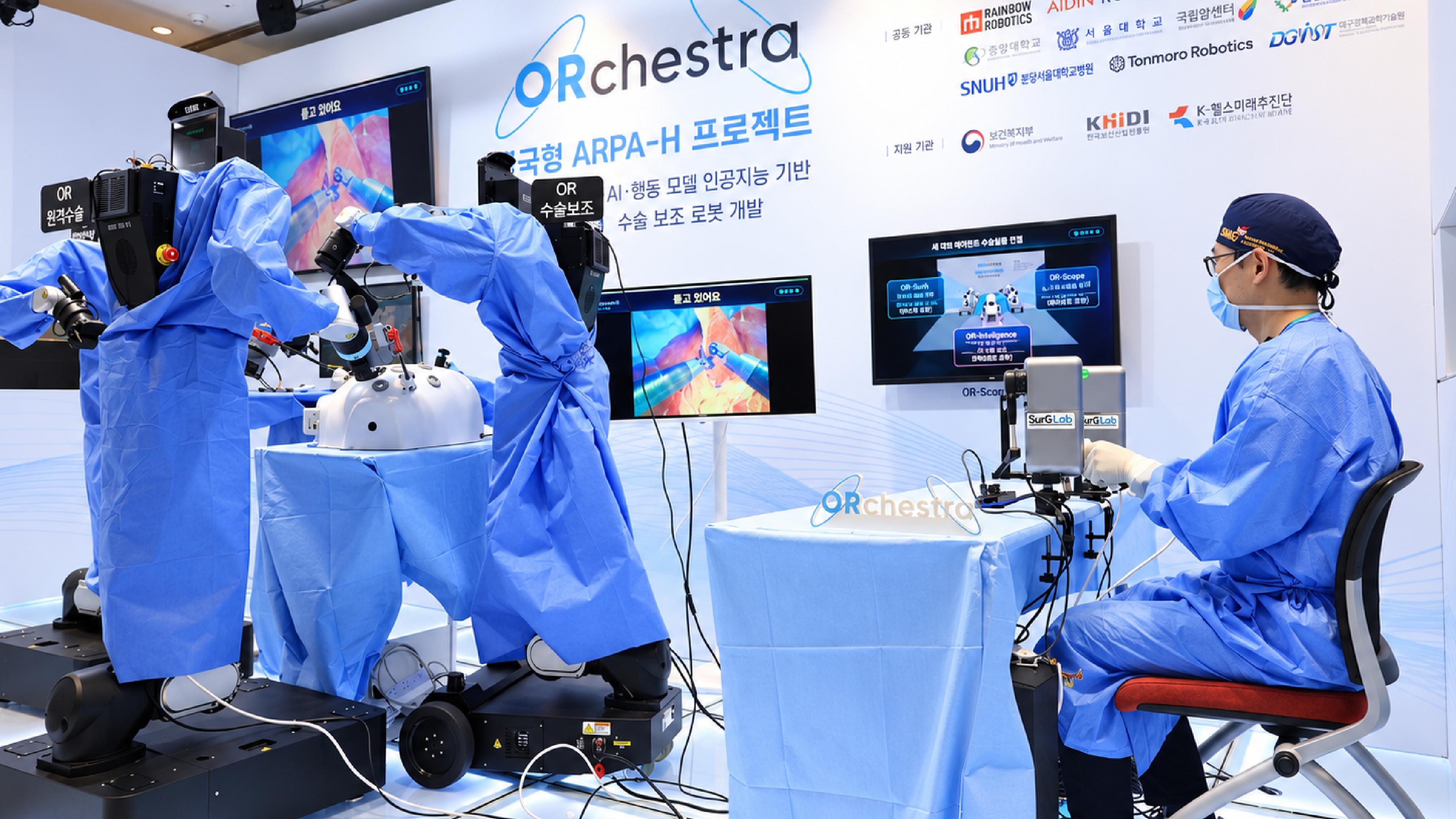
In a demonstration of what is possible in the operating room, two humanoid robots have put on display their capacity to be of service to a surgeon, from passing instruments and keeping the surgical field unobstructed, to heeding verbal orders.
The exercise was part of a simulated gallbladder removal at Samsung Medical Center in Seoul on September 16; an announcement from the hospital on October 16 gave further details. The two robots were put to work with a human surgeon, not on a patient but on an isolated goat liver to see how well they could back up medical staff under conditions similar to an actual operation.
Two Robots, Different Responsibilities
One of the humanoids acted as a nurse of sorts: it would discern which instrument the surgeon wanted, pick it up and present it in the proper orientation. Once done with the tool, the robot put it away where it belonged.
The second humanoid robot was there as an assistant, repositioning a laparoscope for a better vantage point within the surgical area and to hold back tissue. All of this was done at the surgeon’s command, including any need to move the camera.
"The key is not simply handing over an instrument once and stopping there," Yong Gi Jung, a professor at Samsung Medical Center, said, highlighting the value of seeing the whole process through.
What was made clear is that such robots can handle the more routine support functions and let the surgeon give his full attention to the procedure.
Teaching Robots to Work With Surgical Teams
Development of the robots is being overseen by ORchestra, a research consortium of which Samsung Medical Center is the head and which has the backing of South Korea’s Korean ARPA-H healthcare program. Among the participants are Rainbow Robotics, AIDIN ROBOTICS and Seoul National University, along with a number of medical research bodies.
Their purpose is to produce a robot that can comprehend what is asked of it in surgery and act safely if something unanticipated occurs, while also coordinating with the rest of the medical personnel.
To that end, researchers are amassing data on surgical movements so AI can be taught to tell one procedure from another and know what will be called for. The idea in the long run is to have a robot involved in an operation from start to finish, not merely to put some motions on auto pilot.
Clinical Use Still Requires Further Testing
However, these are still works in progress and no approval for clinical use has been given. Before Samsung Medical Center would consider putting them in an operating room, the technology will have to pass regulatory hurdles as well as performance tests, preclinical studies and evaluation by the staff.
Clinical trials are being anticipated for 2029, beginning with less risky business like holding the endoscopic view. Down the line, the project may be of use to hospitals in coping with a heavy surgical load in the absence of seasoned assistants. But for the time being, the demonstration is only a preview of how humanoids could fit into a surgical team, with the doctor making the call on all matters of a medical nature.
More articles on this topic
201 articles ReportWhat it Really Costs to Own a Personal Assistant Robot at Home
 ReportWhat Happens When Robots Lose Their Internet Connection?
 ReportChina's Industrial Robot Output Surges 29% in Nine Months
 ReportInside San Francisco's Robot Housekeeping Experiment
 ReportA Quadruped That Doesn’t Just Look Like Your Dog. It Acts Like It, Too.
 ReportDexForce Teaches Humanoids Real-World Skills
 ReportBeetle-Inspired Robot Walks and Grasps With Finger Controls Alone
 ReportUAE to Test Humanoid Robots in Extreme Gulf Conditions Under UBTECH Partnership
 ReportSurprising New Careers Created by The Everyday Consumer Robotics Boom
 ReportAgility Robotics Says Digit 5 Humanoid Can Work Over 20 Hours a Day With New Battery
 Report15 Humanoid Robots Are Being Put to Work at a Chinese Auto Parts Factory
 ReportSwedish Startup Plans Humanoid-Run Factories Inside Shipping Containers
BUSINESS NEWS WEEKLY LETTER
The Weekly Letter for Robotics Professionals, Summarizing the Most Important Industry Moves, Launches, Deals and Signals.