15 Humanoid Robots Are Being Put to Work at a Chinese Auto Parts Factory
Leju Robotics has deployed 15 humanoid robots at a Chinese auto parts factory, reporting over 60,000 components handled and 98% task success.
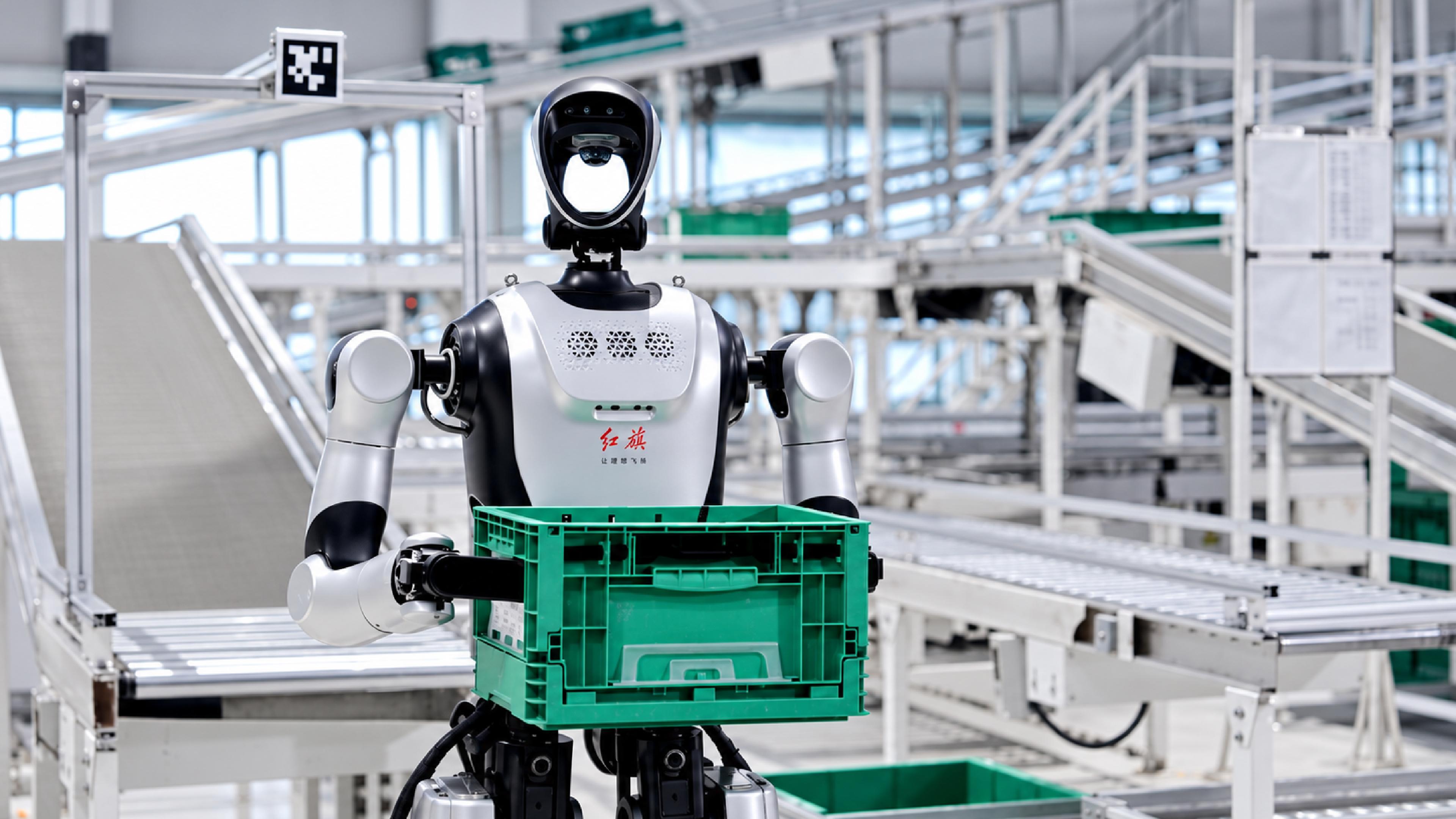
At an automotive parts plant in China, a fleet of 15 humanoid robots is putting in their shifts, taking over the thousands of repetitive tasks that were once the province of factory hands and loading components for the production line.
Leju Robotics of China has developed these robots to work at Zhaofeng’s No. 3 facility in Hangzhou, Zhejiang province. The companies made the deployment public on October 15, with figures from Chinese financial outlet Securities Times indicating the machines have been in service for over two months at 15 workstations and have some 1,000 operating hours under their belt, in the course of which they have put out more than 60,000 auto parts.
Zhaofeng scores the success rate for loading at 98%; there has been no independent verification on those numbers, though. In the course of a day, the robots will deal with more than 10-part types, wheel hub bearings of 80 to 120 millimeters inner diameter among them, taking them from storage and setting them down where they are needed on a machining station.
The point of the exercise is to get around one of the challenges of making auto parts: smaller orders with a lot of switching between components. Some of Zhaofeng’s orders are as little as 250 or 300 sets, so flexibility is key.
To that end, Leju has put together a system of over 30 skill modules for loading operations; developers can put existing skills to use for new tasks, and the company claims it has cut the development time for such applications from a matter of months to weeks.
There is a centralised scheduling platform that allows robots to receive updated instructions and to put safety systems in place to watch for collisions or any unwarranted speed. But the robots do not yet move fast enough for a broader rollout. The companies say a loading cycle runs 35 to 40 seconds, whereas Zhaofeng would like to see that figure be at around 15 before going further. The manufacturer is looking at another six months or a year to make good on that.
Then there is the training data being generated by the physical work. Leju and Zhaofeng report 40,000 operational records are gathered monthly, and some of this is being given to the OpenLET community of the OpenAtom Foundation in China for robotics research.
It is all progress in the direction of an industrial application, but how the performance holds up in other environments and what the maintenance and running costs will be in the long run are still open questions.
As for Leju, it is a chance to show that its humanoids can do a job in a factory on a consistent basis, not just in the confines of a lab.
More articles on this topic
201 articles ReportWhat it Really Costs to Own a Personal Assistant Robot at Home
 ReportWhat Happens When Robots Lose Their Internet Connection?
 ReportChina's Industrial Robot Output Surges 29% in Nine Months
 ReportInside San Francisco's Robot Housekeeping Experiment
 ReportA Quadruped That Doesn’t Just Look Like Your Dog. It Acts Like It, Too.
 ReportDexForce Teaches Humanoids Real-World Skills
 ReportBeetle-Inspired Robot Walks and Grasps With Finger Controls Alone
 ReportUAE to Test Humanoid Robots in Extreme Gulf Conditions Under UBTECH Partnership
 ReportSurprising New Careers Created by The Everyday Consumer Robotics Boom
 ReportAgility Robotics Says Digit 5 Humanoid Can Work Over 20 Hours a Day With New Battery
 ReportSouth Korean Hospital Demonstrates Humanoid Robots Assisting Surgeons in the Operating Room
 ReportSwedish Startup Plans Humanoid-Run Factories Inside Shipping Containers
BUSINESS NEWS WEEKLY LETTER
The Weekly Letter for Robotics Professionals, Summarizing the Most Important Industry Moves, Launches, Deals and Signals.