Robots vs Humans: Who’s Winning the Sports Showdown?
From speed and strength to endurance, sports are a great way to show just how far and fast robot technology has come.

October 9, 2026 by Jeremy
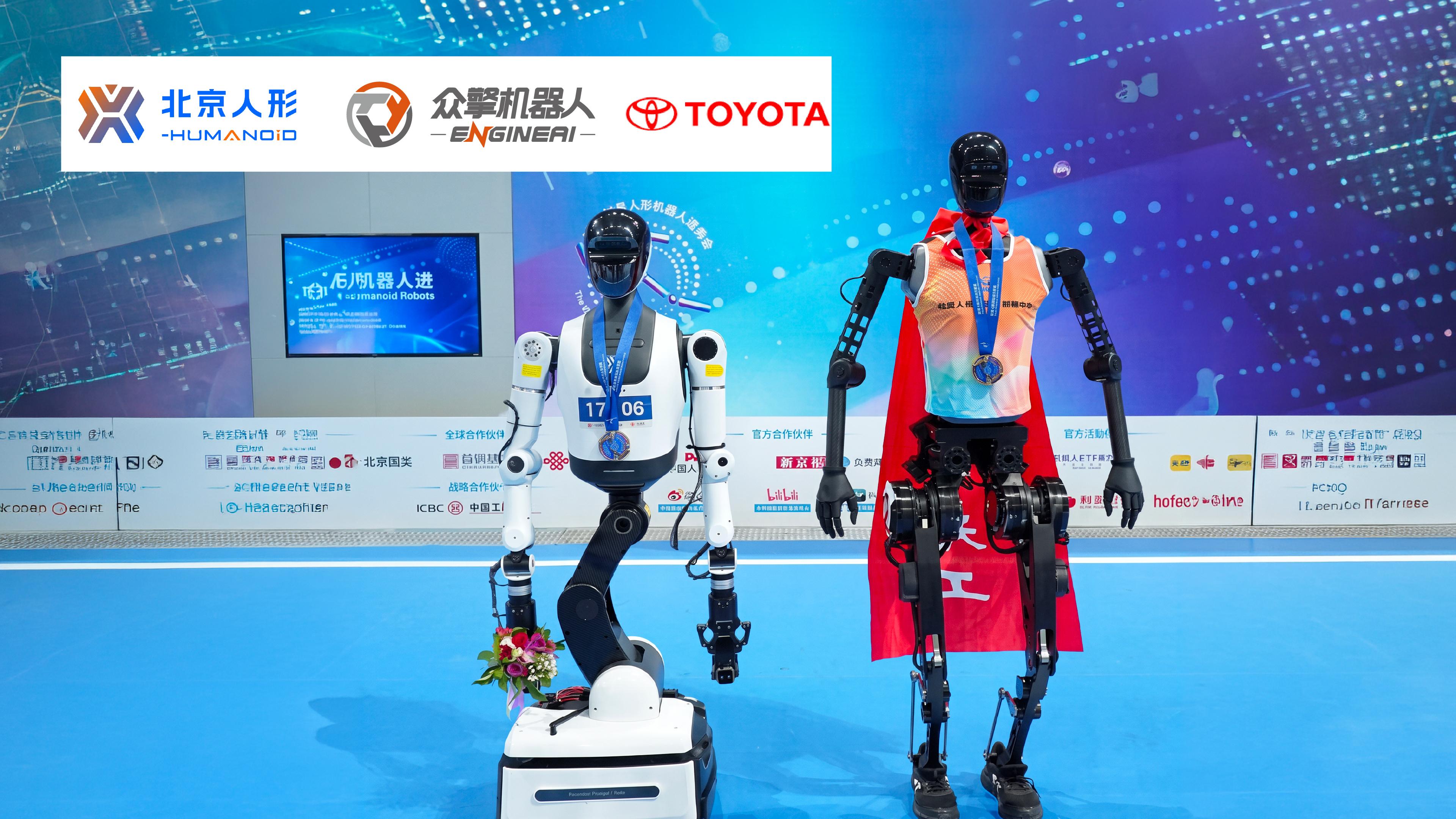
For thousands of years, humans have competed to see who’s the fastest, strongest and toughest. But now, robots have jumped onto the bandwagon. And with improvements in technology, they are beginning to outperform humans in some sports.
From speed and strength to endurance, sports are a great way to show just how far and fast robot technology has come. Compiled below is a lowdown of some of the latest impressive feats of different robots.
X-Humanoid Tiangong Ultra
On August 22, 2026, China’s X-Humanoid Tiangong Ultra sprinted across the track and finished in 9.39 seconds. Tiangong Ultra had broken Usain Bolt’s 9.58-second world record. In a nutshell, a machine has now overtaken the fastest man alive.
In the 2025 World Humanoid Robot Games, Tiangong Ultra finished the 100-meter sprint in 21.50 seconds. This year’s result is more than twice as fast as last year’s. But while Bolt can stop smoothly, Tiangong Ultra was only able to come to a complete halt after slamming into soft barriers that had been designed to stop motion.
Another X-Humanoid robot also cleared 2.88 meters in the high jump, also breaking the 2025 record. It is also worth noting that 2.88 meters is higher than the 2.45-meter world record set by Javier Sotomayor of Cuba in 1993.
Toyota CUE7 Basketball Robot
Earlier this year, Toyota's AI-powered basketball robot CUE7 made its debut, showing off its dribbling and shooting skills on the court. But basketball runs in the family! Its older sibling, CUE3, made headlines back in 2019 after sinking an incredible 2,020 consecutive free throws in just over six and a half hours.
Standing at 2.18 meters and weighing 74 kilograms, the Toyota CUE7 doesn’t have feet. It has two wheels on legs and three fingers, making it specialised for basketball games. While it may not be as nimble as a human yet, its capabilities aren’t to be underestimated.
EngineAI T800 Robots
Influencer Frankie LaPenna stepped into the ring to take on three Chinese-made robots: two EngineAI T800s and a Unitree G1. Billed as the first full-contact fight between a human and robots, it was no ordinary showdown! After all, the T800 can reportedly deliver kicks with up to 850 pounds of force. LaPenna wore protective gear for safety, although he initially wanted to fight without most of it.
The influencer knocked down the Unitree G1 with a kick, ending the fight in seconds. But things got tougher when he faced two modified T800 robots. The first, named “Terminator” after the famous movie character, tossed LaPenna around with ease. The second, “Predator”, was even faster and quickly wore him out without showing any signs of slowing down. Luckily, LaPenna escaped without serious injuries, although he did hurt his hand while punching one of the robots.
Human operators controlled the robots using VR equipment or game controllers, while AI helped them move and stay balanced. The robots copied the operators’ movements or responded to commands to throw punches and kicks.
Why Sports?
Athletic records are always waiting to be broken and humans have long tested themselves, hoping to be among the greats in any sport. For engineers and manufacturers, sports are a great way to show just how far their robots have come. And the more records these robots break, the more attention they attract.
In reality, robot sports like the World Humanoid Robot Games are tests more than record-breaking festivals. The most important thing is getting the robots to the finish line or completing the task at hand. Sports also combine timing, dexterity, strength, decision-making, and many other important factors in one activity. After all, lab tests are controlled, but sports are chaotic. If a robot can win against athletes, it deserves to be called exemplary.
Even when robots overheat, crash or break down, engineers can learn from what went wrong and make improvements. These lessons also help develop better robots for everyday tasks, from lifting heavy cargo to helping around the house. So, every sporting achievement brings us one step closer to smarter, more capable robots.
Aaron Prather, Director of the Robotics and Autonomous Systems Programs at ASTM International, summed it up in the best way possible: “These robots aren’t just entertaining us — they’re helping set the foundation for responsible deployment in workplaces, homes, and public spaces. Every match is a lesson. Every stumble is a stress test. Every finish line crossed is one more step toward useful, trustworthy, and standardized humanoid robots.”
We are being beaten by robots but perhaps that’s how they have to get better. After all, every mistake is a chance to learn and improve.
More articles on this topic
159 articles ReportAmazon Unit Connects Nvidia Simulation With Robot Training and Deployment
 ReportUBTECH, FAW-Volkswagen Expand Humanoid Robot Work Into Logistics
 ReportThe Rise of Delivery Robots: How They Work and Where They’re Headed
 ReportOctopus-Inspired Muscle Design Simplifies Dexterous Soft Robots
 Report5 Jobs Robots Could Take Over by 2035 — And 5 They’ll Struggle to Replace
 ReportWhy aren't robots in our homes yet?
 ReportFlourish Opens Preorders for $3,555 Trainable Home Robot
 ReportHow Do Robots See the World?
 Report6 Unusual Jobs Done By Robots
 ReportRLWRLD Expands Physical AI Push for Industrial Robots
 ReportCircus SE Partners With Royal Prestige for UAE Food-Robot Launch
 ReportSix Giant Robots from Around the World
BUSINESS NEWS WEEKLY LETTER
The Weekly Letter for Robotics Professionals, Summarizing the Most Important Industry Moves, Launches, Deals and Signals.