Minerva Humanoids Raises $10 Million for Robots Built for Dangerous Jobs
The San Francisco startup is developing a semi-autonomous humanoid that lets perform hazardous work remotely, with paid pilots planned for this fall.

October 8, 2026 by Artem
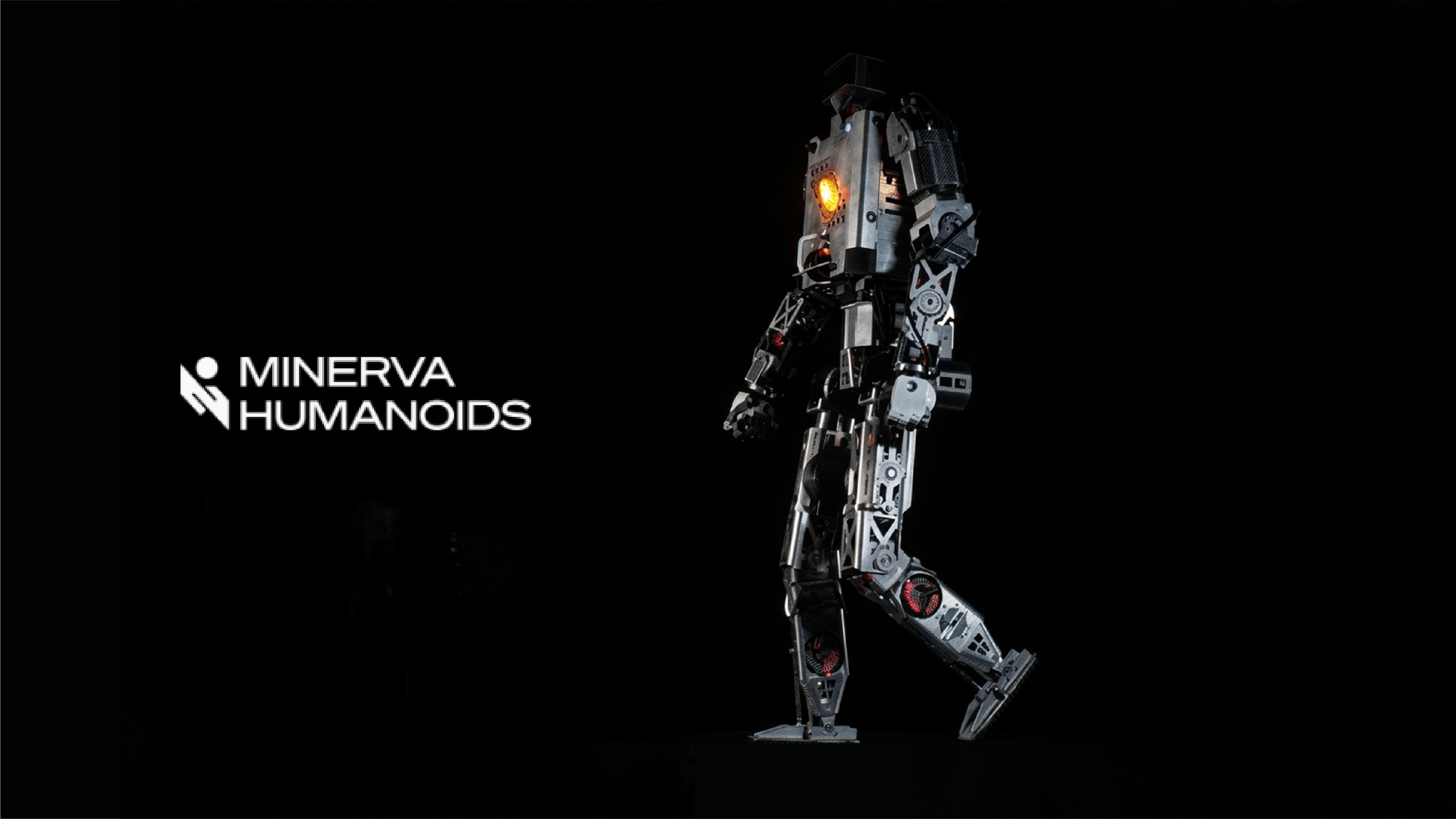
SAN FRANCISCO -- Minerva Humanoids has raised approximately $10 million in pre-seed funding to develop a humanoid robot designed for hazardous jobs, including work at oil and gas facilities, where trained specialists could operate machinery without entering dangerous environments.
The company announced the funding, emerging from stealth with its first robot, Roger. General Catalyst led the round, with Long Journey Ventures and Credo Ventures as co-leads. Other investors include Hugging Face, RunwayVC and Compound.
Roger is a semi-autonomous humanoid controlled through a virtual reality headset. A trained operator sees through the robot's cameras and directs tasks requiring human judgment, while Minerva's onboard AI handles balance, navigation and recovery from falls.
The approach differs from humanoid systems intended to perform industrial tasks with little direct human intervention. Minerva is developing Roger as a remotely operated machine that can use existing human skills in workplaces built around people.
The robot's design as an effort to make remote operation intuitive, according to Sandor Felber, Minerva co-founder and CEO. Roger’s arm geometry includes wrist axes arranged to resemble those of a human, while its sensing system provides multiple camera perspectives and thermal imaging.
The company says it developed Roger from an initial design into a walking prototype in about five months. Its software was tested on third-party robots while the custom hardware was being designed and assembled.
Minerva says its AI and software are developed primarily in the United States, while its initial prototypes are manufactured and assembled in Germany. The company plans to establish production in both countries.
Felber previously worked on humanoid AI research at MIT's Computer Science and Artificial Intelligence Laboratory and Tesla's Optimus program. Co-founder and Chief Technology Officer Maurice Rahme previously worked on Boston Dynamics' Stretch warehouse robot.
The startup plans to begin its first paid pilots this fall. It has not publicly identified the pilot customers, disclosed contract values or established that Roger is operating in routine commercial service.
More articles on this topic
71 articles ReportAmazon Unit Connects Nvidia Simulation With Robot Training and Deployment
 ReportUBTECH, FAW-Volkswagen Expand Humanoid Robot Work Into Logistics
 ReportMecka Raises $60 Million as Demand for Robot Training Data Grows
 ReportAsmech Starts Selling $6,999 Elephant Robotics Cobot in Japan
 ReportKUKA Taps TD SYNNEX to Expand Mobile Robot Sales in Europe
 ReportBoston Dynamics Puts Former Amazon Executive at Helm for Physical AI Push
 ReportHumansX launches Wuji dexterous hand and data glove in Japan
 ReportDoosan Gets $51M in State Support for Physical AI
 ReportTeradyne Invests in Bright Machines to Link Robots and Factory Data
 ReportPanasonic Targets Humanoid Robot Production by 2029
 ReportPersona AI Adds Daiwa House Fund as Industrial Humanoid Investor
 ReportRoboParty Targets Q4 Production for Open-Source RP1 Humanoid
BUSINESS NEWS WEEKLY LETTER
The Weekly Letter for Robotics Professionals, Summarizing the Most Important Industry Moves, Launches, Deals and Signals.