MIPS Unveils RISC-V Platform to Deliver Precise Motor Control Inside Humanoid Robot Joints
MIPS has added motor control, edge AI and deterministic networking to its open Actus platform, aiming to fit them on a single chip inside compact humanoid robot joints.

November 11, 2026 by Dr Maulik Vyas
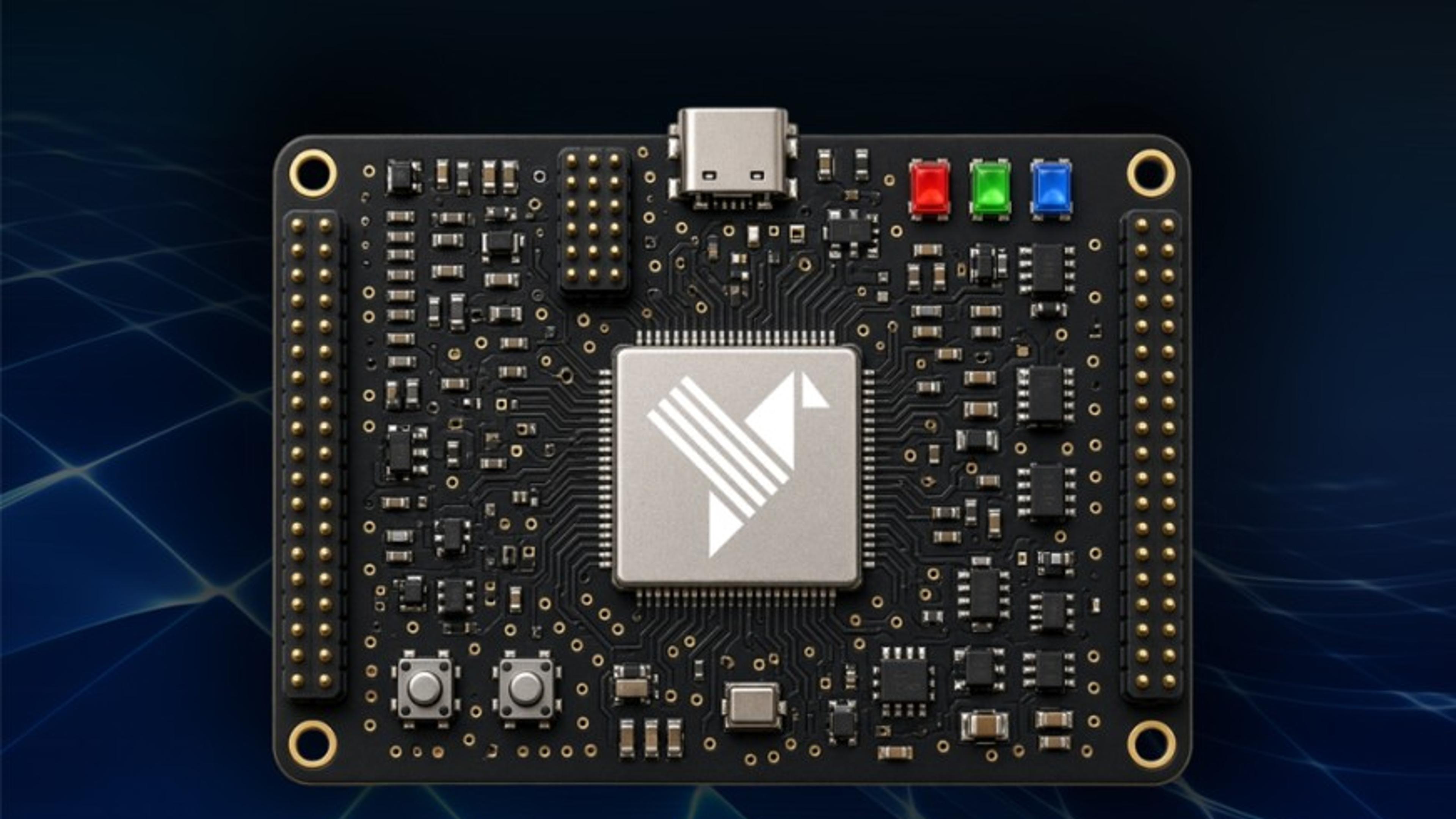
The processor company owned by GlobalFoundries MIPS has introduced new advances to its Actus platform. Actus is an open RISC-V design intended to handle motor control, local AI and networking inside the joints of humanoid robots. The company announced the update on Nov. 9 at electronica 2026 in Munich, where Actus is on display at Hall C3, Booth 540, through Nov. 13.
MIPS is targeting what it calls the last mile of a humanoid arm. The arm is the section from the elbow to the fingertips, where every joint must move smoothly while fitting within tight limits on space, weight, power and heat. Actus tries to meet those limits by placing motor control, edge inference and communications on a single chip instead of spreading them across several boards.
For motor control, Actus uses two Atlas M8500 real-time RISC-V processors that rely on hardware multithreading to avoid the delay of switching tasks whenever the motor needs attention. The platform also includes dedicated hardware for the trigonometric calculations behind field-oriented motor control, which MIPS says runs more than 16 times faster than standard software libraries.
Intelligence sits on the same chip, since a 512-bit vector processor allows each joint to run sensor fusion and predictive maintenance models locally. Hence, it can spot signs of wear without sending raw data to a central computer.
Networking relies on gigabit Ethernet with three-port Time-Sensitive Networking to deliver data on a fixed schedule so that position and torque information from each joint reaches the central controller predictably. A hardware security module with post-quantum cryptography protects every node, and the design supports functional safety requirements for production robots.
The platform is built on GlobalFoundries' FDX FD-SOI technology with on-chip MRAM, which MIPS says keeps power low while reducing board area and system cost.
MIPS CEO Sameer Wasson said robots will earn trust through the way they move autonomously and safely. Edward Wilford, senior research director at Omdia, said actuators and the networks connecting them pose some of the toughest engineering problems for robot makers. He also said that a single chip combining real-time motor control with deterministic networking addresses a clear gap in the market.
Actus is a reference platform, and the announcement does not name customers, pricing or production timelines. The performance figures also come from MIPS, thus how the platform performs inside a working humanoid robot has yet to be shown.
More articles on this topic
264 articles ReportWhat it Really Costs to Own a Personal Assistant Robot at Home
 ReportGoogle DeepMind Tests Gemini Robotics 2.5 on Mercedes-Benz Production Lines With 96 percent Success Rate
 ReportImpossible Metals Tests Autonomous Underwater Robot to Collect Minerals at 4,000-Metre Depth
 ReportWhy Industrial Data is Becoming the New Strategic Asset in the AI Race
 ReportRobotic Systems Are Bringing Greater Precision to Veterinary Surgery
 ReportEvery Brick, Even the Curves—Monumental Shows What Its Robots Can Build
 ReportServe Robotics Launches Physical AI Services to Supply Technology to Other Robot Makers
 ReportBoston Dynamics Debuts Stretch Gen 2 to Reduce Warehouse Downtime
 ReportHumanoids report news as Xinhua Unveils New robot Anchors
 ReportNEURA Robotics teams up with E.ON and enviaM to bring robots into power grid operations
 ReportChina’s LiberAI Reports 36% Success Rate for New Robot Model
 ReportNEURA Robotics Teams Up With E.ON to Train Humanoids for Power Grid Inspections
BUSINESS NEWS WEEKLY LETTER
The Weekly Letter for Robotics Professionals, Summarizing the Most Important Industry Moves, Launches, Deals and Signals.