Foundation’s Humanoid Robot Push Expands Toward Battlefield Use
The startup says it has deployed about 10 humanoid robots in industrial and military tests, including work with the Air Force, pilot programs in Ukraine to move objects, and automotive trials of racking and unracking.

September 15, 2026 by Artem
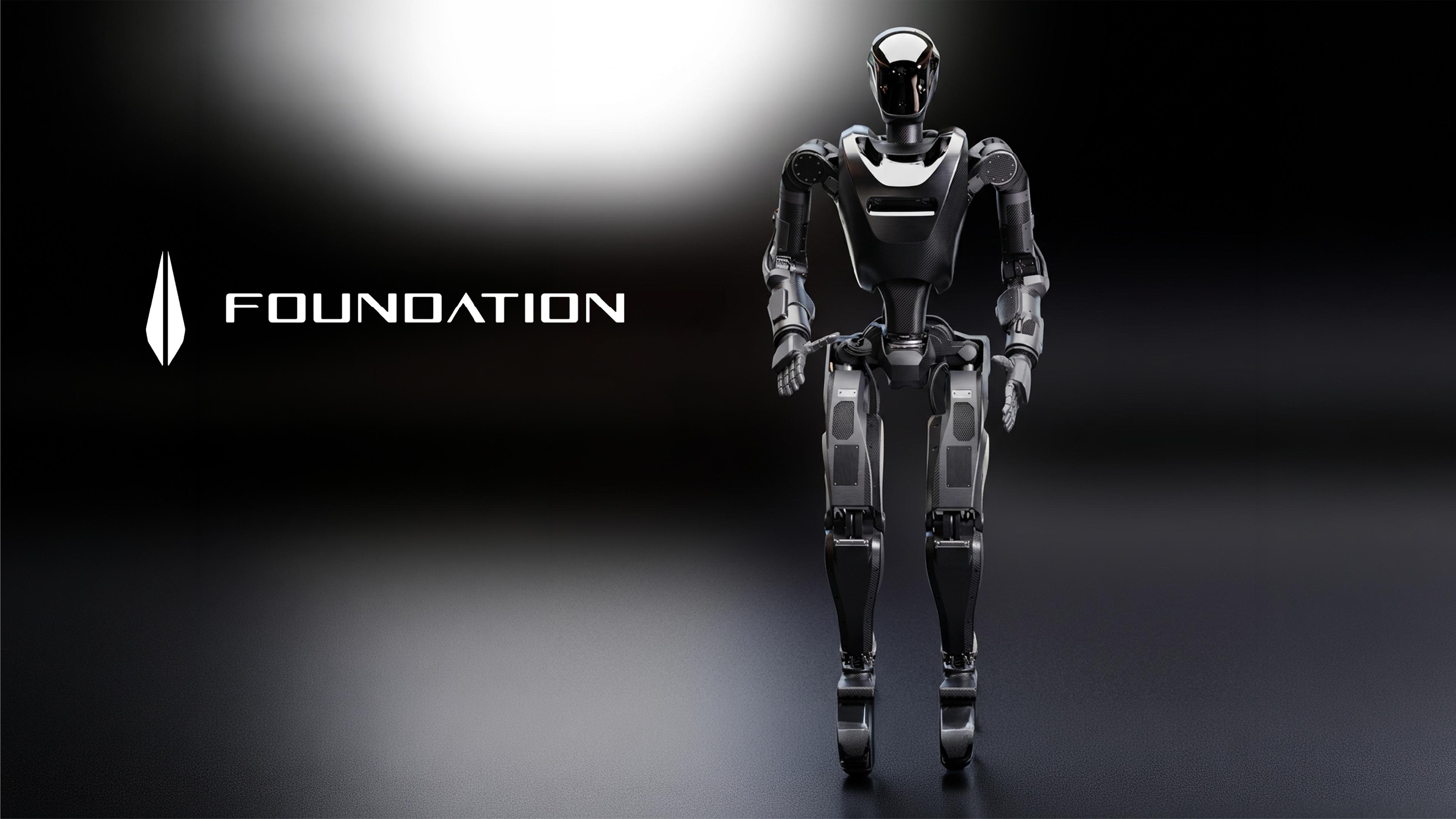
SAN FRANCISCO — Foundation Future Industries is developing its Phantom humanoid robot for heavy industrial and military work, including potential battlefield roles, as the U.S. defense sector invests in autonomous systems.
Foundation is connected to about $24 million in Pentagon contract work and is testing robots with U.S. military organizations, The Wall Street Journal reported, citing co-founder and CEO Sankaet Pathak. Although the origins of the reported $24 million in Pentagon-related contracts remain unclear.
The contracts were not necessarily awarded directly to Foundation. Wired reported in July that the company identified two contracts inherited through its acquisition of Boardwalk Robotics and three involving the Florida Institute for Human & Machine Cognition. Wired found no indication that Foundation had independently received new government funding associated with the contracts.
Founded in 2024 in San Francisco, California,, the company acquired Boardwalk later that year. Its investors include Tribe Capital, and Eric Trump serves as chief strategy adviser, according to the Journal.
Pathak said Foundation has deployed about 10 humanoid robots in industrial and military tests — work with the Air Force, pilot programs in Ukraine to move objects, and automotive trials of racking and unracking. The organizations, locations and terms of those projects were not disclosed, preventing an independent assessment of whether they are temporary tests or regular commercial deployments.
Foundation leases its robots for $100,000 per unit annually, Pathak said.
The current Phantom MK-1 stands 1.8 meters tall, weighs about 80 kilograms and can carry as much as 40 kilograms, according to Foundation’s product page. The manufacturer lists a maximum speed of 1.7 meters per second and 29 degrees of freedom. Those specifications have not been independently tested.
Foundation is developing a second-generation robot using processors from Advanced Micro Devices. The companies announced their collaboration in July, saying the Phantom MK-2 would use AMD computing technology for perception, movement and control.
Pathak said Foundation’s San Francisco site can manufacture 300–500 robots a year; another facility is being built. He acknowledged that the company’s earlier target of producing 10,000 robots by the end of 2026 was overly ambitious.
Foundation has not disclosed which groups are using its robots, released test results, or demonstrated autonomous combat capability.
More articles on this topic
76 articles ReportRobots vs. Drones: What Is the Real Difference?
 ReportHow Animals Inspire Better Robots
 ReportFrom Toys to Tools: The Coolest Robots in Schools Today
 ReportThis Tiny Robot Hops Like a Frog And Swims Using Elastic Limbs
 ReportJapan Tests Robot Bins at Tokyo’s Busiest Railway Station
 ReportAmazon Unit Connects Nvidia Simulation With Robot Training and Deployment
 ReportUBTECH, FAW-Volkswagen Expand Humanoid Robot Work Into Logistics
 ReportMecka Raises $60 Million as Demand for Robot Training Data Grows
 ReportMinerva Humanoids Raises $10 Million for Robots Built for Dangerous Jobs
 ReportAsmech Starts Selling $6,999 Elephant Robotics Cobot in Japan
 ReportKUKA Taps TD SYNNEX to Expand Mobile Robot Sales in Europe
 ReportBoston Dynamics Puts Former Amazon Executive at Helm for Physical AI Push
BUSINESS NEWS WEEKLY LETTER
The Weekly Letter for Robotics Professionals, Summarizing the Most Important Industry Moves, Launches, Deals and Signals.