Comparisons · Robot24.com Original
Bear Robotics Servi Plus vs. UBTECH CADEBOT L100
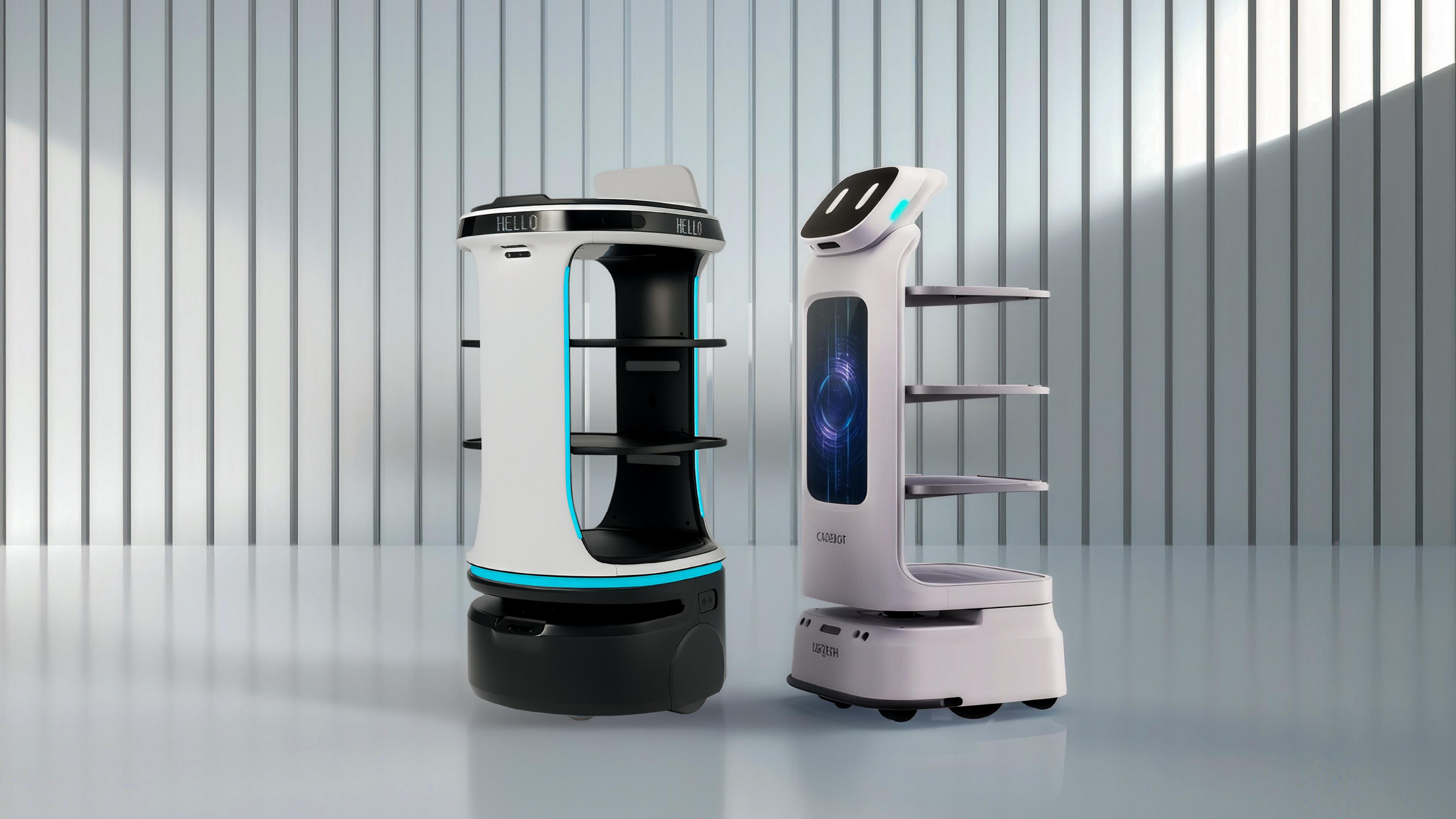
Bear Robotics Servi Plus and UBTECH CADEBOT L100 are autonomous service robots targeting restaurants, hospitality and other commercial environments. Based on ROBOT24.com market-research data records, this comparison examines their differences in speed, carrying capacity, runtime, navigation, perception and service capabilities.

October 9, 2026 by Business Desk Team
Introduction
Bear Robotics Servi Plus and UBTECH CADEBOT L100 are both listed in the ROBOT24.com market-research data record and are compared here using the recorded specifications and uses.
Bear Robotics Servi Plus is listed as an autonomous hospitality service robot, where use cases include restaurants, hotels, senior living, stadiums and high-volume service. UBTECH CADEBOT L100 is listed as an autonomous indoor delivery robot, where use cases include food service, hospitality, retail, healthcare and logistics.
The primary documented variation exists in their layout, specifications, autonomy stack, carrying capacity and level of technical detail observed in the ROBOT24.com marketresearch data repositories.
How They Compare
At a Glance
| Metric | Bear Robotics Servi Plus | UBTECH CADEBOT L100 |
|---|---|---|
| Robot type | Autonomous hospitality service robot | Autonomous indoor delivery robot |
| Use cases | Restaurants; hotels; senior living; stadiums; high-volume service | Food service; hospitality; retail; healthcare; logistics |
| Dimensions | 533 x 584 x 1219 mm | 484 x 551 x 1252 mm |
| Weight | ~51 kg | 55 kg |
| Payload / capacity | 40 kg; over 16 entrees | 40 kg; 4 trays |
| Maximum speed | 1.2 m/s | 0-0.8 m/s |
| Runtime | 8-12 hours | Up to 8 hours |
| Charging time | ~4 hours | ~4 hours |
| Navigation | LiDAR SLAM; camera navigation; multi-destination routing | Laser SLAM; route planning; cruise mode; autonomous charging |
| Sensors / perception | LiDAR; RGB/depth cameras; collision and cliff sensors | LiDAR; RGB; depth; ultrasonic; cliff/collision sensors; IMU |
| Special capability | 2-4 configurable trays; active suspension; fleet orchestration | 21.5-inch advertising display; 270 deg open trays; fleet/cloud management |
| Availability | Commercially available | Commercially available |
| Price | USD $50,000-100,000 | USD $8,280-10,000 |
How They Compare
By application, the Bear Robotics Servi Plus is recorded for restaurants, hotels, senior living, stadiums and high-volume service, while the UBTECH CADEBOT L100 is recorded for food service, hospitality, retail, healthcare and logistics. Their primary overlap is in the food service and hospitality spaces, while the ROBOT24.com market-research data records show some variance in their other commercial uses.
According to the recorded performance specs, Bear Robotics Servi Plus has a weight of around 51 kg as compared to 55 kg for UBTECH CADEBOT L100. Servi Plus has a top speed of 1.2 m/s as compared to CADEBOT L100 at a top speed of 0.8 m/s. Servi Plus is rated to run for 8-12 hours as compared to a maximum of eight hours for CADEBOT L100. Both are listed to have a charging time of about four hours.
The payloads for the two robots were listed as 40 kg, but whether the payloads were in a single or dual mounting was a matter of how the robots were recorded in the ROBOT24.com market-research data records. Servi Plus was recorded as carrying more than 16 entrees with two to four configurable trays. CADEBOT L100 was recorded with four trays.
Autonomy & Perception: Bear Robotics Servi Plus Records: With LiDAR SLAM, camera navigation and multi-destination routing LiDAR, RGB/depth cameras, collision and cliff sensors UBTECH CADEBOT L100 Records: With laser SLAM, route planning, cruise mode and autonomous charging LiDAR, RGB and depth sensing, ultrasonic sensors, cliff and collision sensors, and an IMU.
Their supplementary features are the result of their respective service needs. Servi Plus is equipped with active suspension and fleet orchestration, while CADEBOT L100 comes with a 21.5-inch advertising display, 270 open trays, and fleet and cloud management.
Summary
Bear Robotics Servi Plus and UBTECH CADEBOT L100 fall under the general classification of autonomous service-robot, but the ROBOT24.com market-research data says that their respective averages differ in the areas of speed, runtime, navigation and perception, tray configuration and commercial service features. Please use the value above only as a direct comparison of the current ROBOT24.com market-research data records.
More articles on this topic
83 articles ReportRichtech DUST-E S vs. Gausium Phantas
 ReportEngineAI SE01 vs. AGIBOT RAISE A1ReportRichtech DUST-E S vs. KEENON KLEENBOT C20
 ReportRobint Rhino vs. OrionStar CleaniBot S55 Pro
 ReportECOVACS DEEBOT X8 PRO OMNI vs. eufy X10 Pro Omni
 ReportUnitree R1 EDU vs. Booster K1
 ReportCleanfix S170 Navi vs. OrionStar CleaniBot K1
 ReportCleanfix S170 Navi vs. Nexaro NR 1700
 ReportReeman Nurse vs. Robotise JEEVES
 ReportBear Robotics Servi Plus vs. OrionStar LuckiBot Pro
 ReportBear Robotics Servi Plus vs. KEENON DINERBOT T10
 ReportUBTECH Cruzr 1S vs. Hantewin S30
Free Weekly
BUSINESS NEWS WEEKLY LETTER
The Weekly Letter for Robotics Professionals, Summarizing the Most Important Industry Moves, Launches, Deals and Signals.
120,000+ robotics professionals follow Robot24.com