Unitree G1 EDU vs. Booster K1
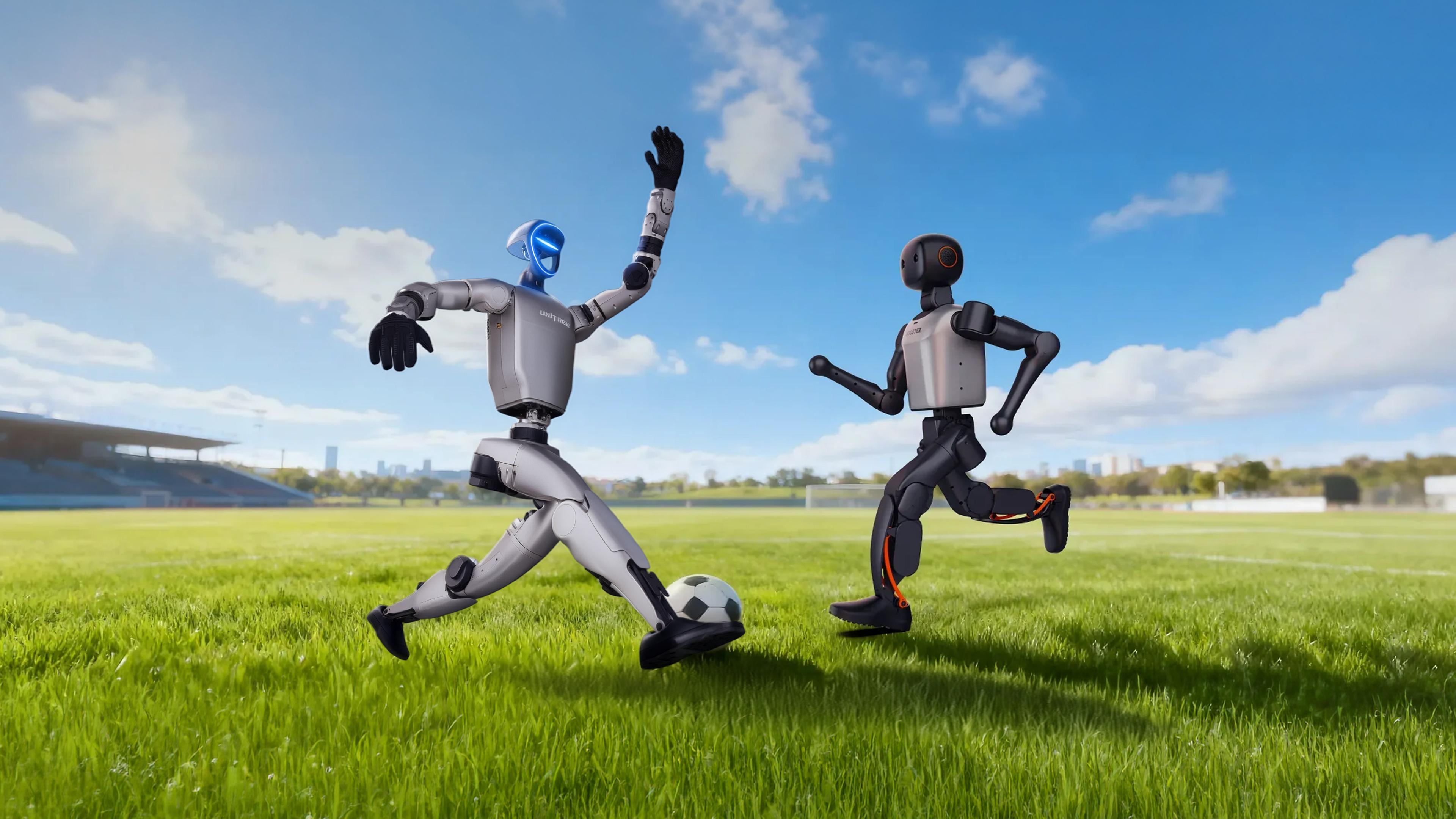
The Unitree G1 EDU and Booster K1 bring different strengths to humanoid robotics. While the G1 EDU emphasizes configurable hardware, manipulation research and embodied AI, the K1 focuses on compact design, programmable locomotion and accessible development tools. This comparison examines their capabilities, computing, runtime and research applications to help identify the right platform for each project.

October 26, 2026 by Business Desk Team
Introduction
Humanoid robots are headed out of labs and into hands-on experimentation, AI development, and human-robot interaction. The Unitree G1 EDU and Booster K1 provide two ways into this future: one focused on adaptable humanoid research and manipulation, the other designed to bring embodied development, locomotion, and educational experiments into your hands.
The Unitree G1 EDU focuses on secondary development, flexible joint configurations, and optional dexterous hands for manipulation research. The Booster K1 pairs a small size with programmable mobility, intelligent sensing, and a broad range of pre-installed applications.
The key factors will be which platform better works with the proposed research process, the development environment, and the degree of hardware customization.
At a Glance
| Metric | Unitree G1 EDU | Booster K1 |
|---|---|---|
| Robot type | Programmable humanoid research platform | Compact humanoid robotics development platform |
| Best-fit use cases | Humanoid locomotion, embodied AI, manipulation research and reinforcement learning | Education, soccer robotics, locomotion research and interactive development |
| Dimensions | 1,320 × 450 × 200 mm (standing; H × W × D) | Approx. 950 mm standing height |
| Weight | Approx. 35 kg+ with battery | Approx. 19.5 kg |
| Degrees of freedom (DoF) | 23–43, depending on configuration | 22 across the head, arms and legs |
| Arm load capacity | Approx. 3 kg maximum for the EDU arm, depending on extension and posture | No directly comparable arm payload figure established in the cited specification |
| Runtime / charging | Approx. 2 h stated battery life; varies by operation and configuration | Geek: 20 min; Education/Professional: up to 70 min at the specified test speed of 1.1 m/s; charging up to 2 h |
| Navigation / sensing | Depth camera, 3D LiDAR and microphone array | Stereo/depth camera, 9-axis IMU and microphone array; perception configuration varies by edition |
| Computing | 8-core CPU; optional high-compute modules, including Orin-based options | Geek: 48 TOPS; Education: 117 TOPS; Professional: 200 TOPS |
| Locomotion | Humanoid movement with configurable joint architecture and developer control | Forward/backward and lateral walking, turning, balance recovery and compound gaits |
| Software / development | Secondary development supported; configuration-dependent hardware and computing options | Python/C++ SDK support, Agent framework, Booster Studio and simulation-to-robot development workflows |
| Distinctive capabilities | Optional three-finger force-controlled dexterous hands, additional wrist and waist axes, and extensive joint configuration | Lightweight design, built-in interactive Agents, autonomous get-up capability and an accessible development ecosystem |
| Key limitation / caveat | Confirm the exact EDU configuration, optional hands, waist joints and computing module before comparing specifications | Battery life, computing performance and warranty vary by edition; published walking-speed figures differ by test conditions |
Sources: official G1 specs from Unitree, official K1 specs from Booster. Performance figures are manufacturer-provided and vary by configuration.
How They Compare
Research focus and operational role: The Unitree G1 EDU is an appropriate robot for communities working on humanoid control, reinforcement learning and manipulation. Customizable joints and optional dexterous hands expand the possibilities for experiments involving object handling and manipulation. The Booster K1 is a robot built for embodied AI education, research in locomotion, and interactive applications with its embedded Agents supporting soccer, dance, and dialogue.
Hardware and manipulation: The G1 EDU can achieve 23-43 degrees of freedom (depending on which configuration you choose), versus 22 degrees of freedom in the K1. But just having more degrees of freedom does not equate to better performance. For manipulation research, the G1 EDU has optional dexterous hands, more wrist axes and a waist configuration. The K1's light 19.5kg body makes transportation and configuration simple across classrooms, laboratories and competitions.
Computing and development: Unitree has an eight-core CPU, as well as optional high-compute modules for the G1 EDU. Booster has three levels of its K1 with claimed AI computing capabilities of 48, 117 and 200 TOPS. Its development environment supports Python and C++, as well as its Agent framework and simulation tools to enable a link between virtual testing and physical-robot realisation. These figures should be weighed against access to software, supported frameworks, integration burdens and the actual computation hardware included in the purchase.
Locomotion and endurance: Both units support humanoid type walking and running, but K1 makes an explicit claim to support (horizontal) lateral walking in addition. Booster currently states the peak walking speed on its product page as 2 m/sec and (on the spec sheet) as 1.1 m/sec under specified test conditions, and its 'Education' and 'Professional' editions are rated for 70 minutes at this specified speed compared to 20 minutes for the Geek. Unitree lists 2 hours battery life for the G1 'EDU' model, though endurance will depend on how far it walks, what payloads it carries, what computing it uses and how it is configured - not all of these figures are directly comparable.
Deployment and usability: The K1's smaller profile and integrated interactive features could make it easier to use for demos, training and repeatable development activities. The G1 EDU provides a more configurable research platform but its optional accessories and compute options will need to be specified carefully. Consider SDK availability and support, documentation, sensor interfaces, safety features, maintenance support and existing robotics suite integration.
Important Qualification
Unitree G1 EDU: The 23-43 DoF stated is the range of various hardware variations, not one default spec. Dexterous hands, more wrist & waist axes, and high-compute modules might be upgrades. And its arm payload figure will be related to arm extension and stance.
Booster K1: Geek, Education and Professional editions all run on the same 22-DoF body, but vary in battery and computing spec. The maker publishes a variety of walking-speed and runtime specifications under different test conditions, so check which spec applies before publishing.
No overall performance winner for either specification sheet. The actual test results will vary according to the task, the hardware configuration, the control software, the computer and the environment.
Summary
Select the Unitree G1 EDU if robotics research emphasizes customizable humanoid chassis, advanced manipulation testbeds and optional dexterous Hand development. Select the Booster K1 if a lightweight platform, built-in interactive capabilities and a well-defined development ecosystem are the best matches for your curriculum, walking and embodiment research, and prototyping of AI working inside robots.
The choice should be driven by the needs of the research tasks, the tools provided (or not provided), software flexibility, run-time and support issues. The best way to determine which platform will work best is to have a pilot study using the algorithms, sensors and manipulation tasks of interest.
This comparison is based on ROBOT24.com market-research data records and manufacturer-reported specifications rather than controlled performance testing.
More articles on this topic
86 articles ReportRichtech DUST-E S vs. Gausium Phantas
 ReportEngineAI SE01 vs. AGIBOT RAISE A1ReportRichtech DUST-E S vs. KEENON KLEENBOT C20
 ReportRobint Rhino vs. OrionStar CleaniBot S55 Pro
 ReportNilfisk Liberty SC50 vs. PUDU CC1
 ReportHusqvarna Automower 305 vs. Robomow RK 1000
 ReportMirokaï vs. NUWA Kebbi
 ReportDEEPRobotics LYNX M20 Pro vs. Unitree B2-W
 ReportECOVACS DEEBOT X8 PRO OMNI vs. eufy X10 Pro Omni
 ReportCleanfix S170 Navi vs. OrionStar CleaniBot K1
 ReportCleanfix S170 Navi vs. Nexaro NR 1700
 ReportReeman Nurse vs. Robotise JEEVES
BUSINESS NEWS WEEKLY LETTER
The Weekly Letter for Robotics Professionals, Summarizing the Most Important Industry Moves, Launches, Deals and Signals.