Husqvarna Automower 305 vs. Robomow RK 1000
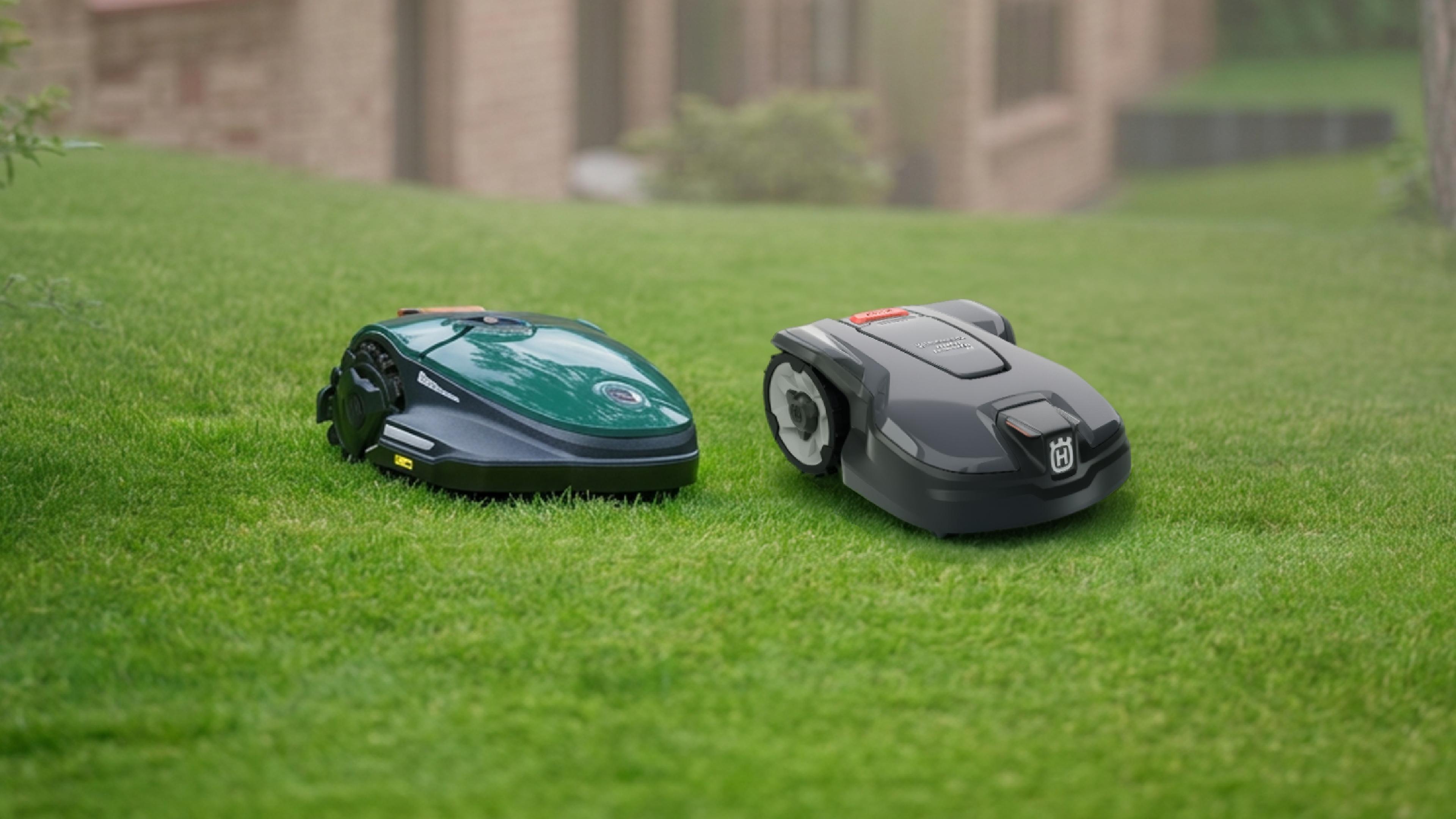
Husqvarna Automower 305 and Robomow RK 1000 are robotic lawnmowers compared here on ability to mow lawn, ability to cope with obstacles, cutting performance, battery life and ability to mow multiple zones.

October 27, 2026 by Business Desk Team
Introduction
The Husqvarna Automower 305 and Robomow RK 1000 are wire-guided robotic lawn mowers designed to maintain residential lawns with minimal manual intervention. Both models can cut down on manual work with automatic charging and the ability to set individual mowing times with fully automatic cutting systems. While the two devices differ in the size of the garden, the handling of slopes, the ability to change the cutting height and zones, which enables them to be used for different garden sizes, who they are better for.
At a Glance
| Comparison | Husqvarna Automower 305 | Robomow RK 1000 |
|---|---|---|
| Manufacturer | Husqvarna | Robomow |
| Recommended lawn area | Up to 600 m² | Up to 1,000 m² |
| Boundary system | Physical boundary wire | Perimeter wire |
| Cutting width | 22 cm | 21 cm |
| Cutting-height range | 20–50 mm | 15–100 mm |
| Maximum slope inside the mowing area | 40% | 45% |
| Maximum slope at boundary wire | 15% | 20% |
| Mowing time per charge | Approximately 60 minutes | Approximately 50–60 minutes |
| Charging time | Approximately 60 minutes | Approximately 60–120 minutes |
| Battery | 18 V lithium-ion, 2.1 Ah | 18.5 V lithium-ion, 2.8 Ah |
| Navigation and zone management | Guide wire, automatic passage handling and secondary-area support | Up to four sub-zones and two separate zones |
| User interface | Keypad, display and Bluetooth app control | 4.3-inch colour touchscreen and app control |
| Noise level | 59 dB(A) perceived sound level | Below 60 dB, according to manufacturer specifications |
| Cutting system | Three pivoting razor blades | Staggered blades and floating mower deck |
| Automatic charging | Yes | Yes |
Specs are derived from the manufacturers published product data. Exact specifications and features may vary by model revision and geographical location.
How They Compare
1. Lawn Coverage and Operating Capacity
The most obvious difference is the sizing of lawn which each lawnmower was created to cater for. The Husqvarna Automower 305 is capable of accommodating lawns of a maximum of 600 m2 and therefore makes it a prime possibility for small sized residential gardens. Moving up in working area capacity, the Robomow RK 1000 is now capable of maintaining up to 1,000 m2.
That extra capacity might also make the RK 1000 more viable for lawns with more extensive grassed areas. But do not take the recommended coverage as a forecast mowing time, as the shape of the lawn, rates of grass growth, trees and other obstacles, slopes and operating hours all influence results.
2. Terrain and Slope Management
Both mowers are rated for use on hilly terrain although the RK 1000 has a higher slope rating. Robomow says the mower is capable of climbing a slope of up to 45% in the mowing area and up to 20% at the boundary wire. The Automower 305 is rated for up to 40% on a slope within the installation area, and 15% at the boundary wire.
And these numbers make the RK 1000 slightly more effective on steeper slopes. However, a slope rating does not by itself guarantee traction in wet grass, performance on uneven terrain or dependability across all lawn configurations. The actual ground surface and the positioning of the boundary wire are still factors.
3. Cutting Height and Lawn Finish
With a cutting height range of 20-50 mm, the Automower 305 uses three pivoting razor blades. The cutting system is built for regular lawn care, with small amounts of grass being cut and removed to create an even finish.
The RK 1000 offers a much wider adjustment range of 15-100 mm. This allows you greater choice in choosing a lower or higher finishing height, depending on the grass type and lawn. Designed to cope with uneven ground, the floating mower deck and uneven blade pairs ensure cutting performance.
The RK 1000 is thus more flexible in terms of grass-cutting height, whereas the Automower 305 covers more of a standard lawn area. No specification by itself means one mower will give a better finish than the other; the type of grass, blade condition and cutting frequency are just as important.
4. Navigation and Multi-Zone Flexibility
The Automower 305 navigates around the installation using guide-wire navigation and a physical boundary wire. It also has features such as automatic passage handling and support for secondary areas, making it capable of navigating a passage or multiple areas if installed accordingly.
The RK 1000 also uses a perimeter-wire setup, but with more focus on the zones. The specs on the RK 1000 state that it supports as many as four sub-zones and two separate zones, which can be adjusted in the app or on the touchscreen.
If your garden is divided into multiple separate mowing zones, the RK 1000's listed zone configuration could be advantageous. But for a straightforward, continuous lawn, you might not see a big difference.
5. Battery, Charging and Energy Usage
Husqvarna's current UK listed automowers specifications include a 2.1 Ah li-ion battery and around 60 mins mowing time per charge and an off-the-chargemap around 60 min charge time.
Robomow states 2.8 Ah li-ion for the RK 1000 with approximately 50-60 minutes mowing and 60-120 minutes charging.
Despite the battery capacity quoted by the RK 1000 being higher, the amp-hour figures do not alone help determine whether the mower is more or less power-efficient or productive. Battery voltage, power used, terrain and charging patterns all have a bearing on the calculation. Husqvarna's monthly energy usage is reported as 5kWh, with Robomow quoting around 2.8kWh (best viewed with a pinch of salt as test and operating assumptions vary).
6. Controls, Scheduling & everyday usability
The Automower 305 utilizes onboard keypad and display control along with app control over Bluetooth. This interface appeals to those who prefer a Mowing Schedule and setting adjustments without a more sophisticated control panel.
The RK 1000 features 4.3 inch HD Colour Touch Screen and App control. Offering a larger on-board screen interface for programming and setting up multiple zone settings.
The decision is mainly down to taste and workflow. Those that require colour touchscreen and larger zone control systems, will most likely prefer the RK 1000 over the simplicity of the Automower 305's controls for a smaller garden.
7. Cutting Near Lawn Edges
Robomow touts the RK series' edge-cutting abilities The blade configuration and cutting design of its mowers are designed to ensure as little grass as possible is left uncut along the edges of your lawn.
Both models employ the Automower 305's three-blade cutting system for the necessary regular maintenance. However it should be recognised neither mower is capable of eliminating all cutting with hand tools. The end result is a direct reflection of the boundary lines, perimeter wire line placement and the configuration of paths, walls and higher levels.
For buyers worried about the finishing work around borders, edging performance is something to compare to the real set up of the garden rather than sales talk.
Important Qualification
Comparison based on manufacturer published specifications, not a controlled side-by-side performance test. Coverage, slope rating, battery life and noise level ratings are not guaranteed to be measured in the same tests or environmental conditions. The Automower 305 has also been released in a few different product revisions and regional versions, so ensure that you double-check the model number before comparing specs or ordering accessories.
Summary
The Husqvarna Automower 305 is aimed at small domestic gardens with a recommended area of 600 m2, an automatic charging function and a narrow cutting system. The Robomow RK 1000 is suitable for larger gardens with an area up to 1000 m2, a broader cut height adjustment, a higher claimed slope ability and more zones.
In lawns of manageable size, with a low level of complexity, the Automower 305 should do what you need without the extra capacity of the RK 1000. The RK 1000 would have the edge on paper for the larger and more segmented gardens. As ever, size, shape, boundary configuration and owner's control requirement come into play.
This comparison is based on ROBOT24.com market-research data records and manufacturer-reported specifications rather than controlled performance testing.
More articles on this topic
86 articles ReportRichtech DUST-E S vs. Gausium Phantas
 ReportEngineAI SE01 vs. AGIBOT RAISE A1ReportRichtech DUST-E S vs. KEENON KLEENBOT C20
 ReportRobint Rhino vs. OrionStar CleaniBot S55 Pro
 ReportNilfisk Liberty SC50 vs. PUDU CC1
 ReportMirokaï vs. NUWA Kebbi
 ReportUnitree G1 EDU vs. Booster K1
 ReportDEEPRobotics LYNX M20 Pro vs. Unitree B2-W
 ReportECOVACS DEEBOT X8 PRO OMNI vs. eufy X10 Pro Omni
 ReportCleanfix S170 Navi vs. OrionStar CleaniBot K1
 ReportCleanfix S170 Navi vs. Nexaro NR 1700
 ReportReeman Nurse vs. Robotise JEEVES
BUSINESS NEWS WEEKLY LETTER
The Weekly Letter for Robotics Professionals, Summarizing the Most Important Industry Moves, Launches, Deals and Signals.