Construction Robotics Gains Ground With Shimizu Deal, Origin Funding
Shimizu is backing Noble Machines' in developing humanoid robots, while Origin has raised $20 million to scale up construction robots that perform interior finishing.

October 16, 2026 by Artem
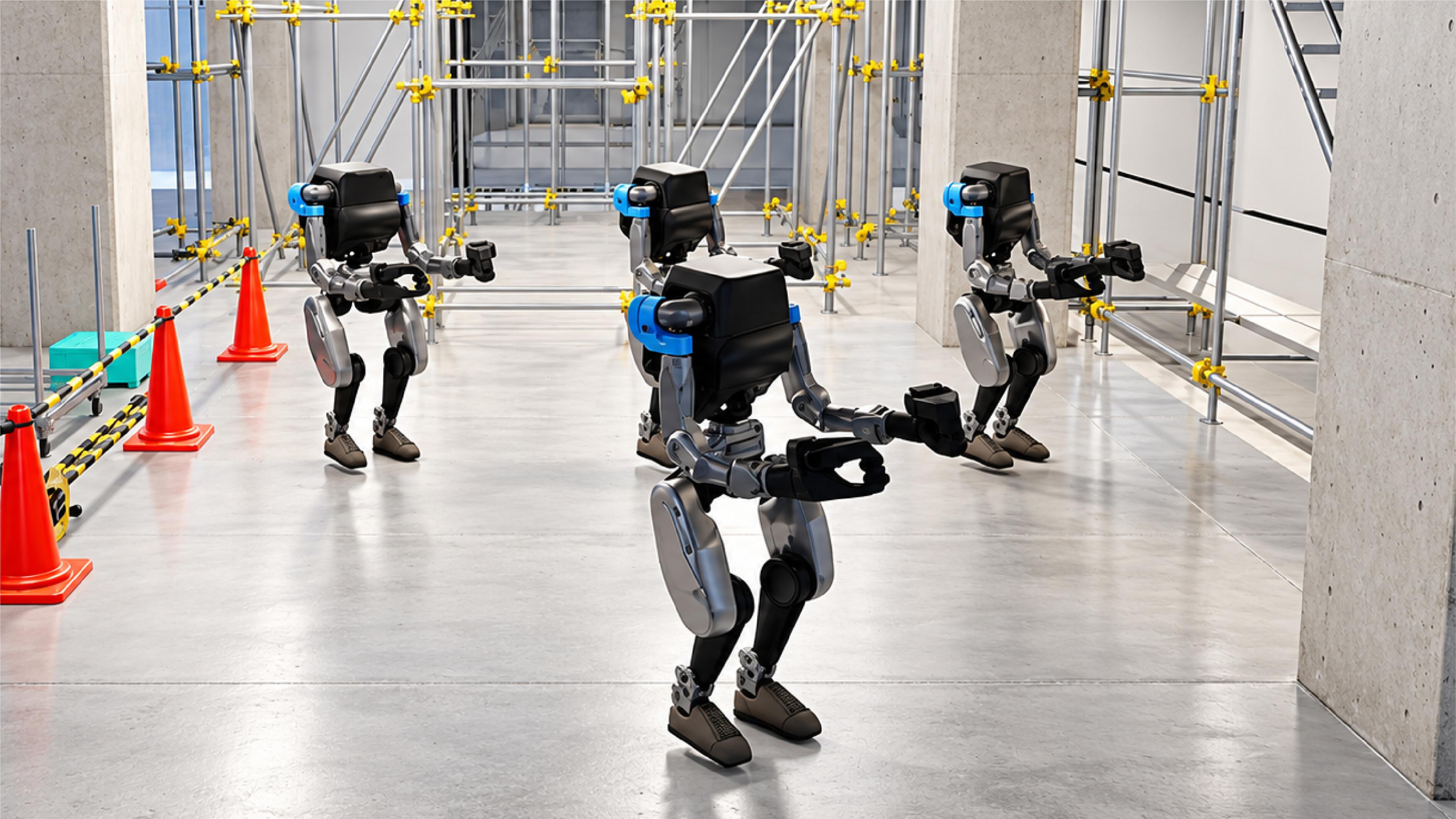
Shimizu, Origin Construction Robots Target Tough Jobs Differently
Shimizu is backing Noble Machines' in developing humanoid robots, while Origin has raised $20 million to scale up construction robots that perform interior finishing.
Japan's Shimizu Corp. has invested in U.S. robotics startup Noble Machines to develop humanoids for construction sites, while Origin has secured $20 million in funding to expand robots already working on interior finishing jobs.
The announcements on Oct. 15 and 16 introduced fresh investment into two distinct construction automation approaches. Shimizu invests in adaptable humanoids, while Origin is concentrating on interior finishing work using a wheeled robots with detachable tools.
Shimizu announced Oct. 16 that it had completed an investment in Silicon Valley-based Noble Machines and begun a development collaboration. The companies plan to combine Noble Machines' robotics hardware and software with Shimizu's construction expertise to automate physically demanding work with safety risks. The Japanese contractor chose not to disclose the investment amount.
Noble Machines develops the MOBY series of humanoid robots, along with control systems and software intended for demanding environments. Shimizu will modify the MOBY humanoids for site use, adapting them to changing equipment and materials.
The partners intend to begin virtual simulations by the end of 2026, using Shimizu's building information modeling and construction data. Initial tasks will be to move materials and equipment, patrol sites, and navigate complex terrain.
Physical testing at construction sites is scheduled to begin in spring 2027. The partnership remains at the development stage. Shimizu has not announced commercial robot deployments, customer orders or performance results from construction-site trials.
Origin Targets Interior Construction
California-based Origin is taking a different route, with robots already operating on construction projects.
According to Business Standard, the startup emerged from stealth on October 15 with $20 million in total funding, co-led by Accel and Zacua Ventures. Other investors include Unilazer Ventures, Schema Ventures and Z21.
Its OG-1 robot moves on a three-wheeled base and handles interchangeable tools for applying joint compound and sanding surfaces before priming walls. The machine can reach heights of approximately 4.3 meters while relying on force feedback to maintain pressure against surfaces during sanding.
Origin says its Construction Action Model combines task planning, learned action policies and feedback-based control. The system is trained using simulation and data collected from construction sites.
The company says OG‑1 robots have been installed at commercial sites, apartment complexes, data centers, hotels and warehouses, and the first machines reached New York construction projects ten months after the company was founded in early 2025.
According to the manufacturer, the robots complete walls three times faster than human crews while maintaining comparable quality, though they still require human assistance.
OG-1 requires human assistance. Though the robot performs its wall-finishing operations autonomously, a construction worker helps prepare the site, selects work areas, supplies materials and handles maintenance, even though the robot.
Origin plans to use the funding to expand its fleet and conduct additional customer pilots in the United States and Europe. It is targeting 150 deployed robots by the end of 2027 and intends to add tasks including drywall installation, taping, drilling and conduit installation.
Different Robots, Similar Task Challenges
Shimizu and Origin face different technical challenges, but both must show that their machines can work consistently in variable site conditions.
Humanoids could potentially use existing tools and move through spaces designed for workers, but handling varied tasks requires reliable mobility, manipulation and control. Shimizu's planned trials will let it test those capabilities outside simulation.
Origin has a narrower initial workload, allowing contractors to compare wall area, finish quality and labor needs with traditional methods.
The company offers OG-1 as robot-as-a-service instead of selling the machines. Origin claims the system can reduce contractors' costs, although independently verified operating-cost data have not been published.
For both approaches, the commercial trials will examine factors beyond robot travel speed, such as finishing quality and operating costs. Contractors must account for supervision, equipment downtime, site preparation, maintenance, and useful work per shift.
Origin has reported early job-site operations and set an expansion target. Shimizu's physical testing is still months away. Neither announcement shows whether the systems will produce lasting cost savings on most projects.
More articles on this topic
84 articles ReportRice Robotics Debuts Education Humanoid, Joins HK’s AI Hub
 ReportCerence AI, Geely Extend Partnership to Develop Humanoid Robots
 ReportTesollo Boosts Production as Robotic Hand Sales Near 1,000
 ReportHesai Targets Physical AI Training With Kosmo Camera and Cloud Platform
 ReportChina's LinkerBot Explores UAE Partnerships for Robot Assembly
 ReportAstribot Raises $150 Million at $2.2 Billion Valuation
 ReportToro Expands Lawn Mower Lineup With New Autonomous Model
 ReportU.S. Leads in Robotics AI but Trails China in Deployment, Commission Says
 ReportPromise Robotics Lands D.R. Horton Arizona Deal for 1,250 Homes
 ReportArchon Robotics Presents Whole-Body AI Control Across Humanoids
 ReportGoogle DeepMind Plans Robotics Hardware Lab in Massachusetts
 ReportUltra Raises $50M Series A to Scale Warehouse Robots
BUSINESS NEWS WEEKLY LETTER
The Weekly Letter for Robotics Professionals, Summarizing the Most Important Industry Moves, Launches, Deals and Signals.