China’s Wall-Climbing Robots Take On Rust, Paint And Inspection Work
The Tianjin company says its magnetic wall-climbing machines are being used for inspection, rust removal and painting work in petrochemical and shipbuilding applications.

September 24, 2026 by Vaishnavi
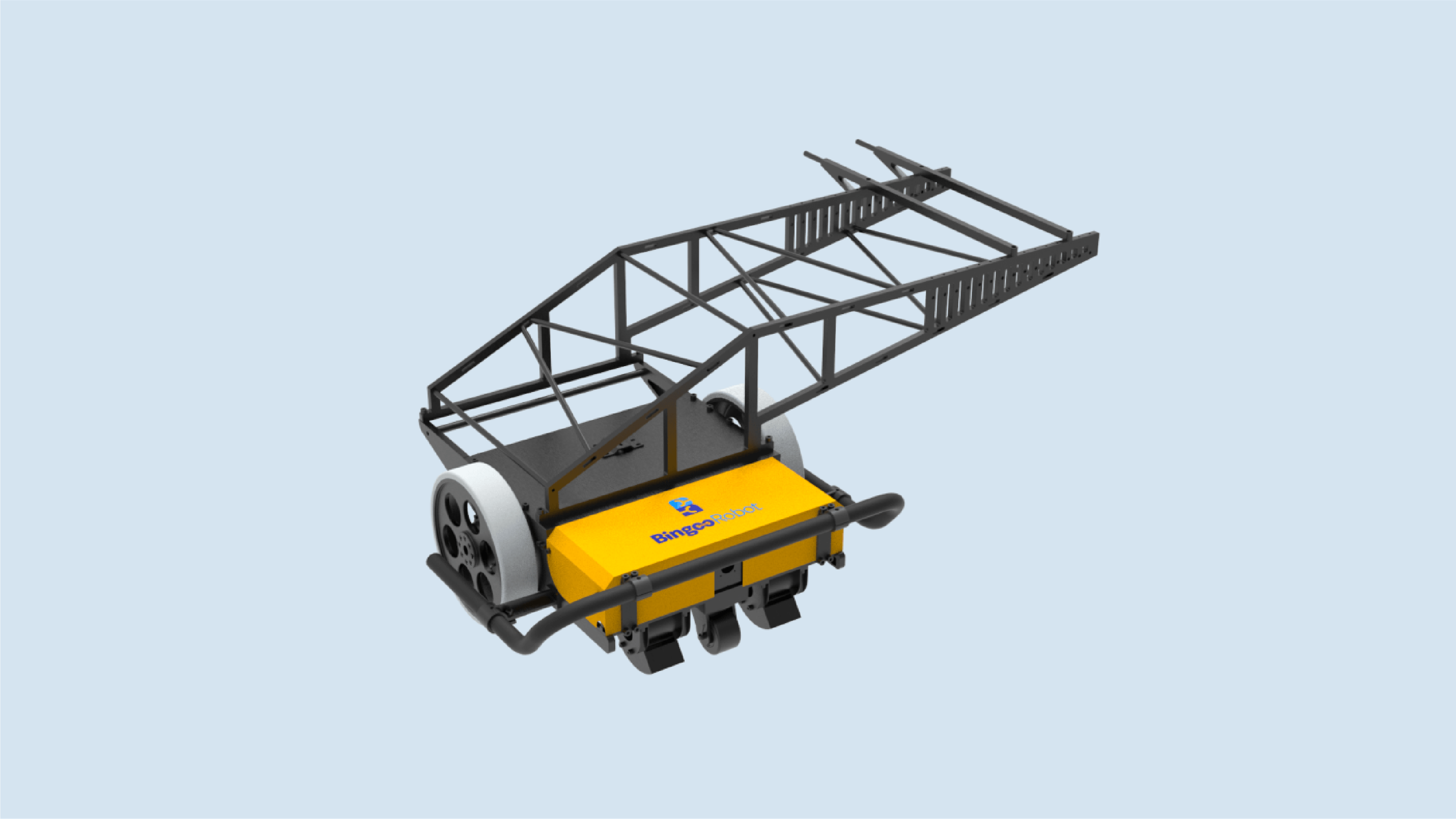
Tianjin-based BingooRobot has developed wall-climbing robots for maintenance and inspection work on large steel structures, including petrochemical storage tanks and ship surfaces.
The robots use permanent-magnet adhesion to remain attached to steel while carrying equipment for tasks including rust removal, painting, cleaning and inspection. BingooRobot says its special-purpose robots are intended for extreme environments where conventional manual work can expose workers to height, hazardous equipment and other safety risks.
Xinhua reported Sept. 24 that one of the company's robots was operating on the exterior of a petrochemical storage tank, carrying out rust removal, inspection and spraying. BingooRobot Chairman Zhang Minglu told Xinhua that welding and spraying can be hazardous and difficult for workers and said robots could help address labor shortages.
The company's product specifications provide a more detailed view of the machines. Its tank corrosion-protection robot is designed for vertical and curved surfaces and can carry equipment for derusting and spray painting. BingooRobot lists a maximum travel speed of 15 meters per minute, a 120-kilogram load capacity and the ability to cross welds up to 10 millimeters high.
The machine is also designed for work inside storage tanks, according to BingooRobot. The company says it can enter through a 600-millimeter manhole and carry high-pressure water nozzles, sandblasting equipment or airless spray guns. These are manufacturer specifications rather than independently verified performance results.
BingooRobot also offers a separate derusting robot weighing 70 kilograms. The company lists a maximum speed of 14 meters per minute and says the robot can work on vertical surfaces and the exterior of tanks with a diameter of at least 8 meters. It can carry sandblasting equipment and other tools for removing rust from ship exteriors and storage tanks.
Those specifications establish that BingooRobot has developed machines specifically for industrial maintenance. They do not establish how frequently the robots are used in routine commercial operations or how much of the work can be completed without human supervision.
The company says its technology has moved beyond laboratory development. Its petrochemical industry page says its storage-tank derusting robot was tested at Sinopec Zhenhai Refining and Chemical and that BingooRobot jointly established a test base with Sinochem for applications in extreme operating environments. The page also describes cooperation and negotiations with PetroChina and Sinopec. These are company-reported relationships and testing activities.
Wall-climbing robots are also being developed independently of BingooRobot. A 2025 paper in Automation in Construction described an adaptive climbing robot for variable-curvature petrochemical storage tanks. The research system used magnetic adsorption wheels and mechanisms to adjust to curved surfaces, with experiments covering inspection, polishing, painting and cleaning. The researchers tested the robot on a 4-meter-diameter cylindrical tank platform rather than reporting a commercial deployment.
China's wider industrial-robot market is growing as well. The National Bureau of Statistics reported production of 729,352 industrial robots in the first eight months of 2026, up 29% from the same period a year earlier. That category covers industrial robots generally and does not identify wall-climbing or hazardous-environment robots separately.
BingooRobot lists applications across petrochemical, shipbuilding, electric power, bridges and tunnels, including rust removal, painting, polishing, cleaning and inspection. Its stated focus is replacing manual work in difficult operating environments, but the available evidence does not establish the scale of routine commercial deployment or whether its machines can consistently replace human crews across different industrial sites.
More articles on this topic
40 articles ReportRobots vs. Drones: What Is the Real Difference?
 ReportHow Animals Inspire Better Robots
 ReportFrom Toys to Tools: The Coolest Robots in Schools Today
 ReportThis Tiny Robot Hops Like a Frog And Swims Using Elastic Limbs
 ReportJapan Tests Robot Bins at Tokyo’s Busiest Railway Station
 ReportStanford, Caltech Give Humanoid Spatial Memory for Household Tasks
 ReportHow Do Robots See the World?
 ReportFive Extreme Sports Where Robots Are Competing
 ReportHow Do Robots See the World?
 ReportChina Raises Scrutiny of Humanoid Robot IPOs After Unitree Shares Fall 55%
 ReportViam Debuts Box-Opening Robot at IROS 2026
 ReportBoston Dynamics Opens New Home For Training Robots
BUSINESS NEWS WEEKLY LETTER
The Weekly Letter for Robotics Professionals, Summarizing the Most Important Industry Moves, Launches, Deals and Signals.