AGIBOT D1 vs. ANYbotics ANYmal C
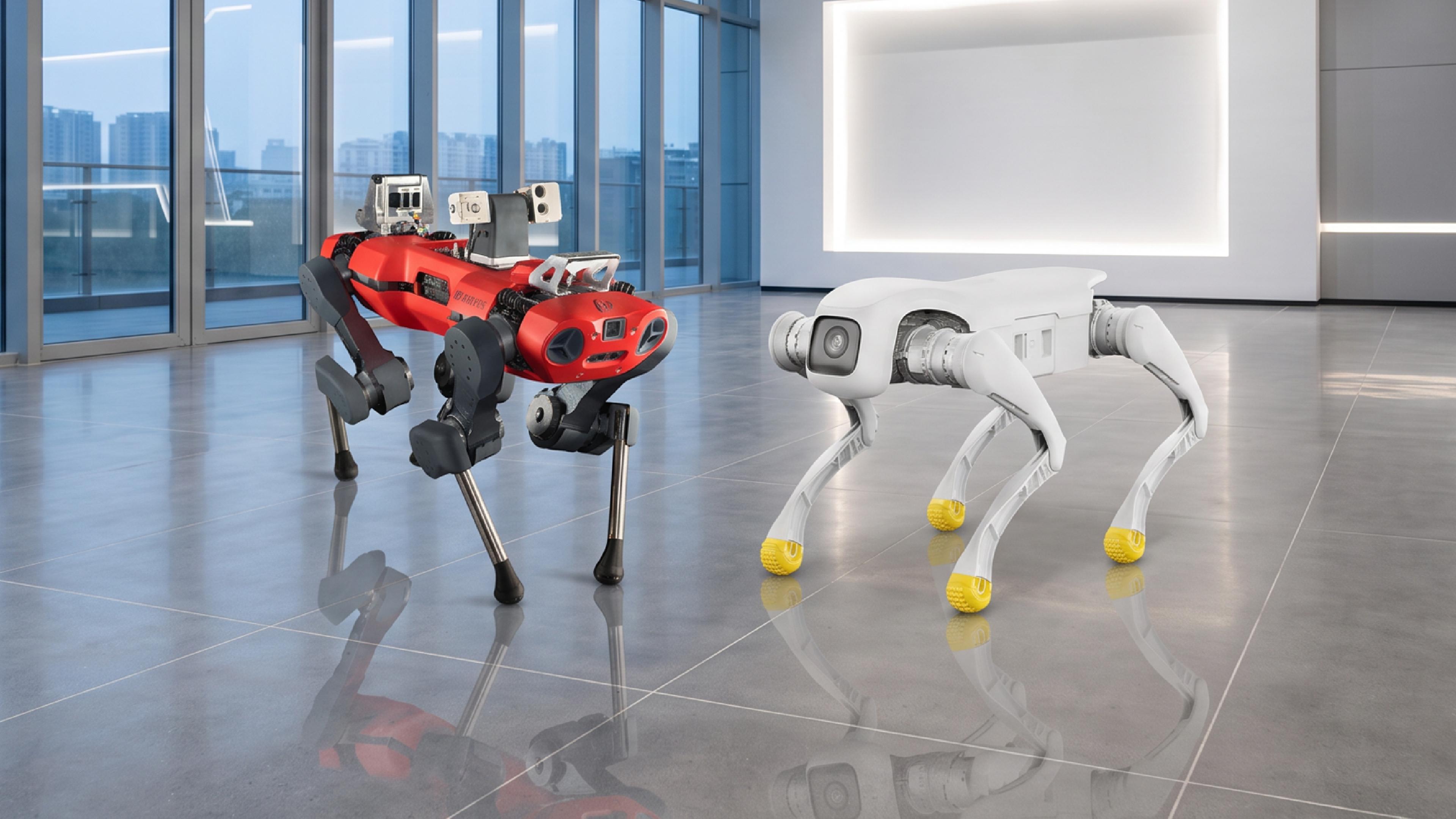
AGIBOT D1 and ANYbotics ANYmal C are both quadruped robots compared here on mobility, navigation, sensing capabilities, autonomous operation and deployment.

November 13, 2026 by Business Desk Team
Introduction
AGIBOT D1 and ANYbotics ANYmal C are quadruped robotic platforms for mobile operation in research and specialised industrial settings. The main difference here is the application positioning; AGIBOT D1 is for R&D, Education & Training, while ANYmal C is for Manufacturing & Industrial, Mining & Metals and R&D.
These two platforms offer stair climbing, so they have value in settings with ascents and complicated access pathways. However, their distinctions in weight, runtime, degree of availability and autonomous navigation skills impact how they can serve various operational needs. AGIBOT D1 is listed as a development supported navigation; is ANYmal C listed as autonomous navigation.
At a Glance
| Metric | AGIBOT D1 | ANYbotics ANYmal C |
|---|---|---|
| Robot type | Quadruped robot | Industrial quadruped robot |
| Best-fit use cases | Research and development, education and training | Manufacturing and industrial operations, mining and metals, research and development |
| Weight | 15.5 kg (including battery) | Approximately 50 kg |
| Runtime | 1–2 hours | Approximately 90 minutes |
| Autonomous navigation | Development supported | Yes |
| Stair climbing | Yes | Yes |
| Availability | Commercially available | Legacy / previous-generation commercial model |
| Nationality | Chinese | Swiss |
| Status | Commercial | Commercial |
| Key distinction | Lightweight development-oriented quadruped platform | Industrial-oriented autonomous inspection platform |
How They Compare
Operational role: AGIBOT D1 is positioned primarily for research and development, education and training, making it relevant for robotics experimentation and development environments. ANYbotics ANYmal C is built for tougher industrial use including manufacturing, mining and metals. This provides the ANYmal C with a more focused industrial application profile while D1 is focused on research and education use.
Hardware and endurance: AGIBOT D1 is 15.5kg with battery, vs 50kg for ANYmal C. D1 therefore has a ~34.5kg weight advantage. Listed endurance is 1-2 hours, with ANYmal C at ~90 mins. Endurance is subject to locomotion demands, payload, surface, environment and duty cycle, and a lighter platform is not necessarily better for more challenging industrial roles.
Navigation and mobility: ANYmal C provides autonomous navigation and AGIBOT D1 assisted navigation, though this is a critical consideration for assessing readiness to deploy. Both support stairs, but stairs do not equate to complementary performance across rough terrain, steep gradients and industrial impediments. Buyers should consider localisation, route planning, obstacle detection and autonomous recovery.
Deployment and availability: AGIBOT D1 is commercially available, development purposes. ANYmal C – legacy/previous generation commercial product. When you compare procurement, long-term technical support, replacement parts, upgrades and integration of it into modern industrial systems, this differentiates between its commercial status and the fact that it is in the traditional industrial market.
Important qualification
AGIBOT D1 - Development-supported navigation is not to be confused with a completely autonomous industrial inspection process without validation.
ANYbotics ANYmal C - As a legacy product, the support arrangements, spare parts availability and lifecycle commitments are a critical procurement consideration.
Summary
Select AGIBOT D1 if you seek a low-weight quadruped platform for research, robotics development and education. Consider ANYbotics ANYmal C if you have a stronger focus on industrial inspection applications, autonomous navigation and a more mature industrial-grade disposition (if legacy product support would be acceptable).
D1 offers a significant weight advantage and a listed runtime of up to two hours, while ANYmal C provides listed autonomous navigation and a broader industrial application focus. Both can handle stair climbing, but their relative maturity in navigation and position in deployment are crucial factors.
These are specs designed for specific application, not a performance comparison. Verify exact configurations, autonomous navigation and stair-climbing capabilities, operational endurance, software support, product longevity commitments via manufacturer documentation, and hands-on application before declaring comparative superiority.
This comparison is based on ROBOT24.com market-research data records and manufacturer-reported specifications rather than controlled performance testing.
More articles on this topic
157 articles ReportRichtech DUST-E S vs. Gausium Phantas
 ReportEngineAI SE01 vs. AGIBOT RAISE A1ReportRichtech DUST-E S vs. KEENON KLEENBOT C20
 Report1X Technologies NEO Gamma vs. AGIBOT A2 Max
 ReportAI² Robotics AlphaBot 2 vs. AGIBOT A2-W
 ReportAGIBOT D1 Pro vs. Unitree Go2 Edu Plus
 ReportAGIBOT G2 vs. Astribot S1
 ReportAGIBOT D1 vs. ARAT 4.2
 ReportDouble Robotics Double 3 vs. temi V3
 ReportANYbotics ANYmal C vs. Deep Robotics Lynx M-20S
 ReportAeiROBOT AIMY vs. AGIBOT G2 Genie
 ReportAGIBOT A2 vs. UBTECH Walker C
BUSINESS NEWS WEEKLY LETTER
The Weekly Letter for Robotics Professionals, Summarizing the Most Important Industry Moves, Launches, Deals and Signals.