The Robot to Fill Potholes and Change How Road Repairs are Done
Fixing a pothole still means cones, shovels and crews working inches from passing cars. Robots can take over the dangerous part.

October 26, 2026 by Dr Maulik Vyas
Everybody has a pothole story. A jolt, a bang, maybe a flat tire and a repair bill. Fixing the hole itself isn't much fun either, because crews do it beside moving traffic. That's the job engineers want to hand to a machine.
How a pothole gets fixed by hand
The routine hasn't changed much. A crew shows up with a truck, cones and a pile of patching material. They blow out the hole, put down a sticky layer so the patch bonds, shovel in asphalt and pound it flat. Three to five people is normal, and all of them are standing on a live road.
That's the part that worries road agencies. Caltrans crews often kneel at the edge of a lane while cars go by at 70 miles an hour. Hot asphalt is the tougher fix, but getting it takes more people, more equipment and a drive out to the plant. Cold patch skips that drive and goes in faster. The catch is that it tends to wear out sooner. Either way, somebody ends up working a little too close to the traffic. And the holes keep coming. Hertfordshire in England repaired more than 40,000 in a single year, and it still wasn't enough.
Trucks with a robot arm
The first step toward automation was a truck with a long arm. Normally, patching a pothole is a six-step chore that takes a crew and a couple of hours. One truck, the Python 5000, does it in about two minutes with a single operator at the controls. Its arm first blows the rocks, water and dirt out of the hole with a blast of air. Next comes a spray of oil, so the asphalt grips. Then the patch material goes in, and the arm pounds it flat.
Caltrans tested a similar truck where each stage gets its own button on a controller: blower, emulsion, stones. A worker sits in the cab and presses them in turn, so nobody has to kneel beside the lane. Chicago leased four trucks of this kind, and officials said one or two people could now do what used to take three to five.
These machines are semi-automatic. A person still picks the hole and aims the arm. The next idea was to hand that over as well.
Letting the robot do the looking
Full automation needs eyes. A computer vision system can scan a pothole, work out its shape and plan a path for the spray arm so the patch comes out flat and dense. A patent for that design has been around for decades, and a US research project built a truck that cut and shaped the hole, vacuumed it clean, heated and dried the surfaces, then sprayed in emulsion and stone with no roller needed. The researchers expected those patches to last several years.
The idea keeps coming back. A Pittsburgh startup, Silly Surfacing, is building a robot that scans and fills a pothole while a single crew member stays in the truck and the road stays open. Its prototype can't yet clean the hole before filling or tamp the patch afterward, and a full repair needs both. Early machines tend to do the interesting middle part and leave the grubby ends to people.
A small robot on a motorway
Not every robot has to be a truck. A European research effort called InfraROB built a compact autonomous vehicle with a 3D printer on top. The printer squeezes out a cold asphalt mix made for patching. A camera technique called photogrammetry measures the hole so the robot knows how much material to lay, and the operator stays outside the traffic area while the machine drives to the pothole on its own.
Two early tests at Sapienza University of Rome checked whether the material calculations held up. Then the whole system went out to an Italian motorway, and the team reported no operational problems. It's one road and a small sample, so don't read too much into it, but a motorway is about as unforgiving a test as anyone could pick.
Fixing cracks before they turn into holes
Water does most of the damage. It seeps into a crack, freezes, expands, and breaks the road apart a little more each cold night. Hertfordshire County Council says winter makes potholes worse for exactly that reason.
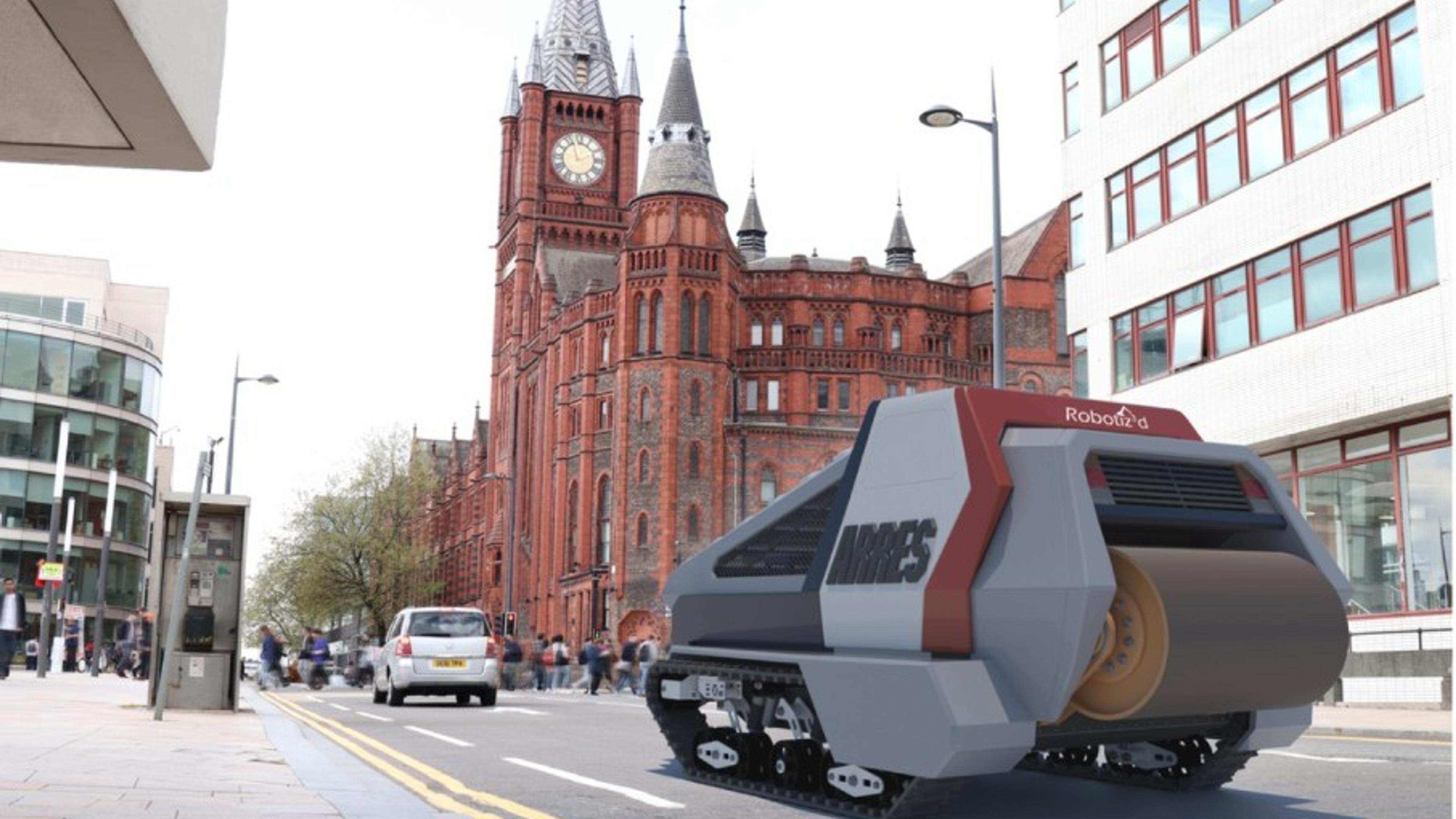
So, a UK team flipped the question. Why wait for the hole? ARRES Prevent, built by Robotiz3d with the University of Liverpool and Hertfordshire's highway engineers, hunts for cracks and seals them. ARRES Prevent looks a bit like a small electric van, and it runs on batteries. Most of the time it drives itself, though somebody can take over by remote if needed. Cameras and AI hunt for cracks in the road surface. When it finds one, an arm hanging off the vehicle drips tar in, which keeps the water out.
Now, every patch gets logged with its location, so inspectors can check the work later. After its first test outside the lab, the team started building a bigger version that can deal with more kinds of road damage. Plug a crack today and you don't have to shovel a pothole tomorrow. That's the real shift here.
What changes for road crews
Fewer people near traffic is the obvious win. Automatic logging is another, since a council can see what was fixed, where and when. Survey data from the same machines could show which streets crack first and deserve attention.
The limits are practical. Many robots still need a human for cleaning, tamping or driving. Weather matters too. The emulsion used in some patches is about 35 percent water, and in cold, damp conditions it dries slowly, which is exactly when potholes show up. Most of these machines are also prototypes, not fleets. Crews will be around for a while, just standing somewhere safer.
Roads will keep cracking. Water, frost and heavy wheels make sure of it. What's changing is who stands in the lane with the shovel, and how quickly someone arrives once a small crack shows up.
More articles on this topic
235 articles ReportWhat it Really Costs to Own a Personal Assistant Robot at Home
 ReportA Little Company, Courtesy of a Robot
 ReportA Humanoid Walks into a New York Park
 ReportRailway Inspection Robots Search for Defects in Tracks
 ReportChina's Humanoid Supply Chain Moves Toward Industrial Production
 ReportCompanionship now comes with a Charging Cable
 ReportCould a Robotic Guide Help Blind Travelers Navigate Public Spaces?
 ReportThis Robot Finds Cracks and Fixes Them
 ReportXPENG's IRON Humanoid Adapts to Changing Human Gestures in Real Time
 ReportRobots Are Learning to Sort Clothes for Textile Recycling
 Report110 Humanoid Robots Set Guinness World Record With Synchronized Dance
 ReportScientists Teach Humanoid to Climb Ladders and Survive Falls
BUSINESS NEWS WEEKLY LETTER
The Weekly Letter for Robotics Professionals, Summarizing the Most Important Industry Moves, Launches, Deals and Signals.