110 Humanoid Robots Set Guinness World Record With Synchronized Dance
Using centralized fleet control and precise positioning, the performance highlights the challenge of coordinating large groups of humanoids.
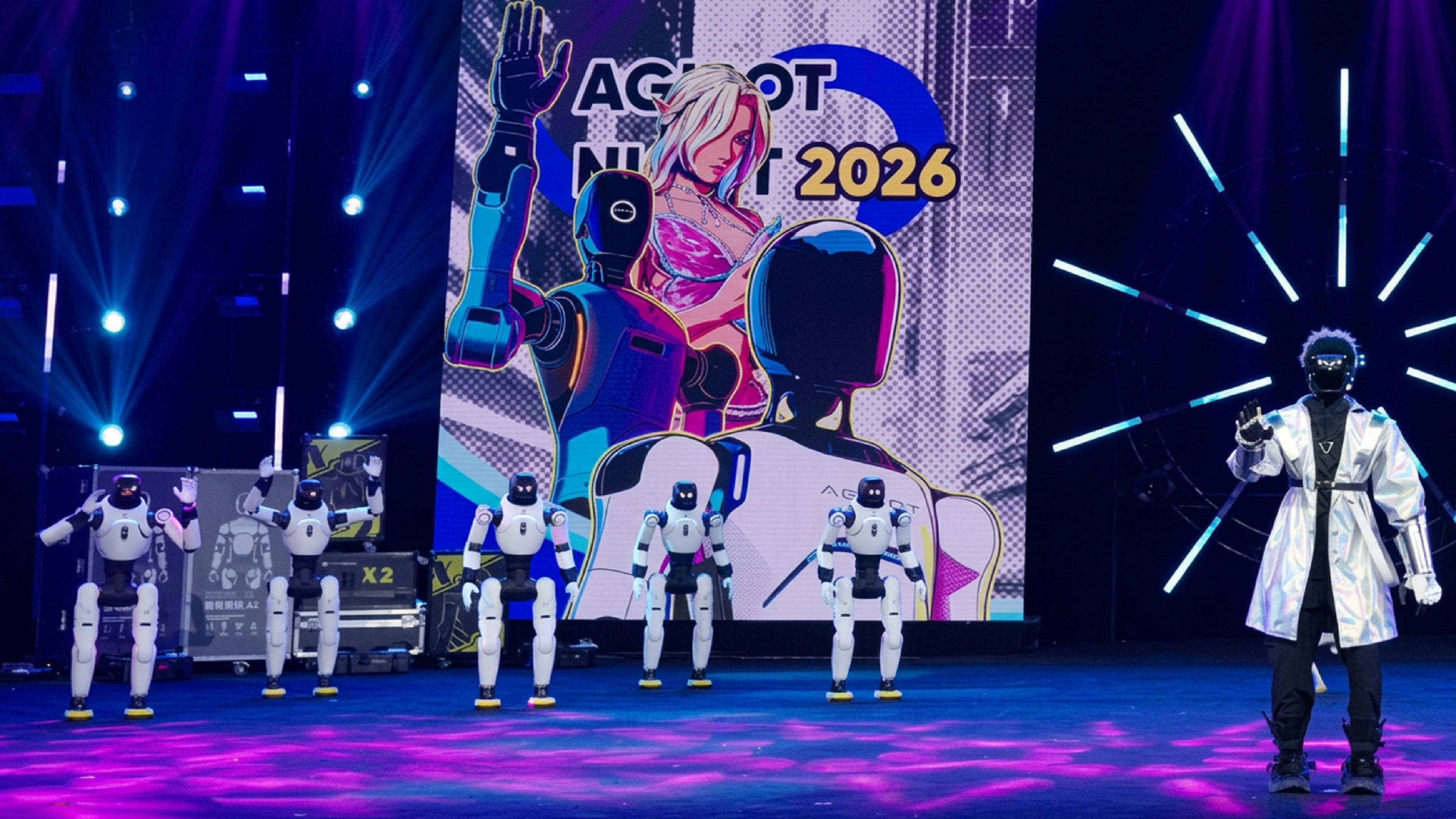
In a display of large-scale coordination made possible by a centralized fleet-control system, AGIBOT, the Chinese robotics firm, has secured a Guinness World Record for a synchronized dance by 110 full-size humanoid robots in Jinan, China.
On October 24, at the Yellow River International Convention and Exhibition Center, the company’s Expedition A3 humanoids completed a routine lasting approximately five minutes and 43 seconds. An adjudicator from Guinness World Records attended the event to verify the numbers and bestow the title for the most humanoid robots dancing at one time.
The 110 machines held their positions as they cycled through formations and produced wave and numerical patterns with their choreography. To do so, AGIBOT did not have to take individual control of every robot; the LinkBots platform was employed to run the whole group. With its ultra-wideband positioning technology and fleet-wide movement planning, the system can pinpoint a robot’s location to within a centimetre. Should connectivity be lost, 5G and Wi-Fi are used by LinkBots to see that movements and formations are adjusted accordingly, the company says.
There is more to it than having over 100 humanoids go through the same motions. Each one has to be in the right place at the right time and not get in the way of its neighbouring robots. Small differences in joint calibration or motor performance can become noticeable when large groups attempt identical movements.
Wang Chuang, senior vice president and partner at AGIBOT, said the robots on display were standard production models, not ones modified for the purpose of the demonstration. He put down the success of the routine to partly in the torque settings, movement programs and joint calibration from one machine to the next. As the company described, it was an illustration of what can be done with off-the-shelf hardware and software.
But the record does not mean the robots are capable of unaided collaboration on something they have not been taught; the event was a controlled affair with planned moves. There is also the matter of differentiating from previous records of a smaller dancing variety, such as the 1,372 robots that put on a show in Rome in 2018.
AGIBOT has plans to put the humanoids to work in public services, research, education and cultural tourism following the event. Some are already on trial in and around Jinan at metro stations and sports venues offering guidance to visitors.
It is yet to be seen if the technology can reliably support large groups more demanding tasks. What the demonstration makes clear is a challenge facing manufacturers of humanoids: one must be able to handle a sizeable fleet in a consistent manner, rather than focus solely on the abilities of individual robots.
More articles on this topic
235 articles ReportWhat it Really Costs to Own a Personal Assistant Robot at Home
 ReportA Little Company, Courtesy of a Robot
 ReportA Humanoid Walks into a New York Park
 ReportRailway Inspection Robots Search for Defects in Tracks
 ReportChina's Humanoid Supply Chain Moves Toward Industrial Production
 ReportCompanionship now comes with a Charging Cable
 ReportCould a Robotic Guide Help Blind Travelers Navigate Public Spaces?
 ReportThis Robot Finds Cracks and Fixes Them
 ReportXPENG's IRON Humanoid Adapts to Changing Human Gestures in Real Time
 ReportRobots Are Learning to Sort Clothes for Textile Recycling
 ReportScientists Teach Humanoid to Climb Ladders and Survive Falls
 ReportThe Robot to Fill Potholes and Change How Road Repairs are Done
BUSINESS NEWS WEEKLY LETTER
The Weekly Letter for Robotics Professionals, Summarizing the Most Important Industry Moves, Launches, Deals and Signals.