Cleanfix S170 Navi vs. SoftBank Robotics Whiz vs. KEENON KLEENBOT C30
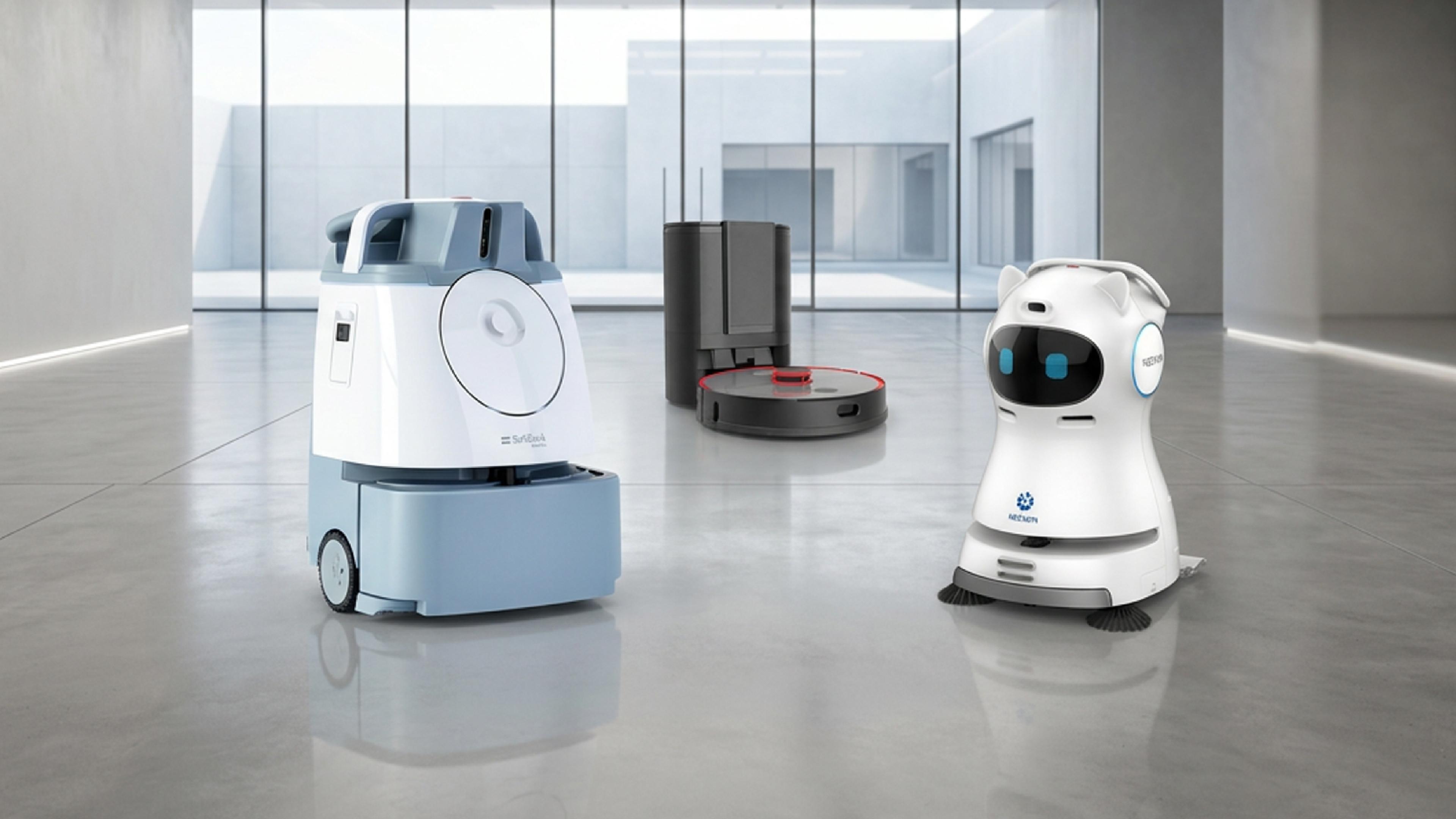
Cleanfix S170 Navi, SoftBank Robotics Whiz and KEENON KLEENBOT C30 are autonomous cleaning robots designed to support commercial floor maintenance. While S170 Navi offers compact vacuum cleaning, Whiz focuses on autonomous vacuuming and KLEENBOT C30 supports multiple cleaning modes. We compare their size, navigation, battery endurance, cleaning capabilities and suitability for different facilities.

November 17, 2026 by Business Desk Team
Introduction
Maintaining clean floors across commercial buildings is a repetitive task, particularly in facilities with high foot traffic and extensive cleaning schedules.
Hotels, hospitals, educational institutions and workplaces must regularly remove dust and debris while managing staffing requirements and operational costs.
Autonomous cleaning robots can support these activities by performing designated floor-cleaning tasks with reduced direct operator involvement.
However, not all cleaning robots are designed for the same environments or workloads.
Some focus on compact spaces and routine vacuuming, while others are intended for larger commercial areas or support multiple cleaning methods.
Cleanfix S170 Navi, SoftBank Robotics Whiz and KEENON KLEENBOT C30 represent three approaches to autonomous floor maintenance.
Cleanfix S170 Navi is a Swiss autonomous dry-vacuum robot designed for hard floors and short-pile carpets. Its compact design and automatic charging and dust-emptying system are relevant to facilities seeking routine cleaning of smaller areas.
SoftBank Robotics Whiz is a Japanese commercial vacuum-cleaning robot associated with hospitality, healthcare and educational environments.
KEENON KLEENBOT C30 is a Chinese commercial cleaning robot supporting vacuuming, sweeping and dust-mopping modes.
All three robots are commercially positioned, but their specifications reveal differences in physical size, battery endurance, navigation systems and cleaning functions.
Based on ROBOT24.com market-research data records, supplemented by Cleanfix's published product specifications, this comparison examines their operating capabilities, cleaning applications and deployment requirements.
At A Glance
| Metric | Cleanfix S170 Navi | SoftBank Robotics Whiz | KEENON KLEENBOT C30 |
|---|---|---|---|
| Availability | Commercially available through Cleanfix’s worldwide certified dealer and service network | Commercially Available | Commercially Available |
| Nationality | Switzerland | Japanese | Chinese |
| Height | 97 mm (9.7 cm) | 65.3 cm | 750 mm |
| Weight | Approximately 3.6 kg (earlier documentation; current model to be confirmed) | 35 kg | 35 kg |
| Battery | Lithium-ion, 5,200 mAh | Lithium-ion 25.2 V | 25.6 V 28.5 Ah LFP (Lithium Iron Phosphate) |
| Charging Time | 5.5–6 hours | Approximately 4 hours | 5–6 hours |
| Cleaning Reports | Yes, through FieldBots | Yes | Yes |
| LiDAR | Yes | Yes | Yes |
| Maximum Speed | Not publicly specified | 1.8 km/h | 0.8 m/s |
| OTA Updates | Not confirmed | Supported | Yes |
| Runtime | Up to 250 minutes (4 hours 10 minutes) | Approximately 3 hours | Up to 6 hours (vacuum/sweeping), up to 10 hours (dust mopping) |
| Wi-Fi | Yes, including 5 GHz support | Yes | Yes |
| Typical use | Cleaning & Facility Maintenance | Hospitality, Healthcare, Education & Training | Cleaning & Facility Maintenance |
| Status | Commercial | Commercial | Commercial |
How They Compare
Cleaning applications and intended use
Cleanfix S170 Navi, SoftBank Robotics Whiz and KEENON KLEENBOT C30 are designed to support commercial floor maintenance, but they approach the task differently.
S170 Navi is a compact autonomous vacuum cleaner intended for dry cleaning on suitable hard floors and short-pile carpets. Its small size makes it relevant to facilities requiring routine cleaning in relatively confined areas.
Whiz is designed for autonomous vacuum cleaning in commercial environments. Its recorded applications include hospitality, healthcare and education, where routine floor cleaning is an ongoing requirement. KLEENBOT C30 supports vacuuming, sweeping and dust mopping.
These different modes may make it relevant to facilities managing more than one type of dry floor-cleaning task. However, the robots should not be considered interchangeable simply because they are all autonomous cleaners. Their suitability depends on floor type, cleaning area, required cleaning method and operating conditions.
Physical dimensions and design
Physical size is one of the clearest differences between the three robots. Cleanfix S170 Navi measures 345 × 345 × 97 mm. Its height of just 9.7 cm makes it considerably lower than the other two platforms. SoftBank Robotics Whiz measures 65.3 cm tall. KEENON KLEENBOT C30 measures 750 mm, equivalent to 75 cm.
S170 Navi's low-profile design may allow it to access some areas beneath furniture and fixtures, provided there is sufficient clearance. Whiz and C30 have taller commercial cleaning-robot designs. Their larger physical profiles may be relevant to facilities with open corridors and designated cleaning routes.
However, height alone does not establish maneuverability. Width, turning radius, sensor placement and obstacle clearance also influence how easily a robot navigates an environment. The supplied records do not include directly comparable full dimensions for Whiz and C30.
Weight and handling
Cleanfix S170 Navi has a previously documented weight of approximately 3.6 kg, although this figure requires confirmation for the current product version.
SoftBank Robotics Whiz and KEENON KLEENBOT C30 both have a recorded weight of 35 kg. This indicates a substantial difference in physical scale between S170 Navi and the other two platforms.A lighter robot may be easier to transport, reposition or prepare for cleaning.
However, weight does not establish cleaning capacity or productivity. Larger commercial cleaning robots may accommodate different cleaning mechanisms, dust containers or battery systems. The weight figures should therefore be considered alongside cleaning width, storage capacity and operating endurance.
Cleaning methods and floor compatibility
All three robots support floor-cleaning applications, but their recorded functions differ. Cleanfix S170 Navi performs dry vacuum cleaning. Cleanfix identifies hard floors and short-pile carpets among its intended surfaces. SoftBank Robotics Whiz is also associated with autonomous vacuum cleaning. KEENON KLEENBOT C30 supports vacuuming, sweeping and dust mopping.
This gives C30 multiple recorded cleaning modes. However, dust mopping should not be confused with wet scrubbing or washing. The supplied specifications do not establish that C30 performs wet-floor scrubbing.
For facilities selecting a robot, the first consideration should be the required cleaning task. A robot intended for routine dry vacuuming may not be suitable for a facility requiring wet cleaning or intensive floor restoration.
Cleaning width and coverage
Cleanfix S170 Navi has a recorded cleaning width of 170 mm, extending to 275 mm when its side brush is included. The manufacturer lists cleaning coverage of up to 320 square meters per charge. Its recommended cleaning area is approximately 20–300 square meters. These specifications provide a clearer indication of the scale of cleaning tasks for which S170 Navi is intended.
The supplied records do not include directly comparable cleaning widths or area-coverage figures for Whiz and C30. Consequently, it is not possible to determine which robot cleans the greatest area per hour using the available information.
Maximum movement speed and battery runtime should not be treated as substitutes for measured cleaning productivity. A fair comparison would require all three robots to clean equivalent surfaces under comparable conditions.
Navigation and LiDAR
All three robots have LiDAR navigation listed in their specifications. Cleanfix S170 Navi combines LiDAR with ultrasonic sensors and a bumper system. These components support environmental detection and navigation within its intended cleaning area.
SoftBank Robotics Whiz also uses LiDAR. KEENON KLEENBOT C30 has LiDAR listed among its navigation-related specifications. LiDAR measures distances using laser-based sensing and can support mapping and localization. However, the presence of LiDAR does not establish identical navigation performance.
Sensor placement, mapping software, obstacle detection and route-planning algorithms may differ. A direct comparison would require evaluating the robots in the same cleaning environment.
Obstacle detection and confined spaces
Commercial cleaning robots must operate around furniture, fixtures and people. Cleanfix S170 Navi's compact body and combination of LiDAR, ultrasonic sensors and bumper detection are relevant to its operation in smaller indoor areas.
Its low height may also allow access beneath some furniture. However, a low profile does not guarantee access to every confined space. Floor clearance, furniture design and navigation restrictions can limit movement.
Whiz and C30 operate using taller platforms, which may suit different cleaning layouts. The supplied records do not provide equivalent obstacle-detection ranges or minimum passage widths for all three robots. Their performance in crowded or confined spaces should therefore be assessed through practical testing.
Battery technology
Cleanfix S170 Navi uses a lithium-ion battery with a recorded capacity of 5,200 mAh. SoftBank Robotics Whiz uses a 25.2 V lithium-ion battery. KEENON KLEENBOT C30 uses a 25.6 V, 28.5 Ah lithium iron phosphate battery. Lithium iron phosphate, or LFP, is a lithium-ion battery chemistry. Based on its listed voltage and capacity, C30 has a nominal battery energy of approximately 730 Wh.
However, S170 Navi's battery voltage and Whiz's ampere-hour capacity are not included in the comparison. The available figures therefore cannot be used to establish a complete battery-energy ranking. Battery chemistry and capacity should also be considered alongside power consumption and cleaning workload.
Operating runtime
Runtime is one of the most important differences between the robots. Cleanfix S170 Navi has a recorded maximum runtime of 250 minutes, equivalent to four hours and ten minutes. SoftBank Robotics Whiz has a recorded runtime of approximately three hours. KEENON KLEENBOT C30 offers up to six hours in vacuuming or sweeping mode and up to ten hours in dust-mopping mode.
Based on the stated figures, C30 has the longest maximum operating duration. S170 Navi's recorded endurance is approximately 70 minutes longer than Whiz's. However, these figures are not necessarily based on equivalent cleaning conditions.
Runtime depends on cleaning mode, floor resistance, navigation patterns and battery condition. C30's ten-hour dust-mopping figure should not be directly compared with the vacuuming runtime of the other platforms as an equivalent workload.
Charging time
Cleanfix S170 Navi has a recorded charging time of approximately 5.5–6 hours. SoftBank Robotics Whiz requires approximately four hours. KEENON KLEENBOT C30 has a recorded charging time of five to six hours. Based on these figures, Whiz has the shortest stated charging duration. However, charging time should be considered alongside runtime and cleaning coverage.
A robot with a shorter charging period may still require more frequent charging if its operating endurance is lower. Facility managers should evaluate how each robot fits into the intended cleaning schedule.
Automatic charging and dust collection
Cleanfix S170 Navi supports automatic charging and dust-emptying through its docking system. The current product listing specifies an onboard dust container of 0.28 liters and a docking collector with a capacity of 2.5 liters. These features may reduce the frequency of manual dust disposal during routine cleaning. However, automatic emptying does not eliminate maintenance.
The docking collector must still be emptied, and the robot's cleaning components require inspection and servicing. The supplied comparison records do not establish equivalent automatic dust-emptying capabilities for Whiz and C30. It would therefore be inappropriate to assume that all three provide the same level of automated maintenance.
Cleaning reports and fleet management
All three robots support cleaning reports according to the available specifications. Cleanfix S170 Navi integrates with FieldBots, a fleet-management platform used to monitor and manage compatible cleaning robots. This can provide facility managers with information about cleaning operations.
SoftBank Robotics Whiz and KEENON KLEENBOT C30 also have cleaning-report functionality listed. However, the supplied records do not identify the exact reporting fields or dashboard capabilities for Whiz and C30.
Cleaning reports may differ in their treatment of completed routes, operating time, coverage and exceptions. A direct comparison would require reviewing the reporting interfaces and available data for each platform.
Wi-Fi and connectivity
All three robots support Wi-Fi connectivity. Cleanfix S170 Navi supports Wi-Fi, including 5 GHz connectivity, and offers an integrated SIM connectivity option. This may provide additional communication flexibility in facilities with different network requirements. Whiz and C30 also support Wi-Fi, but the supplied records do not specify their supported wireless bands or optional cellular configurations.
Connectivity can influence remote monitoring, fleet management and software services. However, Wi-Fi support alone does not establish identical cloud-management capabilities. Organizations should confirm network requirements and data-management arrangements before deployment.
Software updates
SoftBank Robotics Whiz and KEENON KLEENBOT C30 both support OTA software updates according to the supplied records. Over-the-air updates can simplify software maintenance across supported robot fleets. Cleanfix S170 Navi's exact OTA firmware-update capability has not been confirmed.
Although Cleanfix documents software-related functions and FieldBots integration, these should not automatically be treated as proof of robot-level OTA firmware support. Organizations should confirm update procedures and software-support arrangements for the exact models being purchased.
Hospitality applications
Hospitality is included among Whiz's recorded applications.
Hotels and similar facilities often require routine cleaning of corridors, common areas and guest-facing spaces.
Whiz's autonomous vacuuming may support appropriate cleaning workflows.
Cleanfix S170 Navi may be relevant to smaller spaces requiring regular dry vacuuming.
Its compact size and recommended cleaning area of 20–300 square meters distinguish its intended operating scale.
KLEENBOT C30's multiple cleaning modes may be relevant to facilities managing different dry floor-maintenance tasks.
However, the suitability of each robot depends on the surface type, cleaning area and expected workload.
Healthcare applications
Healthcare is among Whiz's recorded applications.
Hospitals and other healthcare facilities may require routine cleaning of corridors, waiting areas and shared spaces.
Autonomous cleaning robots can support appropriate maintenance activities. However, healthcare cleaning may involve additional requirements related to hygiene, safety and disinfection procedures. The supplied records do not establish that any of these robots performs clinical disinfection or meets particular healthcare cleaning standards.
Cleanfix S170 Navi and KLEENBOT C30 are categorized more generally under cleaning and facility maintenance. Their suitability for healthcare facilities should be assessed against the specific cleaning tasks and applicable requirements.
Education and commercial workplaces
Education and training are included among Whiz's recorded applications. Schools and universities often require regular cleaning of corridors, classrooms and shared areas.
Whiz may be relevant to suitable vacuum-cleaning tasks in these environments. Cleanfix S170 Navi may be considered for smaller rooms and designated cleaning zones. KLEENBOT C30 may be relevant to commercial spaces requiring its supported cleaning modes.
However, the supplied records do not establish equivalent cleaning productivity across these environments. Facility managers should evaluate cleaning coverage, floor type and scheduling requirements before selecting a platform.
Commercial availability and service support
All three robots are listed as commercial products. Cleanfix S170 Navi is available through Cleanfix's worldwide certified dealer and service network. This may be relevant to organizations seeking local purchasing and maintenance arrangements. SoftBank Robotics Whiz and KEENON KLEENBOT C30 are also listed as commercially available.
However, availability can vary by region and product configuration. Commercial status does not guarantee immediate stock or identical after-sales support. Organizations should confirm purchasing arrangements, spare parts, warranty coverage and technical services before procurement.
Maintenance and operating costs
Maintenance requirements can influence the long-term cost of autonomous cleaning. Cleanfix S170 Navi has a small onboard dust container and an automatic dust-emptying dock. This arrangement may reduce some routine handling tasks, although consumables and docking-system maintenance remain necessary.
Whiz's vacuum-cleaning system requires appropriate cleaning and servicing. C30's multiple cleaning modes may involve different maintenance requirements depending on how the robot is used.
The supplied records do not include comparable consumable costs, service intervals or maintenance expenses. A complete procurement assessment should therefore consider both purchase price and ongoing operating costs.
Summary
Cleanfix S170 Navi, SoftBank Robotics Whiz and KEENON KLEENBOT C30 are commercial autonomous cleaning robots designed for different floor-maintenance requirements.
Cleanfix S170 Navi stands out for its compact dimensions, measuring 345 × 345 × 97 mm. It supports dry vacuuming on suitable hard floors and short-pile carpets, with a stated runtime of up to 250 minutes and cleaning coverage of up to 320 square meters per charge.
Its automatic charging, dust-emptying system and FieldBots integration are relevant to facilities seeking routine cleaning of smaller designated areas.
SoftBank Robotics Whiz is a commercial vacuum-cleaning platform associated with hospitality, healthcare and education. It has a recorded weight of 35 kg, a runtime of approximately three hours and a charging time of approximately four hours.
KEENON KLEENBOT C30 supports vacuuming, sweeping and dust mopping. It also weighs 35 kg and offers up to six hours of vacuuming or sweeping and up to ten hours of dust mopping.
Based on the supplied figures, C30 has the longest stated maximum runtime, while Whiz has the shortest recorded charging time.
However, these differences do not establish which robot delivers the best cleaning performance.
S170 Navi's compact design, Whiz's commercial vacuuming focus and C30's multiple cleaning modes make them relevant to different facility requirements.
The choice depends on floor type, cleaning area, operating schedule, navigation requirements, maintenance arrangements and the exact tasks being automated.
This comparison is based on ROBOT24.com market-research data records and published manufacturer specifications rather than controlled performance testing. Cleaning productivity, runtime, navigation performance and commercial availability should be verified against current manufacturer documentation before drawing conclusions about overall performance.
More articles on this topic
163 articles ReportRichtech DUST-E S vs. Gausium Phantas
 ReportEngineAI SE01 vs. AGIBOT RAISE A1ReportRichtech DUST-E S vs. KEENON KLEENBOT C20
 ReportAGIBOT X2 vs. Unitree R1
 ReportPUDU CC1 vs. UniRing MAX
 ReportPUDU KettyBot vs. KEENON DINERBOT T8
 ReportPUDU KettyBot Pro vs. KEENON DINERBOT T9 Pro
 ReportPUDU CC1 vs. KEENON KLEENBOT C55 vs. UniRing MAX
 Report1X Technologies NEO Gamma vs. AGIBOT A2 Max
 ReportAI² Robotics AlphaBot 2 vs. AGIBOT A2-W
 ReportAGIBOT D1 Pro vs. Unitree Go2 Edu Plus
 ReportAGIBOT G2 vs. Astribot S1
BUSINESS NEWS WEEKLY LETTER
The Weekly Letter for Robotics Professionals, Summarizing the Most Important Industry Moves, Launches, Deals and Signals.