Your Cleaning Robot May Not Be Made By The Company On The Badge
The brand on the machine and the company that built its brain are increasingly two different firms. Brain Corp's BrainOS runs on scrubbers sold under several other names, and Gausium builds the "TASKI Phantas" sold under Diversey's brand.

September 1, 2026 by Business Desk Team
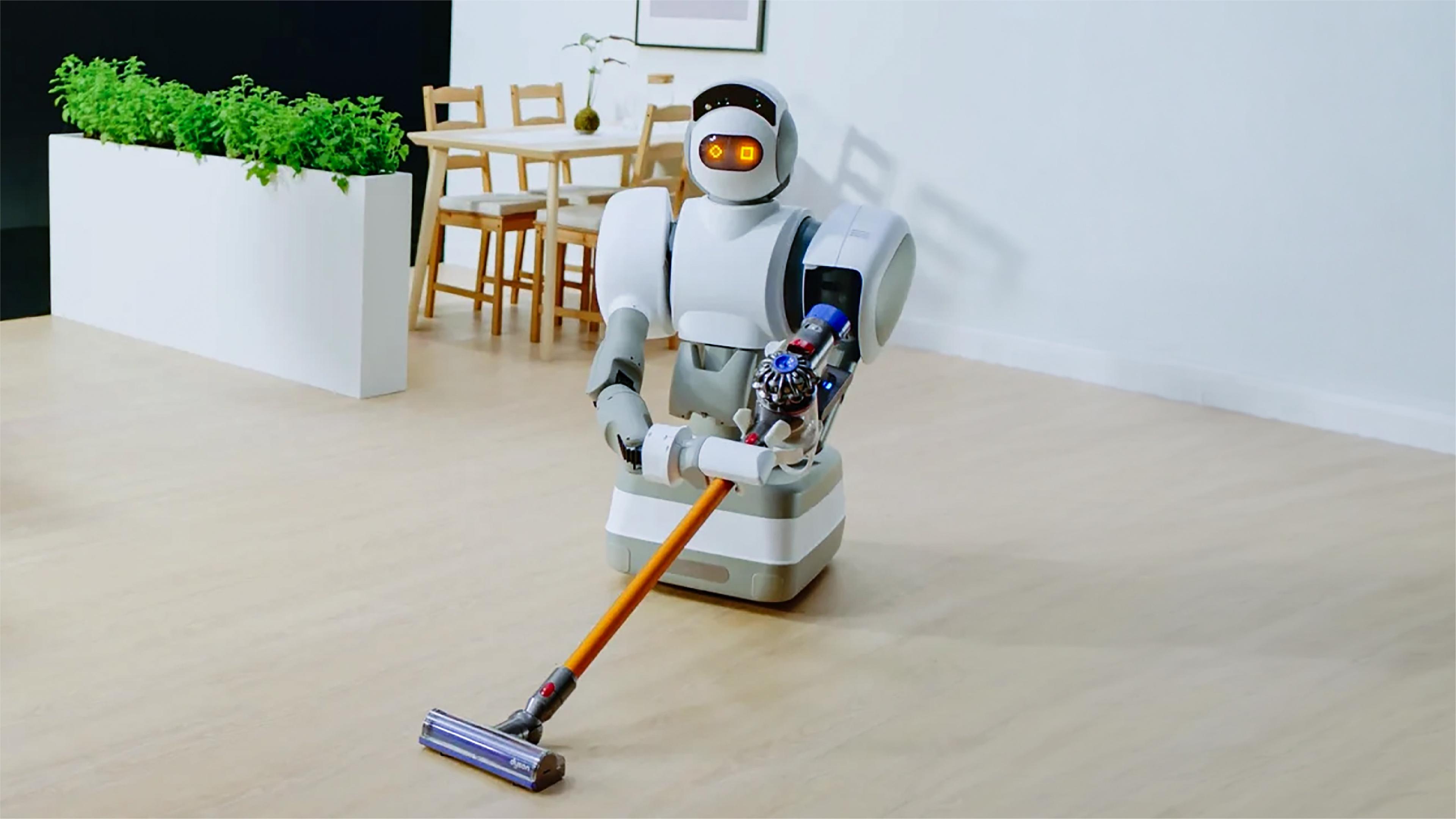
In April 2026, Tennant Company extended its exclusivity agreement with Brain Corp for three more years. Brain Corp is the San Diego software firm whose BrainOS platform drives the autonomy inside Tennant's own branded floor scrubbers.
Tennant, a 155-year-old equipment maker, is targeting a $250 million autonomous-equipment business by 2028 and plans to develop ten new robotic products within two years.
Yet the same BrainOS platform, now running on more than 50,000 robots across six continents, also powers Alfred Kärcher's KIRA scrubbers under a 2019 partnership, Nilfisk's autonomous scrubbers under a separate 2019 licensing deal, and SoftBank Robotics' Whiz vacuum in Japan under a 2018 product partnership.
In each case, Kärcher, Nilfisk and SoftBank Robotics, the brand customers buy from and the company that built the navigation intelligence inside the box are different firms.
Gausium, the Shanghai company discussed below, illustrates a second and opposite model spreading from China: a manufacturer building its own hardware, software, and brand together, then selling that stack back to a Western incumbent, Brain Corp, already serves.
Is Brain Corp the platform underneath the incumbents?
Brain Corp does not manufacture robots; it licenses BrainOS to equipment makers.
Tennant's 2024 investment, reported at $32 million, bought closer integration and a board seat, not exclusivity over the underlying platform Kärcher and Nilfisk had already licensed years earlier.
ICE Cobotics' Cobi 18 scrubbers, now piloted by retailers such as RaceTrac, trace to the same BrainOS lineage SoftBank Robotics used to launch its ICE RS26 scrubber in Japan in 2018.
Are China's vertically integrated challengers becoming suppliers?
Gausium, the Shanghai company founded in 2013, has taken the opposite path, building hardware, navigation software, and its own brand.
It says it achieved profitability for the first time in 2024 after raising $50 million in a Series D round.
Gausium also claims, citing IDC's Worldwide Annual Commercial Cleaning Robotics Tracker, to be the world's largest commercial cleaning robot supplier by shipments and revenue in 2025. That PR Newswire release is the only public source for the ranking; IDC has not independently published it.
Gausium's TASKI supply arrangement, detailed below, is independently verifiable through Diversey's own product materials, regardless of the disputed ranking.
Since a 2022 global partnership, Diversey's TASKI brand sells the "TASKI Phantas" scrubber—an explicitly Gausium-built machine marketed under TASKI's own name. Diversey is owned by Solenis after its $4.6 billion acquisition of Diversey.
Other Chinese manufacturers are pursuing scale through their own channels instead.
Shenzhen-based Pudu Robotics launched its CC1 Pro, a four-in-one scrubbing and vacuuming robot, in May 2025.
Ecovacs, better known for consumer DEEBOT vacuums, runs a separate commercial division that showcased its DEEBOT PRO M1 and K1 VAC at CMS Berlin 2025 and says it is expanding partner networks in Europe and North America.
Beijing's OrionStar sells its CleaniBot line, while Singapore's LionsBot raised $20.6 million in April 2025 at a $165.9 million valuation.
Is outdoor cleaning consolidating differently?
Municipal and outdoor cleaning is following a different pattern: acquisition rather than licensing.
Bucher Municipal, the Swiss sweeper-truck maker, bought Enway, a Berlin robotics startup whose software let a Bucher CityCat sweeper trial autonomous operation on Singapore's public roads from 2021.
Bucher absorbed the company outright, retaining its Berlin and Singapore teams and brand, rather than licensing Enway's technology.
What do the numbers actually show?
The International Federation of Robotics recorded professional cleaning robot sales growing 34% to more than 25,000 units in 2024, the third-largest professional service robot category by volume.
Canada's Avidbots, an independent hardware-and-software builder that raised $70 million in a 2022 Series C led by Jeneration Capital, says its Neo scrubber has passed 1,000 deployments across a dozen countries.
The takeaway
The lesson for buyers: the badge on a cleaning robot tells you almost nothing about who actually built it. Brain Corp's BrainOS quietly drives machines sold under Tennant, Kärcher, Nilfisk, and SoftBank's names, so competing storefronts can run on identical software. Gausium supplies its full stack white-label into Diversey's TASKI line. Anyone evaluating these robots on brand alone is evaluating the wrong layer. The software underneath is where the true differences, and risks, actually live.
More articles on this topic
99 articles ReportNoetix Robotics Reportedly Files for Hong Kong IPO
 ReportHumanoid Expands Nvidia Partnership for Onboard Robot AI
 ReportEka Robotics Secures $150 Million to Advance Dexterous Automation
 ReportAgility Robotics Signs Deal to Pilot Digit at AGCO Factory
 ReportDream Labs Raises $90M, Offers Robot AI by the Hour
 ReportSchaeffler Opens China Factory Where Humanoids Build Robot Parts
 ReportPHYBOT Unveils Direct-Drive Robotic Hand With 23 Active Joints
 ReportOpenAI Expands Robotics Hiring to Develop Humanoid Hardware
 ReportFAIRINO Targets Industrial Embodied AI With New Funding
 ReportDevanthro Rebrands as Plim Robotics, Unveils Home Robot
 ReportAiMOGA to Open Preorders for Mobo Home Humanoid on Oct. 21
 ReportHyphen Taps Ricoh to Scale Robotic Kitchens Across the U.S.
BUSINESS NEWS WEEKLY LETTER
The Weekly Letter for Robotics Professionals, Summarizing the Most Important Industry Moves, Launches, Deals and Signals.