The Best Delivery Robots for Serving Several Tables in One Trip 2026
Three orders are ready at the kitchen pass. Staff load them onto one delivery robot, assign three destinations and send it out on a single run. The first table is served, but the second table doesn't come to pick up its order. Can the robot start towards the third drop-off point and return to the second table later, or does a waiter need to step in and reallocate the delivery?

November 14, 2026 by Business Desk Team
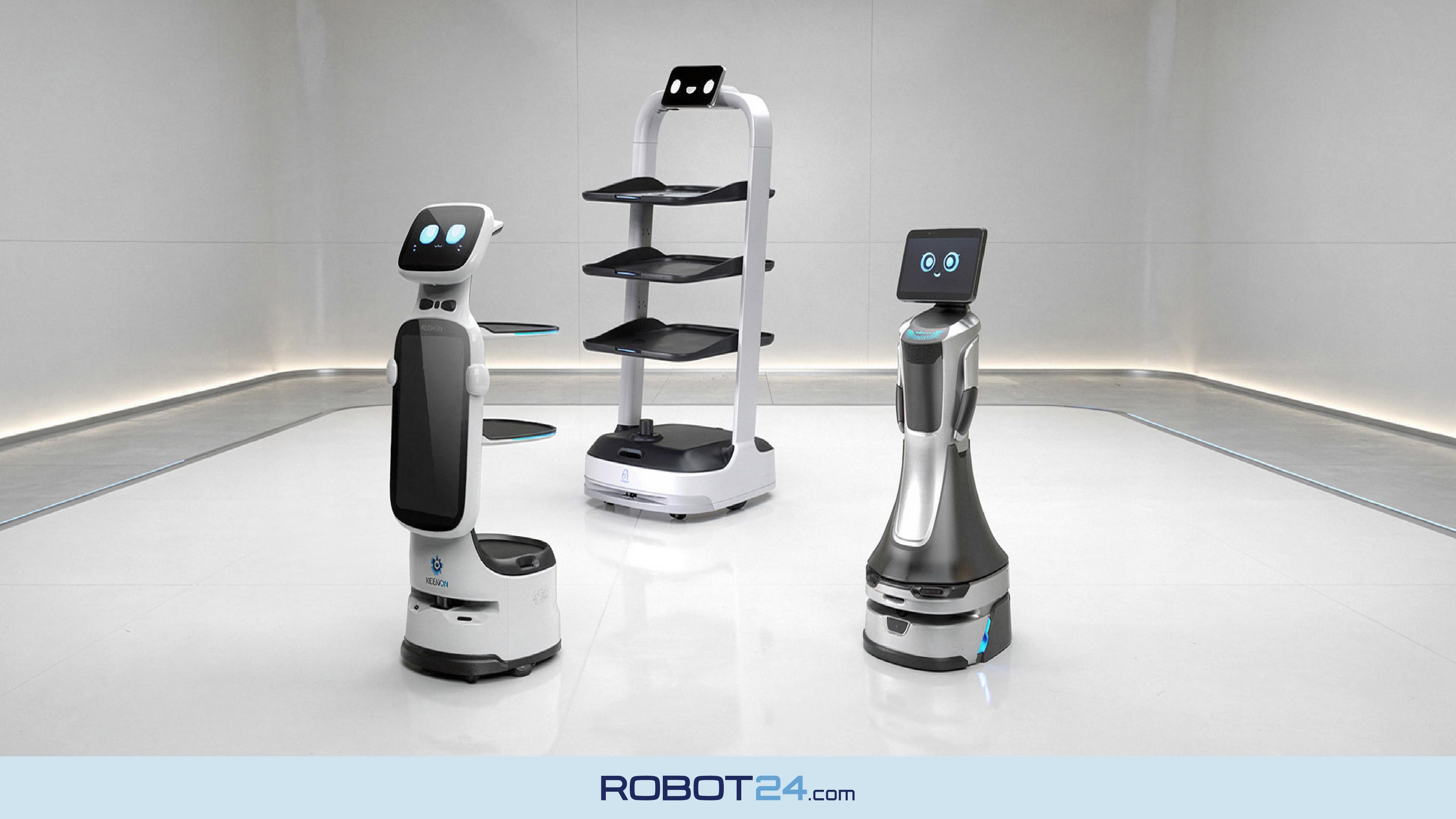
That is the difference between a robot that just can carry a bunch of orders and one that really can cut the amount of work for serving multiple tables. If a restaurant delivers to more than one table at a time, the process is just as important as how many orders a robot can carry. Staff need to assign each robot what tray to carry, send out to multiple locations, find completed handoffs and navigate a no-go delivery.
The ROBOT24.com 2026 ranking evaluates OrionStar LuckiBot Pro, KEENON DINERBOT T11 and PUDU Bot 2 on these use cases. This evaluation considers multi-stop dispatch, order-to-tray assignation, handoff visibility, missed-stop recovery and staff setup. Rankings are based on workflows documented in online available product literature, not direct evaluation in a restaurant setting.
At a Glance
| Rank | Robot | Editorial score | Standout feature | What to verify in a demo |
|---|---|---|---|---|
| 1 | OrionStar LuckiBot Pro | 86.0/100 | Documented tray-by-tray task setup and pickup cues | Whether staff can defer an uncollected order and retry it after the last stop |
| 2 | KEENON DINERBOT T11 | 76.0/100 | Documented multi-point delivery and guided pickup | How staff link an order to a tray and skip or retry a stop |
| 3 | PUDU PuduBot 2 | 71.0/100 | Three standard trays and documented multi-table delivery | How staff assign trays, reorder stops and handle an uncollected order |
The Robots Behind the Rankings
1. OrionStar LuckiBot Pro: Best Documented Tray-to-Table Workflow
Overall score: 86.0/100
The OrionStar LuckiBot Pro can carry orders for several tables in one trip. Staff put each order on a separate tray and tell the robot which table each tray is for. At each stop, the robot uses a voice prompt and a flashing light to show which tray to take from. Once it detects that the order has been collected, it moves to the next table.
Another positive is the handoff. The robot signals to diners and staff via voice and flashing lights when an order is ready to be picked up at its destination. And as soon as it registers that the customer has grabbed their item, the robot proceeds to the next destination. This provides a more obvious cue between table transmissions.
OrionStar also logs a warning if an item is retrieved ahead of where the robot is meant to be at the time. Staffs can then either deliver it or skip forward to the next table. Its manual shows how it nags again for unclaimed orders. But there's no clear indication it allows employees to skip a missed stop and nudge the robot to retry it later. That recovery process should be shown off pre-launch.
2. KEENON DINERBOT T11: Multi-Point Delivery with Guided Pickup
Overall score: 76.0/100
The KEENON DINERBOT T11 is a close second, as it's rated for multi-point delivery and shows tray-detection display for pickup. This can be useful for restaurants that prefer to send off multiple orders to several tables at once rather than having a robot service the order table by table.
It is an interesting indication of the possible complexity of the published delivery process, although many pragmatic aspects are yet to be verified. For example, it will be necessary for restaurants to clarify how staff identify each meal with a tray, or diners do identify the right meal when the robot reaches the table.
An instructive demonstration would further involve the ability to specify that a table is not prepared to receive its served food. Is the T11 required to proceed to other remaining destinations, disregarding the temporarily dropped and then recovered table and return to the missed one? Until that functionality is demonstrated on the actual proposed layout, that missed-stop recovery must be considered an unverified feature.
3. PUDU PuduBot 2: Straightforward Three-Order Loading
Overall editorial score: 71.0/100
For restaurants that need to deliver multiple orders in a single trip, the PUDU Bot 2 provides a simple way to get started. PUDU recommends three trays as its default but has Pudu Bot 2 on the list of models with multi-table delivery. That makes it simple to get three orders loaded with each order on its own tray.
That doesn't, though, immediately tell us how quickly staff are able to track three deliveries with three orders. The public material at hand provides little insight into key workflow considerations, especially whether we can allocate each tray to a destination, then re-route at delivery.
Prior to selecting the Pudu Bot 2 for this role, they should request a demo run with three orders and three table destinations, and staff should see if they can alter the stop order, and what happens if a customer fails to pick up an order. It'll all give an idea of what manual control still exists for a multi-stop run.
Which Robot Best Fits a Multi-Table Restaurant?
The new OrionStar LuckiBot Pro is top of the table for this leaderboard because the publication that came with it offers the most complete description of a tray assignment, pickup indicators and progression to table. It is the best primer for a transparent tray to table process.
The KEENON DINERBOT T11 might also be worth considering for multi-point delivery with guided pickup. Its order-assignment and missed-stop procedures should be demonstrated more fully before any conclusion is drawn. The PUDU Bot 2 has a well-defined three-tray arrangement and documented multi-table delivery, but staff should check out how its task assignment and route-management process actually works.
To be fair to all three, they should each perform the same challenge: they should load three orders, then go to three table locations and perform the route using identical aisle widths, tray loads and table placements. Run the route with all tables ready, then do it again with nobody grabbing the second order.
Save if the robot manages the other deliveries, times staff have to step in, how long the robot waits and if it can try to deliver missed orders without restarting the whole run. These results will tell us more about its utility to the restaurant than the tray capacity alone.
Ranking Explained
The ranking scores each robot on five factors pertaining to the actual work involved in efficiently serving a small number of tables on a single trip.
| Parameter | What We Assess | Weight |
|---|---|---|
| Multi-stop dispatch | How staff queue three destinations and launch them in one run | 30% |
| Order-to-tray assignment | How clearly each order and destination are linked to a tray | 25% |
| Handoff clarity | How staff or diners know which order to collect and how the robot confirms pickup | 20% |
| Recovery when a table is missed | What staff can do when an order is uncollected, taken early or needs a retry | 15% |
| Staff setup | The steps required to load, assign and launch the run | 10% |
Scoring Detail
| Rank / Robot | Dispatch | Tray Assignment | Handoff | Recovery | Setup | Weighted Total |
|---|---|---|---|---|---|---|
| 1. OrionStar LuckiBot Pro | 9 | 9 | 9 | 7 | 8 | 86.0/100 |
| 2. KEENON DINERBOT T11 | 9 | 7 | 8 | 5 | 8 | 76.0/100 |
| 3. PUDU PuduBot 2 | 8 | 7 | 7 | 5 | 8 | 71.0/100 |
Each criterion will be allocated a score of 10 and converted to a weighted total out of 100. Very low scores may highlight missing procedures in the publicly available workflow such as missed-stop recovery. These are editorial judgements of publicly available product data, not a delivery accuracy, restaurant throughput or staff time saving metric. Final suitability should be verified through a demonstration with the restaurant in the same configuration and operating environment.
More articles on this topic
55 articles ReportThe Best Robots for Interactive Art Galleries and Museum Exhibits 2026
 ReportBest Robots for Serving Drinks at Events
 ReportBest Robots for Answering Product Questions in Showrooms 2026
 ReportBest Robots for Multilingual Reception Desks 2026
 ReportBest Full-Size Humanoids for Live Brand Launches and Events 2026
 ReportThe Best Robots for In-Store Promotions 2026
 ReportThe Best Robots for Sweeping Covered Loading Bays 2026
 ReportBest Compact Humanoids for Staffed Live Demonstrations
 ReportBest Robotic Mowers for Large Commercial Lawns 2026
 ReportBest Robots for Routine Dry Vacuuming on Commercial Hard Floors 2026
 ReportBest Robots for Routine Inspection in Hazardous Process Plants 2026
 ReportBest Warehouse Inventory Drones for Counting High-Rack Pallets 2026
BUSINESS NEWS WEEKLY LETTER
The Weekly Letter for Robotics Professionals, Summarizing the Most Important Industry Moves, Launches, Deals and Signals.