Best Robots for Routine Inspection in Hazardous Process Plants 2026
Here we compare three different robotic solutions for performing periodic visual inspection rounds in dangerous process environments: from legged inspection robots to a tracked industrial platform.

November 10, 2026 by Business Desk Team
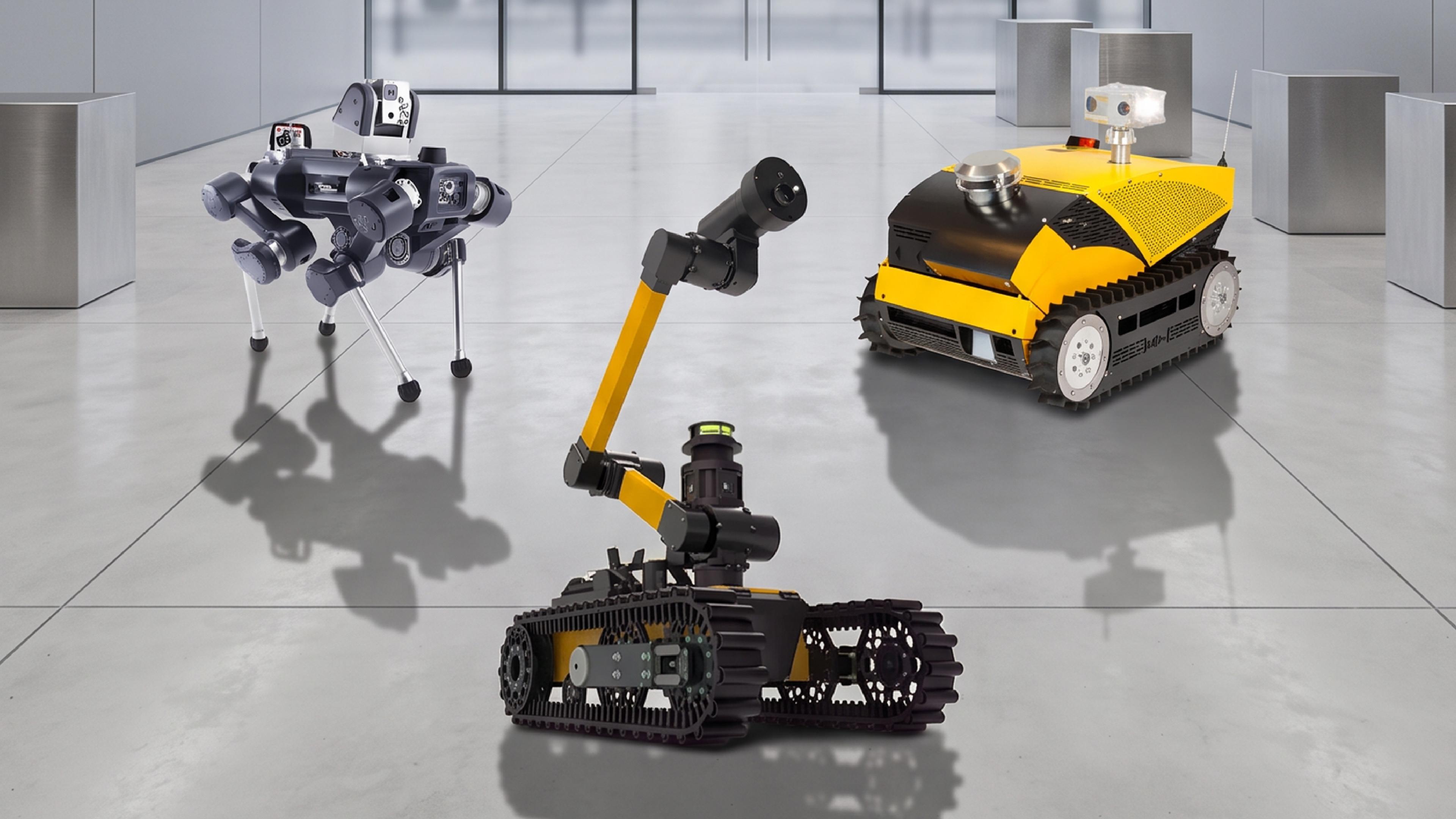
Hazardous process plants require regular inspection of equipment, infrastructure and operating areas. Sending personnel into potentially hazardous locations for repetitive inspection tasks can introduce operational risks. Mobile inspection robots offer an alternative by collecting visual evidence and reporting observations to operators.
But when it comes to choosing a robot for these conditions, it's not just a matter of mobility or sensor features. The system configured must be able to obtain the same site-necessary hazardous-area certification. Certification is thus an eligibility factor, not a bonus for scoring.
This ranking compares ANYbotics ANYmal X, Taurob Inspector and ExRobotics ExR-2 against one shared task: completing routine visual inspection rounds in a hazardous process area. Five practical criteria are scored: inspection sensor compatibility, route and terrain compatibility, mission repeatability, report creation and integration, and deployment and maintenance.
The scores are as sent in, editorial assessment supplied. They should only be used after a check has been done on the certification documents of all three proposed setups against the same site requirement.
AT A GLANCE
| Rank | Inspection robot | Overall score | Standout assessment | Best suited to |
|---|---|---|---|---|
| 1 | ANYbotics ANYmal X | 88.5 | Strong marks across inspection sensors, mobility, repeatability and reporting | Hazardous process sites requiring recurring visual inspection rounds |
| 2 | Taurob Inspector | 84.5 | Strong assessment for inspection sensor fit and mission repeatability | Industrial inspection routes where configured site eligibility is confirmed |
| 3 | ExRobotics ExR-2 | 82.0 | Strong mission-repeatability mark with consistent scores across other criteria | Hazardous-area inspection evaluations involving tracked robotic platforms |
The same site-required certification must be met by the three configurations before the scores can be used for a procurement comparison.
The Robots Behind the Rankings
1. ANYbotics ANYmal X
Overall score: 88.5/100
The highest-ranked inspection platform
For the overall highest rating, the pristine ANYbotics ANYmal X reaches the top spot with a stated score of 88.5. It scores 9/10 for inspection sensor fit, 9/10 for route and terrain fit, 9/10 for mission repeatability, 9/10 for reporting and integration, and 8/10 for deployment and service.
The most prominent evaluation for the robot is extended in four of the five criteria. When it comes to general inspections in process plants these points are important because the robot has to make it to the checkpoints, hence, follow its route and deliver good results back to operators.
ANYbotics announced the release of ANYmal X, a platform designed for harsh industrial environments. Read more about this launch in an official announcement from ANYbotics.
The product's hazardous-environment classification does not in itself confer all plants. The specific robot configuration, approved classification, conditions of use, site specification should be verified prior to use.
2. Taurob Inspector
Overall score: 84.5/100
A strong assessment for inspection and repeatability
Taurob Inspector with a score of 84.5. Inspection sensor fit 9/10, route and terrain fit 8/10, mission repeatability 9/10, reporting and integration 8/10, deployment and service 8/10.
It scores highest for inspection sensor fit and mission repeatability. These are important factors for repeated inspection rounds, where the system has to gather relevant evidence at known check points and maintain reporting.
Taurob Inspector is part of the tracked inspection platform, bringing an alternative mobility concept to the comparison with the legged ANYmal X.
The following information, supplied, does not clarify which configuration of Taurob Inspector has been supplied, nor show the certification documentation for it. The scope of the certification for this proposed system, sensor package and its suitability for this plant needs to be established before it is considered eligible.
3. ExRobotics ExR-2
Overall score: 82.0/100
A reproducible evaluation with high repeatability score
The ExRobotics ExR-2 earns 8/10 for inspection sensor fit, 8/10 for route and terrain fit, 9/10 for mission repeatability, 8/10 for reporting and integration, and 8/10 for deployment and service.
Its top score, for mission repeatability, applies to process plants, where standard inspection rounds require the same locations and provide evidence that operators can access at a later date.
The ExR-2 introduces another tracked platform to the lineup which will give the ranking the ability to assess systems that travel along very different mobility options in the industrial inspection space.
The production brief does not specify the precise ExR-2 configuration, certification, or detailed deployment conditions. These will need to be verified using the same hazardous-area criteria as for the other shortlisted systems.
The Best Fit Depends on Site Certification and Inspection Requirements
In hazardous process plants, the initial issue is not which robot has the greatest score. Rather, it's whether the proposed application has been approved for use in the hazardous area where it is expected to work.
Performance evaluation comparisons should only be made between comparable systems that have the same site required certification. Verify certification with the particular configuration quoted, including sensors and accessories, instead of checking based solely on robot product-family description.
The ANYbotics ANYmal X tops the supplied scoring, with four strong marks. Taurob Inspector gets strong scores for sensor fit and mission repeatability, and ExRobotics ExR-2 scores a strong mark for repeatability.
A procurement assessment should include one plant brief that has been agreed upon, including inspections points, route conditions, sensors required, reports required and service standard. Certification documentation for all three bids should be reviewed prior to the final rankings being published.
This comparison features both tracked and legged platforms. It overlaps with ROBOT24.com's published industrial inspection quadruped ranking, so may not carry as much editorial weight.
RANKING EXPLAINED
| Parameter | What was assessed | Weight |
|---|---|---|
| Inspection sensor fit | Suitability of the configured inspection sensors for the required visual checks | Not supplied |
| Route and terrain fit | Ability to navigate the specified plant routes and operating surfaces | Not supplied |
| Mission repeatability | Suitability for completing recurring inspection rounds and checkpoints | Not supplied |
| Reporting and integration | Ability to return inspection evidence and work with operator reporting systems | Not supplied |
| Deployment and service | Practical deployment requirements and ongoing service considerations | Not supplied |
Once scoring, each proposed configuration should satisfy the same site-required certification. Any configuration that cannot show this requirement should be removed from the ranking instead of being penalized with a lower performance score.
SCORING DETAIL
| Inspection robot | C1: Inspection sensor fit | C2: Route and terrain fit | C3: Mission repeatability | C4: Reporting and integration | C5: Deployment and service | Reported total |
|---|---|---|---|---|---|---|
| ANYbotics ANYmal X | 9 | 9 | 9 | 9 | 8 | 88.5 |
| Taurob Inspector | 9 | 8 | 9 | 8 | 8 | 84.5 |
| ExRobotics ExR-2 | 8 | 8 | 9 | 8 | 8 | 82.0 |
The original brief did not include criterion weighting, so the totals have been kept as reported with no weighting applied. The basic averages of the five marks are 88, 84 and 82 respectively, rather than the reporting 88.5, 84.5 and 82.0. Verify the scoring formula/calculations in the final table before publication.
This is a draft, editorial ranking for ordinary visual inspection in hazardous process plants. There is no independent, matched-condition test of the three systems, and no robot should be considered eligible for purchase until the precise quoted configuration and corresponding certification documents are cross-referenced to the exact same site requirement. Sensor packages, operating parameters, reporting capabilities, and service agreements should similarly be compared. This comparison is completely separate from the ranking of basic industrial inspection quadrupeds – it's only when the hazardous-site brief and hazardous-site certification requirement are the defining factor that this ranking is valid.
More articles on this topic
47 articles ReportBest Compact Humanoids for Staffed Live Demonstrations
 ReportBest Robotic Mowers for Large Commercial Lawns 2026
 ReportBest Robots for Routine Dry Vacuuming on Commercial Hard Floors 2026
 ReportBest Warehouse Inventory Drones for Counting High-Rack Pallets 2026
 ReportBest Scrubbing Robots for Shopping Centre Concourses
 ReportBest Portable Robots for Cleaning Ground-Mounted Solar Panels 2026
 ReportBest Window-Cleaning Robots for Large Home Windows 2026
 ReportBest Robots for Spot Cleaning Retail Hard Floors
 ReportBest Wire-Free Robot Mowers for Hotel and Campus Lawns 2026
 ReportBest Compact Robot Scrubbers for Offices with Tight Layouts 2026
 ReportThe Best Wet-Cleaning Robots for Small Shops 2026
 ReportBest Robots for Retrieving Totes From Tall Warehouse Racks 2026
BUSINESS NEWS WEEKLY LETTER
The Weekly Letter for Robotics Professionals, Summarizing the Most Important Industry Moves, Launches, Deals and Signals.