Rockwell's AI Ambitions Test the Limits of Factory Automation
Rockwell Automation wants AI to take on more industrial tasks, but manufacturers face questions about safety, reliability and how much control software should have over machinery.

October 28, 2026 by Artem
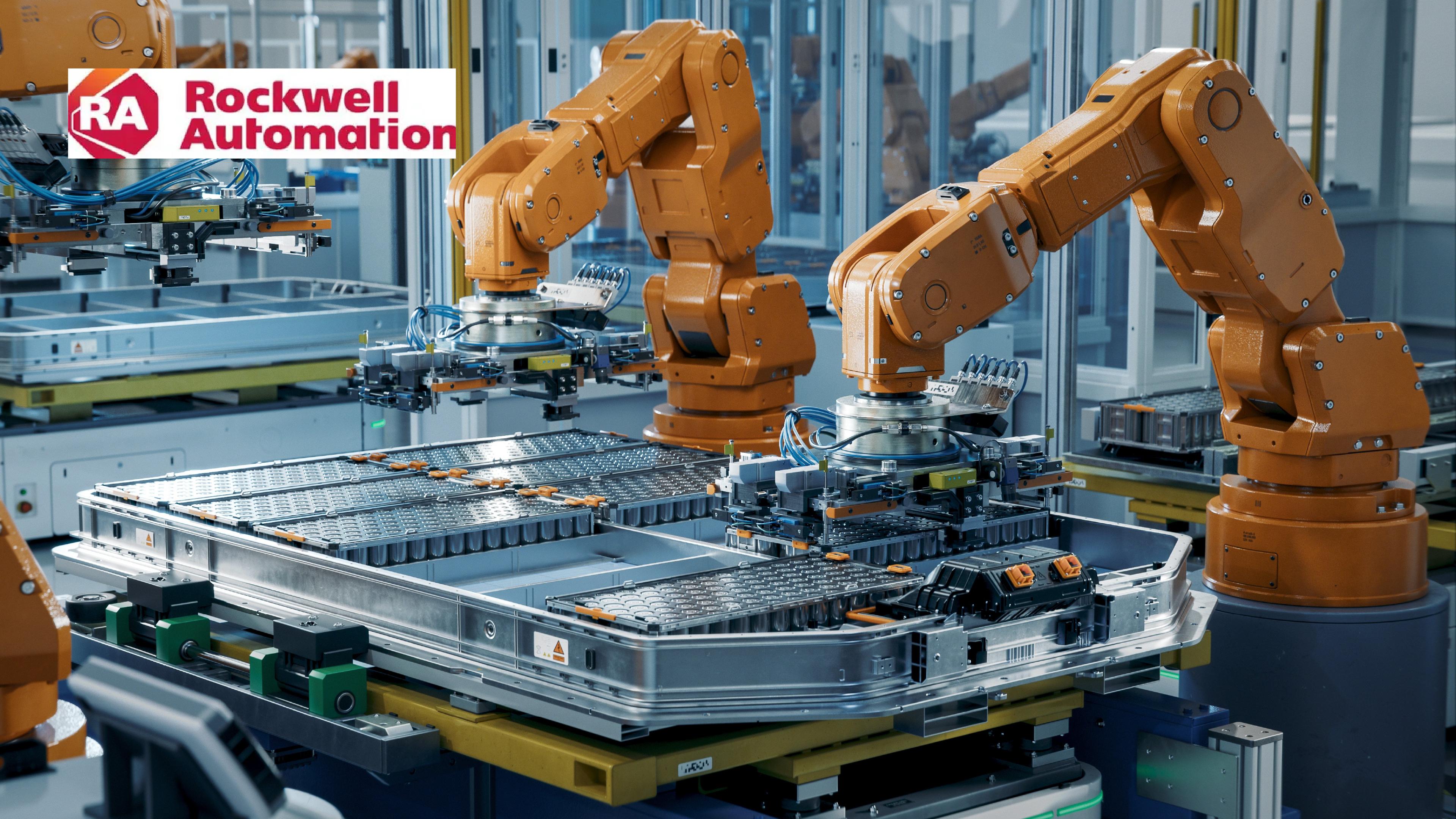
MILWAUKEE -- Rockwell Automation has unveiled industrial controllers and AI software meant to help make factories operate autonomously. But making AI play a more prominent part in production processes raises the question of how the machines would be programmed to act when automated decisions go wrong.
The American company presented its updated technology portfolio Oct. 27, prior to Automation Fair 2026, which features, among others, LogixEdge, an industrial controller said to unite traditional industrial control and information technology and AI workload capabilities for autonomous control.
It comes after FactoryTalk Conductor was presented Oct. 21 as a software designed to synchronize activities of AI agents in industrial engineering applications. The platform is set to be launched commercially in the first quarter of 2027.
LogixEdge and FactoryTalk Conductor mark two stages of the automation process. The latter begins with engineering tasks such as design, simulation, and testing. LogixEdge puts the AI processing capability closer to those systems that control machine operation.
AI assistance in designing a production process differs from the authorization of software to change machine behavior during operation.
Where AI Control Meets Safety Limits
Programmable controllers are currently employed to carry out instructions, monitor sensors, and coordinate machinery in factories. The use of AI would increase the flexibility of factory operations through the analysis of conditions and suggesting changes that go beyond set sequences.
However, the problem lies in the fact that such changes should stay within the safe operational limits.
Suggestions for combining AI with Operational Technology provided by Australian and international cybersecurity organizations list safety risks, reliability risks, and cybersecurity risks. They stressed that large language models should not be able to make any critical safety decisions.
Thus, there should be some sort of AI-independent protection. For instance, if the system suggests increasing the speed of operation, it should not result in dangerous machine actions.
Furthermore, the testing is complicated bedause the behavior of AI is conditioned by the current working conditions and input information rather than set instructions. Thus, manufacturers should know how their systems behave under conditions of incorrect sensor readings and unpredictable output.
The AI Risk Management Framework recommended by the U.S. National Institute of Standards and Technology provides further suggestions regarding monitoring and evaluation for human oversight.
Who Approves the Machine's Next Move?
In addition, connecting AI software to industrial controllers broadens cybersecurity issues.
ISA/IEC 62443 standards cover cybersecurity requirements for industrial automation systems with respect to access control, network security and system integrity.
In case of AI-based processes, manufacturers need to decide on authorized persons, record their decisions and put machines in a stable operating mode after a failure.
According to Rockwell, FactoryTalk Conductor will enable AI agents to interact within engineering software. The first integrations provided by Rockwell include Studio 5000 Logix Designer, Logix Echo, Emulate3D and FactoryTalk Optix. But it does not mean that AI agents can operate production machines independently.
At the same time, Rockwell's press releases do not clarify to what extent the new AI-based controllers will make decisions in everyday factory activities. Also, the manufacturer provided no comparative results concerning the performance of its autonomous control capabilities.
More articles on this topic
112 articles ReportUnitree Reports 17% Profit Drop in First Earnings Since IPO
 ReportMachenta Raises $40M to Develop Robots That Learn From One Demo
 ReportQiyuan Claims 20-Fold Daily Robot Production Jump in One Month
 ReportMaxinsights Updates $30M Robot Training Funding Release
 ReportChina's Humanoid Supply Chain Moves Toward Industrial Production
 ReportFFR Sees 2,000 Robot Shipments in 2026 as Faraday Deal Closes
 ReportFormer OpenAI Executive Raises $215M for Robotic Labs
 ReportAgility Expands Humanoid Rollout With GXO to Two More US States
 ReportEnact Intelligence Raises $30M for Development of Force-Aware Robots
 ReportChina Launches First National Standards for Humanoid Robots
 ReportDEEP Robotics Reports Navigation Gains With New Embodied AI Models
 ReportResearchers Show How Two Letters Can Manipulate Robot Behavior
BUSINESS NEWS WEEKLY LETTER
The Weekly Letter for Robotics Professionals, Summarizing the Most Important Industry Moves, Launches, Deals and Signals.