PUDU FlashBot vs. KEENON DINERBOT T3
PUDU FlashBot and KEENON DINERBOT T3 are commercially available autonomous service robots designed for indoor delivery tasks. Both support automatic charging, fleet management and multi-robot coordination, but differ in size, speed and intended applications. We compare their specifications, navigation capabilities, battery endurance and suitability for commercial environments.

November 19, 2026 by Business Desk Team
Introduction
Autonomous robots are commonly employed in the transport of foods, supplies and other materials within commercial structures.
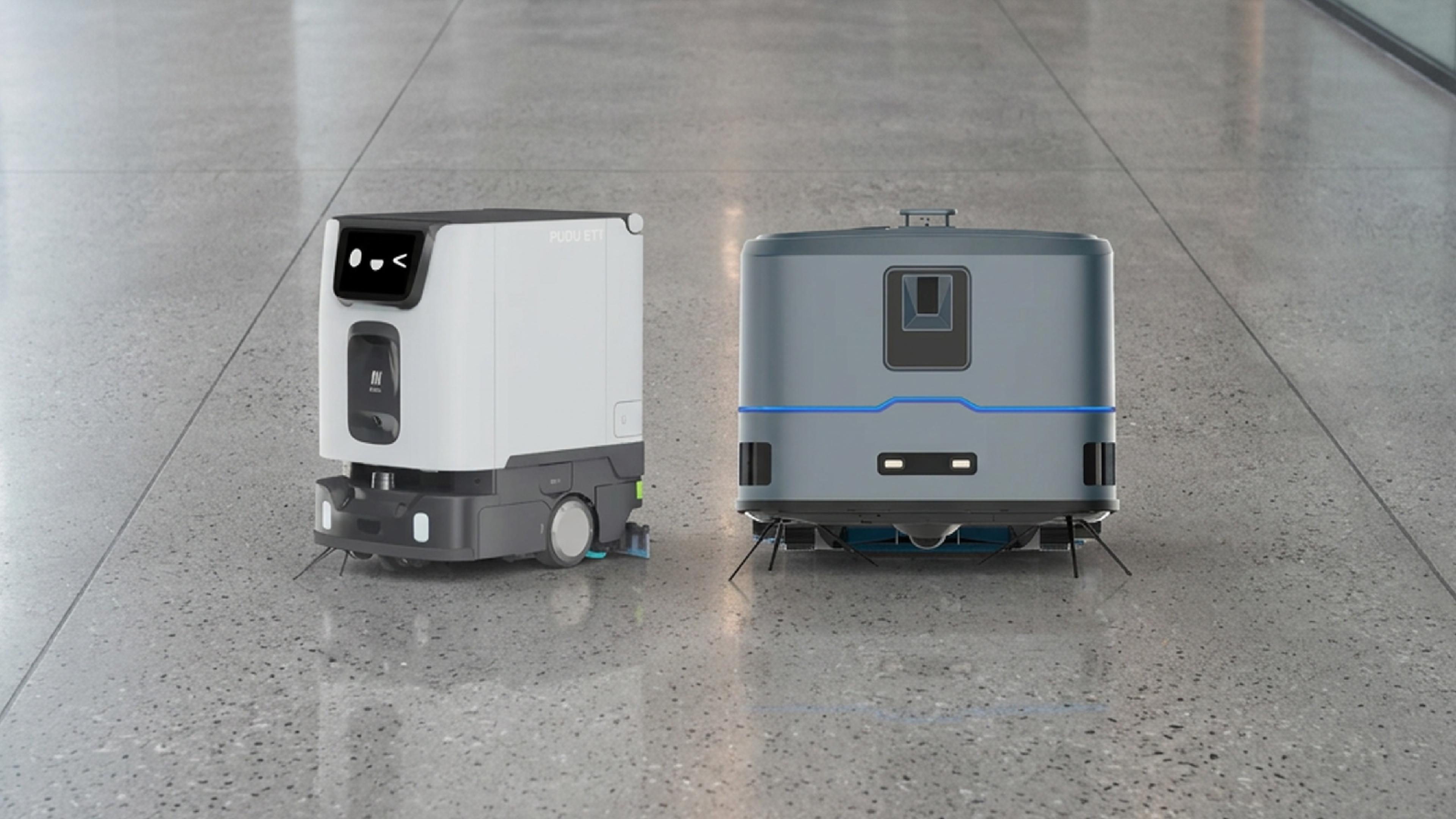
However, requirements differ substantially in restaurants, hotels, hospitals and other indoor locations. PUDU FlashBot and KEENON DINERBOT T3 are two wheels-based autonomous mobile robots used in indoor service applications.
FlashBot robot is 105 cm in height, weighs 55 kg and has a variable maximum traveling speed of 1.5 m/s. On the other hand, DINERBOT T3 robot is taller and heavier, having a height of 135.1 cm and weight of 71 kg with a maximum travel speed of 1.0 m/s.
Both robots have a runtime of 12 hours, self-charging capabilities, autonomous navigation and fleet management systems. Their recorded specifications show variations in terms of physical size, maximum movement speed, charging duration and multi-robots coordination.
This comparison study highlights the mobility, operation endurance and navigation capabilities of both robots based on ROBOT24.com market research data records.
At a Glance
| Metric | PUDU FlashBot | KEENON DINERBOT T3 |
|---|---|---|
| Height | 105 cm | 135.1 cm |
| Max speed | 5.4 km/h | 3.6 km/h |
| Runtime pr charge | 12 hours | Up to 12 hours |
| Weight | 55 kg | 71 kg |
| AMR Classification | Yes | Yes |
| Automatic Charging | Yes | Yes |
| Autonomous Navigation | Yes | Yes |
| Availability | Commercially Available | Commercially available |
| Charging Time | 4.5 hours | Approximately 5 hours |
| Dimensions | 539 × 515 × 1050 mm | 623 × 496 × 1351 mm |
| Fleet Management | Yes | Yes |
| Indoor Operation | Yes | Yes |
| Maximum Speed | 0.5–1.5 m/s (adjustable) | 1.0 m/s |
| Mobility Type | Wheeled | Wheeled AMR |
| Multi-Robot Coordination | Yes | Yes (up to 20 robots) |
| Nationality | Chinese | Chinese |
| Outdoor Operation | No | No |
| Runtime | Up to 12 hours | Up to 12 hours |
| Wi-Fi | Yes | Yes |
| Typical use | Food Service | Hospitality, Healthcare, Food Service |
| Status | Commercial | Commercial |
How They Compare
Product positioning and applications
Both PUDU FlashBot and KEENON DINERBOT T3 are intended for indoor autonomous delivery, although their respective application categories are different.
FlashBot is positioned as food service, while DINERBOT T3 belongs to the list of applications including hospitality, healthcare and food service. Thus, it is possible to speak about potential operating environments of these robots rather than their performance results in certain facilities.
Both robots can be useful for companies that intend to use them for automating repetitive transportation tasks.
However, depending on the kind of the items that are to be transported, the loading and unloading procedure, as well as the characteristics of the building itself, the choice will vary. The supplied specifications do not present any comparable payload capacities or compartment structures.
Physical dimensions and weight
PUDU FlashBot has the following physical dimensions – 539 × 515 × 1,050 mm, and the weight of the robot equals 55 kg. KEENON DINERBOT T3 has the following physical dimensions – 623 × 496 × 1,351 mm, and the weight of the robot is 71 kg.
The height of FlashBot is 30.1 cm less than the one of T3, and the difference in the weights of these robots is 16 kg. Besides, the length of FlashBot is 84 mm less, but the body width of T3 is slightly smaller than that of FlashBot.
However, the performance of robots during their moving is dependent not only on their dimensions and weight but also on their turning radius, obstacle-detection range, etc. But these specifications are not provided by the supplied records.
Movement speed
PUDU FlashBot has a range of the maximum speed from 0.5 m/s to 1.5 m/s; thus, the maximum speed of the robot is 5.4 km/h. KEENON DINERBOT T3 has the maximum speed equal to 1.0 m/s, which is equivalent to 3.6 km/h.
Thus, FlashBot has the maximum speed 50% higher than that of T3. However, the maximum movement speed is not always enough for estimating the robot's performance.
Sometimes the robot may move at slower speed depending on the load, the surrounding environment, the proximity to the destination point, etc.
Battery endurance and charging
Both robots, namely FlashBot and T3, have the operating runtime up to 12 hours. This means that their stated maximum endurance is the same, but it can vary in accordance with the movement speed, payload capacity, etc.
The charging times of these robots are not identical, but they are close to each other. FlashBot has a charging time equal to 4.5 hours, whereas T3 takes approximately 5 hours for charging.
This difference in time is about 30 minutes, which means that the stated time of charging FlashBot is shorter than that of T3. But these robots have the function of automatic charging, which reduces the necessity for manually connecting the robot to charging devices.
Fleet management and multi-robot coordination
Both robots have the fleet management and multi-robot coordination. This specification can be especially useful for companies which will use several robots at once for indoor deliveries.
The fleet management systems can perform the task assignment, monitor and manage the operation of robots. DINERBOT T3 has the multi-robot coordination capacity up to 20 robots. However, there is no information about FlashBot's maximum capacity in terms of multi-robot coordination in the supplied records.
Wi-Fi connectivity
Both robots have Wi-Fi connectivity. The ability to work with the Wi-Fi can help to control robots with the help of fleet management system, change tasks and monitor their performance remotely.
However, this specification alone does not indicate any equivalency of software capabilities of the robots. No information about the standards, network security requirements and management interfaces of robots is provided in the supplied records.
Indoor operating environments
Both FlashBot and DINERBOT T3 are made for working indoors. Thus, neither robot has outdoor operation among their listed supported features. This distinction can be crucial for facilities planning the routes outside enclosed buildings.
Suitability of the robots for particular indoor environments depends on the surface of the floor, width of passages, pedestrian traffic, and access to various areas in the building. The supplied records do not give any information concerning the elevator integration capability, minimum width of passages, and obstacle crossing performance of these robots. These factors should be estimated for the intended deployment of robots.
Commercial availability and maintenance
Both robots are commercially available according to the supplied records. But the availability of the robots may differ depending on the regions, configurations and distributors. Companies should check such factors as installation requirements, warranties, replacement parts, after-sales support, etc.
The maintenance of these robots may include wheel check, cleaning of sensors, battery inspection, and the maintenance of delivery components. But the supplied records do not give any information concerning the intervals and the cost of maintenance.
Summary
PUDU FlashBot and KEENON DINERBOT T3 are commercially available autonomous robots designed for indoor delivery operations. Both robots have such features as automatic charging, autonomous navigation, Wi-Fi connectivity, fleet management, and multi-robot coordination.
The height of FlashBot is smaller than the one of T3, but its weight is 16 kg lighter, and its maximum speed is higher (1.5 m/s). Besides, the time required for charging of FlashBot is 4.5 hours, and T3 needs 5 hours for the same purpose.
The maximum speed of T3 is 1.0 m/s, and this robot is capable of multi-robot coordination up to 20 robots. Both robots have operating runtime up to 12 hours.
But this comparison does not allow establishing the winner concerning overall performance. FlashBot can be more suitable for companies which value the lightness and small size of the robot and its high speed.
DINERBOT T3 can be useful for facilities which are interested in indoor deliveries using coordinated robots in hospitality, healthcare and food services. But the choice will depend on the payload capacity, delivery configuration, building layout, etc.
This analysis is based on ROBOT24.com market research data records.
More articles on this topic
167 articles ReportRichtech DUST-E S vs. Gausium Phantas
 ReportEngineAI SE01 vs. AGIBOT RAISE A1ReportRichtech DUST-E S vs. KEENON KLEENBOT C20
 ReportPUDU CC1 Pro vs. KEENON KLEENBOT C40
 ReportPUDU ET1 vs. KEENON KLEENBOT C20
 ReportUniRing MAX vs. KEENON KLEENBOT C40
 ReportAGIBOT X2 vs. Unitree R1
 ReportPUDU CC1 vs. UniRing MAX
 ReportPUDU KettyBot vs. KEENON DINERBOT T8
 ReportPUDU KettyBot Pro vs. KEENON DINERBOT T9 Pro
 ReportPUDU CC1 vs. KEENON KLEENBOT C55 vs. UniRing MAX
 ReportCleanfix S170 Navi vs. SoftBank Robotics Whiz vs. KEENON KLEENBOT C30
BUSINESS NEWS WEEKLY LETTER
The Weekly Letter for Robotics Professionals, Summarizing the Most Important Industry Moves, Launches, Deals and Signals.