China's AI Stock Rout Puts Humanoid Robot Boom to the Test
Falling technology valuations and tighter scrutiny of public listings could make it harder for Chinese robotics companies to finance expansion until commercial demand catches up.

October 29, 2026 by Artem
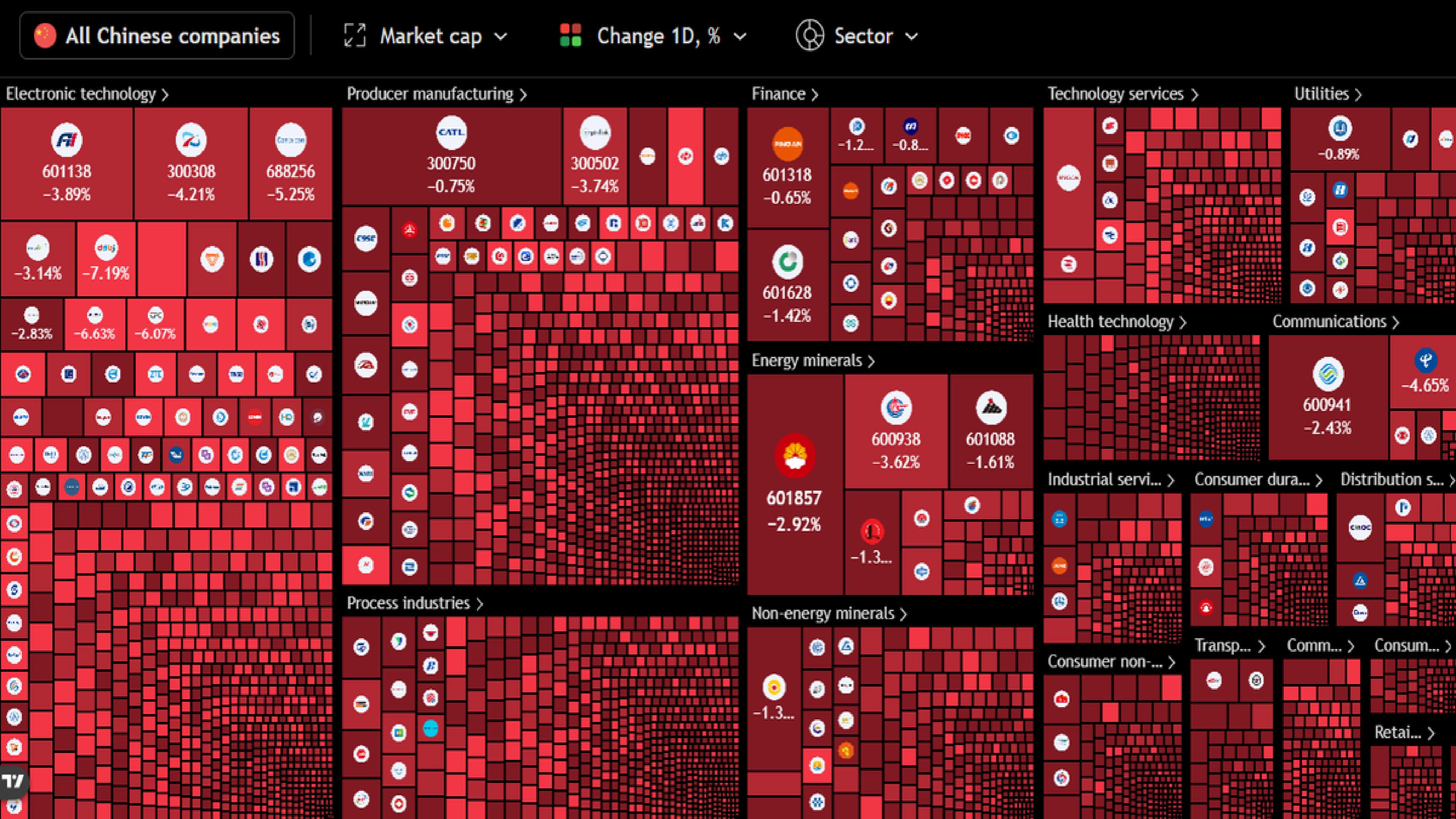
SHANGHAI -- China’s selloff of its tech stocks may pose more challenges for the nation’s humanoid robotics sector, despite having gained significant investments amid ongoing uncertainties regarding consumer demand and profitability.
The selloff worsened Oct. 27, as China’s Shanghai Composite Index fell 1.3 percent, representing its lowest close since August 2025. Its STAR 50 index, which comprises companies in the technology sector, fell 4.8 percent, while the CSI Semiconductor Index dropped by 5.8 percent, and CSI AI Index fell by 4 percent.
This comes amid a selloff in China’s technology sector. As of Oct. 26, the STAR 50 index has seen a fall of about 40 percent in under four months, wiping off approximately $480 billion in market cap.
Chinese stocks managed to recover some grounds Oct. 28, with the Shanghai Composite index increasing by 0.9 percent and the STAR 50 rising by 2.5 percent. Shares of Unitree Robotics rose by around 9 percent.
Unitree, one of China’s leading humanoid makers, had already seen its market valuation cut by almost half since listing in August. The initial public offering was oversubscribed by retail investors by nearly 8,000 times.
The reason for the company’s troubles was a growing focus by regulators on robot companies going public amid fears of unsoundly high valuations and revenue related to state-backed projects.
As far as robot producers are concerned, the problem is with raising money. To build their products, the companies need to invest a lot into actuators, sensors, computational resources, training data and production facilities long before becoming a commercially profitable entity.
While low market values don’t mean less cash in hand for a company, it makes future fundraising more costly, whereas fewer IPOs might push privately held humanoid makers to get more cash from venture capitalists, industrial partners or government-sponsored funds.
Commercial Demand Test
The recession will also highlight contrasts in the robotics industry.
Firms involved in manufacturing automation products for industrial use will be able to prove their worth through customers and improved productivity.
The case is different when it comes to firms that are developing robots of humanoid nature.
These types of firms need to prove that they have robots that can do useful things economically in the real world beyond testing.
The latest set of Unitree's financial numbers explains why revenue growth does not solve the problem of investor worry.
Unitree reported revenue growth of 69.9 percent to 665 million yuan ($100 million) in its third quarter. Its bottom-line profits were reduced by 17.4 percent to 105 million yuan from a year ago. At the same time, its R&D expenses increased by 250 percent to 127 million yuan.
Embodied AI and industrial robots remain the focus of many of China’s government initiatives, manufacturing push, and public investments in technology. Stock market corrections do not necessarily mark an end to such initiatives.
However, the economic climate may become less friendly towards businesses that require continual funding and less about revenues from customers.
For China’s makers of humanoid robots, the challenge is whether their products’ orders, deployments, and profit margins will be enough to grow without the investor valuations from the period of the technology bull run.
More articles on this topic
113 articles ReportAgiBot Unveils Hardware as First-Half Revenue Nears 2 Bln Yuan
 ReportANYbotics Starts Deliveries of Explosion-Protected Quadrupeds
 ReportOtto Group Plans Up to 25 Sereact Robots for Returns Processing
 ReportUnitree Reports 17% Profit Drop in First Earnings Since IPO
 ReportRockwell's AI Ambitions Test the Limits of Factory Automation
 ReportMachenta Raises $40M to Develop Robots That Learn From One Demo
 ReportQiyuan Claims 20-Fold Daily Robot Production Jump in One Month
 ReportMaxinsights Updates $30M Robot Training Funding Release
 ReportChina's Humanoid Supply Chain Moves Toward Industrial Production
 ReportFFR Sees 2,000 Robot Shipments in 2026 as Faraday Deal Closes
 ReportFormer OpenAI Executive Raises $215M for Robotic Labs
 ReportAgility Expands Humanoid Rollout With GXO to Two More US States
BUSINESS NEWS WEEKLY LETTER
The Weekly Letter for Robotics Professionals, Summarizing the Most Important Industry Moves, Launches, Deals and Signals.