AGIBOT G2 vs. KEENON XMAN-F1
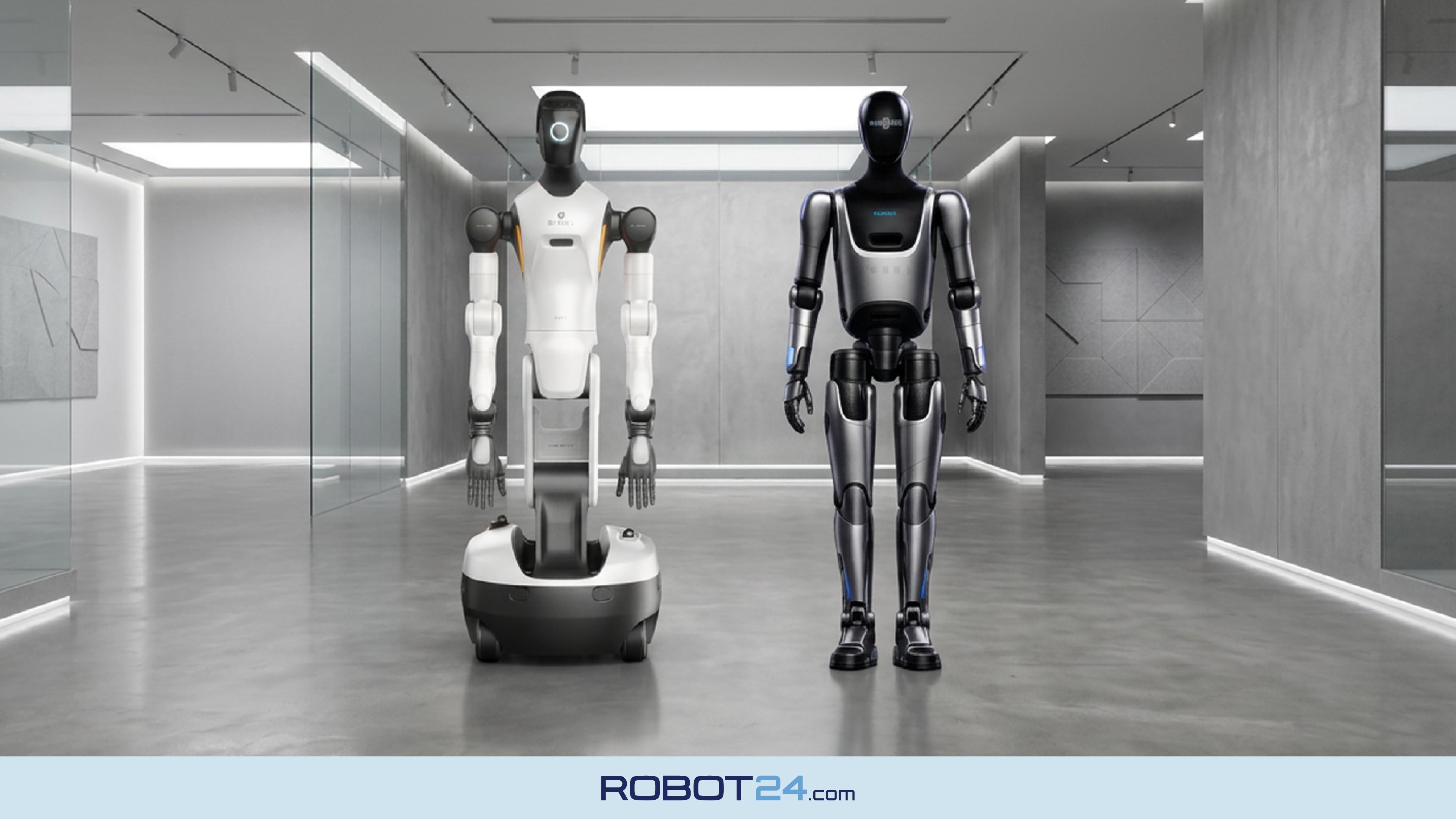
AGIBOT G2 and KEENON XMAN-F1 are Chinese humanoid robots designed for different applications. The 185 kg G2 features adjustable height and targets manufacturing and logistics, while the lighter, 70 kg XMAN-F1 is positioned for hospitality, healthcare and public demonstrations. Both support large language model integration, but differ in physical design, commercial availability and development status.

November 20, 2026 by Business Desk Team
Introduction
There are more and more humanoid robots under development to serve various areas from industrial production and warehousing to customer services and healthcare.
AGIBOT G2 and KEENON XMAN-F1 are examples of two technologies aimed at serving various markets.
G2 is an industrial humanoid robot, which height varies between 122.5–179.5 cm, while its weight equals 185 kg. G2 has been developed for use in manufacturing, industrial applications, logistics and warehousing operations.
XMAN-F1 has a height of 170 cm and weighs 70 kg. Its areas of application include hospitality, exhibition, public presentations and healthcare services.
Integration of large language models can be used by both robots to make interaction in natural language possible.
Nevertheless, their commercial readiness differs – G2 is described as a commercially available robot, while XMAN-F1 was shown publicly, but no information on its commercial availability is provided.
The following comparison is based on data records from ROBOT24.com market research database.
At a Glance
| Metric | AGIBOT G2 | KEENON XMAN-F1 |
|---|---|---|
| Height | 122.5–179.5 (adjustable) cm | 1700 mm |
| Weight | 185 kg | 70 kg |
| Availability | Commercially Available | Publicly Demonstrated — Commercial Availability Not Publicly Disclosed |
| Large Language Model Integration | Yes | Yes |
| Nationality | Chinese | China |
| Typical use | Manufacturing & Industrial Operations, Logistics & Warehousing | Hospitality, Exhibition & Public Demonstrations, Healthcare |
| Status | Commercial | In development |
Source: ROBOT24.com market-research data records.
How They Compare
Physical design and size comparison
The two robots have very different dimensions and weights. AGIBOT G2 has an adjustable height which ranges between 122.5 cm and 179.5 cm, depending on the task and settings. KEENON XMAN-F1 has a constant height of 170 cm. Thus, it is included in G2's adjustable height range.
AGIBOT G2 weighs 185 kg. KEENON XMAN-F1 weighs 70 kg. Thus, G2 is 115 kg heavier, which equals approximately 2.6 times the weight of the latter. Adjustable height of AGIBOT G2 may be useful for performing industrial tasks with workstations of different heights. At the same time, the heavier weight of the robot is likely to impact the needs for transportation and workplace safety. In turn, lightweight design of XMAN-F1 may be useful for situations when the robots are supposed to be moved, although the available specifications do not indicate their mobility.
Industrial applications and service applications
It is worth noting that AGIBOT G2 and KEENON XMAN-F1 are designed for different operating environments. AGIBOT G2 targets manufacturing, industrial operations, logistics and warehousing. Such environments imply that robots are expected to handle materials, interact with equipment and perform other repetitive tasks within a workflow.
KEENON XMAN-F1 is targeted for use in hospitality, healthcare, exhibitions and public demonstrations. Such applications pay more attention to human interaction and communication.
The difference implies their intended role, but not their performance capability. The available records do not contain any comparable payload capacity, task-completion rate or deployment results of the two robots. Consequently, neither AGIBOT G2 nor KEENON XMAN-F1 can be claimed to be better in physical tasks according to its applications.
Integration with large language model
Both robots support integration with large language model. LLM can be used to make robots interpret natural-language instructions, generate responses and communicate with humans.
For AGIBOT G2, such capabilities may be used for task communication or providing information about industrial operations. For KEENON XMAN-F1, such capabilities may help in engaging visitors, giving them information and interacting with them. However, it doesn't necessarily mean that a robot can perform every instruction it receives.
To be able to execute a task physically, a robot also needs to perceive the situation, plan the movement and perform safe manipulations. It is necessary to mention that the exact models of LLM, languages and degree of autonomous task execution have not been indicated in the supplied records for both robots.
Commercial availability and development stage
Commercial availability is one of the clearest differences between the two platforms. According to the supplied records, AGIBOT G2 is commercially available. The commercial status of the robot has been indicated in the ROBOT24.com database.
KEENON XMAN-F1 has been publicly demonstrated, however, the commercial availability has not been indicated in the available records.
It is indicated that the development stage of the robot is in development.
It makes a difference for organizations which want to deploy these robots.
The commercial availability of AGIBOT G2 implies that businesses can consider options for purchasing and deployment of the robot, although they will need to check the regional availability and other details.
Publicly demonstrated KEENON XMAN-F1 means that this platform has already been presented, but it does not mean that it can be purchased and deployed.
Businesses will need to check whether the development stage and sales have advanced further by consulting with KEENON company.
Deployment needs
The different physical characteristics and applications of the two robots imply different deployment needs.
For G2, industrial buyers will need to consider workstation compatibility, payload requirements, safety requirements and the integration with existing manufacturing or warehouse systems.
Its weight of 185 kg is very important for handling, transport and workplace planning.
For XMAN-F1, potential users will need to consider interaction capabilities, visitor safety, navigation and compatibility with service workflows.
Its weight of 70 kg implies certain convenience in the aforementioned aspects; however, this can be confirmed only with the additional information.
Neither robot has the directly comparable battery run time, charging time, navigation speed and degrees of freedom.
Thus, their productivity and endurance cannot be assessed completely.
Summary
Both AGIBOT G2 and KEENON XMAN-F1 are Chinese robots with large language model integration, however, they have different positioning and development stages.
AGIBOT G2 is notable because of its adjustable height which ranges between 122.5 cm and 179.5 cm, as well as its heavier weight – 185 kg.
KEENON XMAN-F1 is lighter – it weighs 70 kg, while its height is 170 cm. Hospitality, healthcare, exhibitions and public demonstrations are the intended applications of this robot.
Commercial availability is another distinguishing factor. G2 is indicated to be commercially available, while KEENON XMAN-F1 is indicated to be in development and its commercial availability is not disclosed.
Organizations which are going to deploy industrial automation should pay attention to G2 because of its applications and commercial availability.
KEENON XMAN-F1 can be interesting for businesses which are interested in humanoid interaction in customer-oriented environments, although its purchasing and deployment availability need to be checked.
Neither robot can be claimed to be an overall performance winner based on the available specifications.
The decision will depend on the needed tasks, physical operating environment and required autonomy.
This comparison is based on ROBOT24.com market-research data records. Task performance and deployment suitability should be checked further technically.
More articles on this topic
170 articles ReportRichtech DUST-E S vs. Gausium Phantas
 ReportEngineAI SE01 vs. AGIBOT RAISE A1ReportRichtech DUST-E S vs. KEENON KLEENBOT C20
 ReportAGIBOT A2 vs. Unitree G1
 ReportOrionStar GreetingBot Mini vs. KEENON GUIDERBOT G2
 ReportPUDU FlashBot vs. KEENON DINERBOT T3
 ReportPUDU CC1 Pro vs. KEENON KLEENBOT C40
 ReportPUDU ET1 vs. KEENON KLEENBOT C20
 ReportUniRing MAX vs. KEENON KLEENBOT C40
 ReportAGIBOT X2 vs. Unitree R1
 ReportPUDU CC1 vs. UniRing MAX
 ReportPUDU KettyBot vs. KEENON DINERBOT T8
BUSINESS NEWS WEEKLY LETTER
The Weekly Letter for Robotics Professionals, Summarizing the Most Important Industry Moves, Launches, Deals and Signals.