Teradyne Invests in Bright Machines to Link Robots and Factory Data
The companies plan to integrate cobots and Teradyne test systems with Bright Machines’ manufacturing platform for AI infrastructure production.

October 6, 2026 by Artem
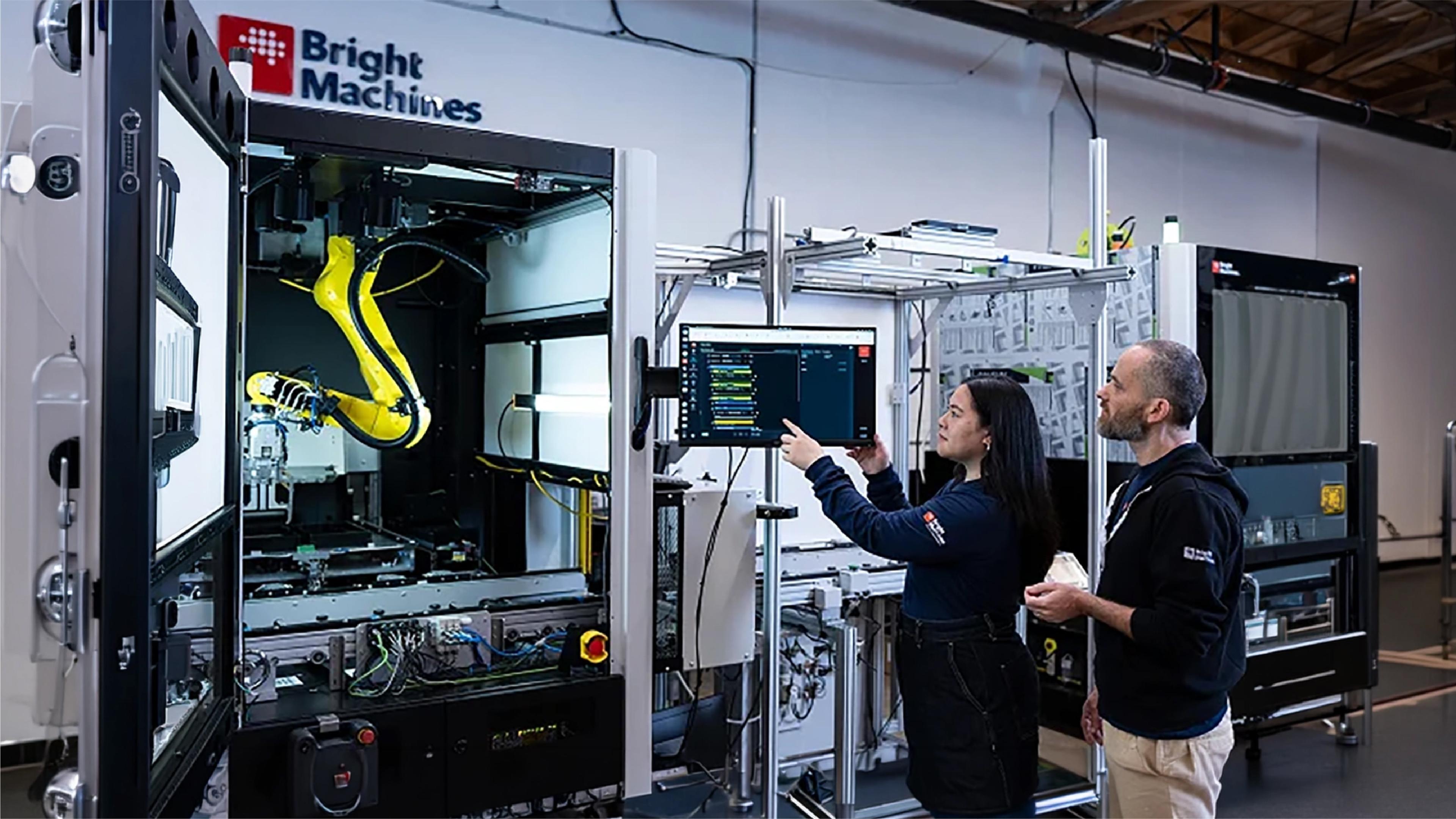
NORTH READING, Mass. - Teradyne invested in Bright Machines to integrate Universal Robots cobots and Teradyne test systems with Bright Machines’ manufacturing platform for AI and data-center hardware.
Neither company disclosed the investment size, Bright Machines’ valuation or Teradyne’s stake in a statement Oct. 5. The deal creates a collaboration to test Teradyne equipment in Bright Machines’ factories.
Potential applications include assembly and inspection records; robot activity; material movement; electrical‑test results.
The planned architecture would combine Bright Machines’ manufacturing platform, collaborative robots from Teradyne-owned Universal Robots and Teradyne board-test equipment. The companies want the systems to share production information, connecting assembly and inspection records with robot activity, material movement and electrical test results.
Bright Machines already uses Universal Robots equipment at its sites. The broader integration described in the investment announcement, however, remains a work in progress that the companies plan to evaluate, rather than a newly announced customer deployment.
Teradyne also owns Mobile Industrial Robots, which develops autonomous mobile robots for internal logistics. This means the company's portfolio includes both collaborative robot arms and mobile systems that could be incorporated into Bright Machines’ manufacturing environments.
San Francisco-headquartered Bright Machines develops a software-defined platform that combines automation, robotics, and production data. The company says it has set up over 130 microfactories in more than 10 countries and serviced upwards of 60 customers. Those figures were not independently verified for this report.
The companies are focusing their collaboration on manufacturing AI infrastructure, where server and other hardware designs can change quickly and production lines may require frequent reconfiguration.
“What limits automation today is not what a robot can physically do but how much engineering it takes to tell it what to do,” said Teradyne’s Chief AI Officer James Davidson in the announcement.
Bright Machines completed a $126 million Series C in 2024: $106 million in equity led by funds managed by BlackRock and $20 million in venture debt from JPMorgan Chase, with investors including Nvidia and Microsoft.
Neither Teradyne nor Bright Machines named customers that will use the integrated architecture, nor did they provide a timetable for when it will be broadly available; they also declined to state expected revenue from the partnership.
More articles on this topic
119 articles ReportCorvus Drones Help ASICS Cut Inventory Recovery Time 60%
 ReportBritish Royal Mail Partner Raises €14.5M for Delivery Robots
 ReportEurope Urged to Launch €11 Billion Physical AI Partnership
 ReportSharpa Supplier Hesai Reports 51% Growth in Lidar Shipments
 ReportIndia’s Humro Secures $5.47 Mln Order for 103 Warehouse Robots
 ReportChina’s UniX AI Raises $75 Million to Expand Robot Deployments
 ReportUBTECH Looks Beyond Industry With China Telecom Partnership
 ReportDexterous Robot Hand Sales in China May Triple in 2026
 ReportNvidia Plans Investment in Robot AI Developer RLWRLD
 ReportCarnegie Mellon Develops Pixel Humanoid for Under $15,000
 ReportFrance’s Physicl Raises $10 Million for AI Training Data
 ReportFieldAI Robots Deployed at Over 10 Construction Sites in Japan
BUSINESS NEWS WEEKLY LETTER
The Weekly Letter for Robotics Professionals, Summarizing the Most Important Industry Moves, Launches, Deals and Signals.