The Best Scrubbing Robots for Large Warehouses and Facilities 2026
We compare five commercial cleaning robots, assessing their cleaning performance, coverage, navigation, servicing requirements and operational support, from heavy-duty floor scrubbing to autonomous cleaning workflows.

October 31, 2026 by Business Desk Team
Introduction
Large warehouses and commercial facilities need floor-cleaning equipment that can cover extensive areas while working around people, obstacles and daily site activity. Autonomous scrubbing robots may offer a solution, but their effectiveness depends on scrubbing quality, optimized routes, water consumption, charging infrastructure and available support.
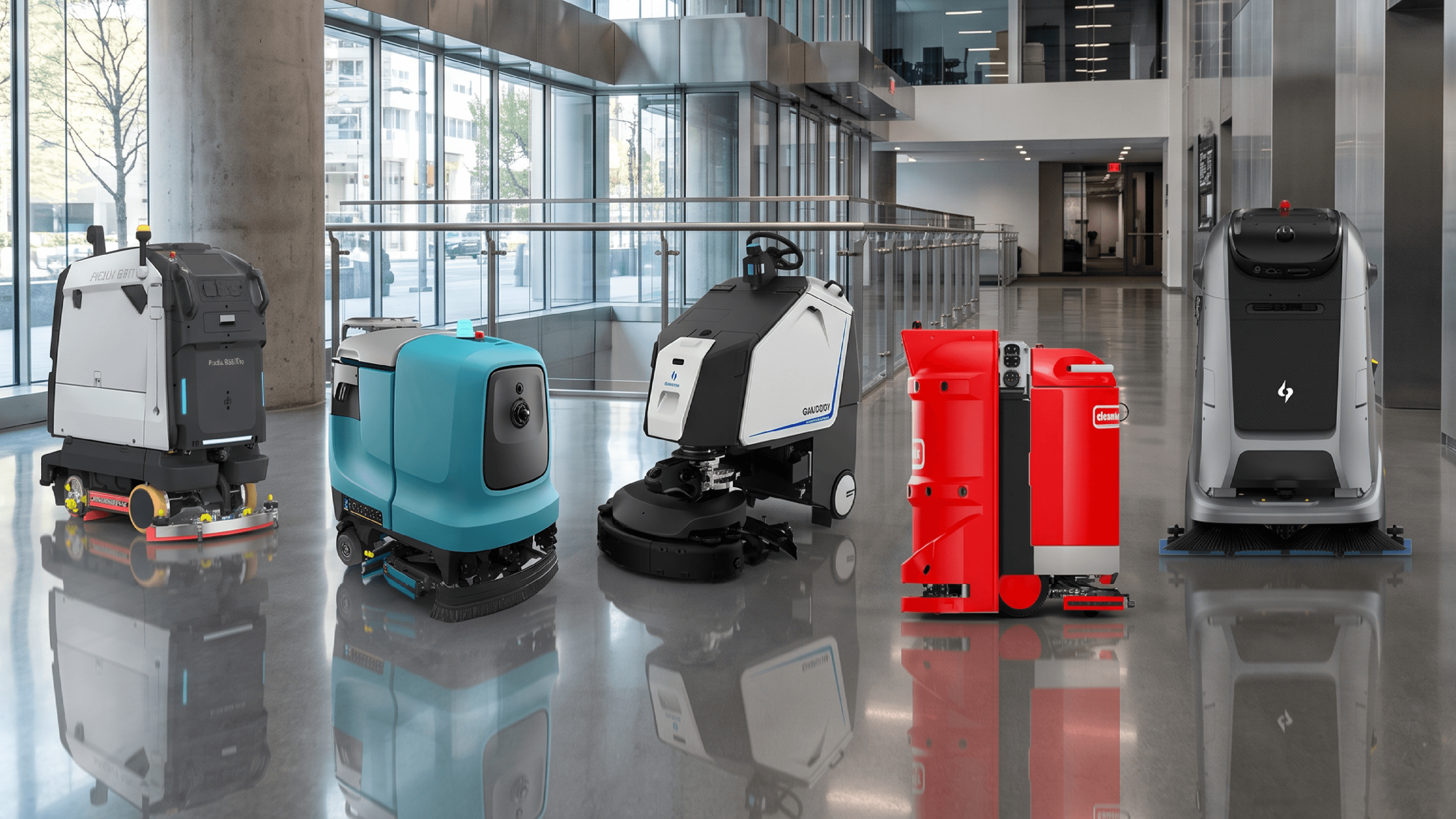
This chart compares five floor scrubbers using the following model names: Gausium Scrubber 75, PUDU BG1 Pro, Cleanfix RA660 Navi XL, Tennant X6 ROVR and Gausium Marvel. These floor scrubbers were rated based on their application of use in large commercial spaces such as warehouses.
We assess each model using the ROBOT24.com market- data research, selected manufacturer material and editorial judgement. Five areas inform the ranking: scrubbing performance and wastewater recovery; practical cleaning coverage and productivity; navigation around people, obstacles and site traffic; water capacity, automatic servicing, runtime and charging; and maintenance, ownership cost, deployment evidence and support. Scores are provisional estimates, not laboratory-test results. The methodology appears below.
AT A GLANCE
| Rank | Robot | Overall score | Standout specification or feature | Best suited to |
|---|---|---|---|---|
| 1 | Gausium Scrubber 75 | 92/100 | Wide-area, heavy-duty scrubbing positioning | Large facilities prioritising extensive floor-cleaning operations |
| 2 | PUDU BG1 Pro | 88/100 | Larger-format autonomous floor-care design | Facilities evaluating larger-format autonomous scrubbing |
| 3 | Cleanfix RA660 Navi XL | 88/100 | Camera-free obstacle detection, re-cleaning logic and service dock | Facilities prioritising obstacle handling and automated servicing |
| 4 | Tennant X6 ROVR | 88/100 | Commercial service ecosystem and autonomous scrubber workflow | Businesses prioritising service support and established cleaning operations |
| 5 | Gausium Marvel | 78/100 | Agile cleaning design for changing routes and mixed spaces | Facilities with changing layouts and mixed cleaning areas |
The Robots Behind the Rankings
1. Gausium Scrubber 75: Built for wide-area cleaning operations
Overall score: 92/100
The Gausium Scrubber 75 takes first place in this assessment with its wide-area, heavy-duty scrubbing positioning. It earns the highest score in the shortlist through its strong overall assessment across cleaning performance, coverage, navigation, servicing and operational support.
Its positioning makes it a candidate for large warehouses and facilities where extensive floor coverage is a priority. However, the practical productivity of an autonomous scrubber depends on more than its cleaning capability. Route planning, site layout and the docking configuration can all influence how effectively it operates across a large facility.
The main consideration is deployment planning. Buyers need to evaluate the locations of their cleaning routes, water-service and dock requirements to determine if the model can reach the necessary productivity. Its top ranking is based on the submitted evidence weighted score, but this performance needs to be validated in a site-specific demonstration.
2. PUDU BG1 Pro: A larger-format autonomous floor-care option
Overall score: 88/100
PUDU BG1 Pro takes the second place with larger-format, autonomous floor-care positioning. It's a worthwhile option for sites exploring autonomous scrubbing machines for more high-end commercial cleaning needs.
Water and service requirements are key drivers of operational uptime at large facilities. The actual productivity of the BG1 Pro will depend on the option selected and the water-service setup at the deployment location. Buyers should therefore consider how the robot will be filled, emptied and serviced during normal operations.
It scores 88/100, placing it in a three-way tie for second position. Its main consideration is the relationship between configuration, water-service arrangements and real-world operating time. Having specific demonstration of a given facility's throughput in water-changer times at the capacity it is designed to handle would be valuable.
3. Cleanfix RA660 Navi XL: Obstacle detection and automated servicing
Overall score: 88/100
The camera-free obstacle detection, re-cleaning logic and service dock on the Cleanfix RA660 Navi XL are supported by very clear evidence of its characteristics for providing autonomous facility cleaning and a clear operational workflow.
The dynamic obstacles are detected without the use of any camera, which makes the robot especially suitable for high-traffic facilities that need to avoid equipment, objects, and other obstacles. The robot's re-cleaning logic provides an additional level of safety, and the service dock enables automated service arrangements.
The RA660 Navi XL shares second place with the PUDU BG1 Pro and Tennant X6 ROVR at 88/100. Its strong score reflects the supplied assessment of its navigation and servicing features. Buyers should still verify cleaning coverage, water-handling requirements and the service-dock configuration for the exact deployment.
4. Tennant X6 ROVR: Commercial service support and autonomous scrubbing
Overall score: 88/100
The Tennant X6 ROVR is crowned among the highest performing through its commercial service ecosystem and autonomous scrubber workflow. When considering autonomous floor cleaning for your business, the service offering and continued support will carry as much significance to your operation as the cleaning robot itself.
The commercial service ecosystem is an important factor to consider for facilities requiring more than the initial installation of the system. The autonomous scrubbing workflow means the floor scrubber can be applicable to organizations that want to add robotic floor care to their current cleaning operation.
The X6 ROVR holds a second place 88/100. The only thing to watch out for is to verify the particular solution to charging and to place for consumables. Buyers should also evaluate the available service coverage, maintenance requirements and operating costs for their location.
5. Gausium Marvel: Agile cleaning for changing environments
Overall score: 78/100
The Gausium Marvel completes the ranking with an agile cleaning proposition suited to changing routes and mixed spaces. Its versatility makes it suitable for sites where the cleaning route may vary across individual spaces rather than adopt a single pattern.
The possible benefit is that it can be programmed for different cleaning situations. It may be able to do this, but the concern may be that some warehouse sizes will need good capacity, and consistent coverage, to do the job.
It ranks fifth with 78/100 and so overall score is lower compared to the larger-format and more facility-based options on this list. Whether or not it is suitable will depend on the size of the site and the extent of cleaning required, and the nature of the routes. Facilities with mixed spaces and changing layouts may still find it worth evaluating.
The Best fit depends on the facility
Gausium Scrubber 75 tops the pack with a score of 92/100, supported by its wide area, heavy duty scrubber and its solid overall average across the five criteria. The PUDU BG1 Pro, Cleanfix RA660 Navi XL and Tennant X6 ROVR follow in a three-way tie at 88/100, each offering a different operational consideration.
Facilities prioritising extensive floor coverage may want to evaluate the Scrubber 75, while those comparing larger-format floor-care options may consider the BG1 Pro. The Cleanfix RA660 Navi XL incorporates obstacle-detection and servicing capabilities, whereas the Tennant X6 ROVR provides a commercial service ecosystem to the comparability. For hybrid areas and ever-changing routes, the Gausium Marvel is perhaps price a glance, relying on capability necessities.
The final choice depends on the facility's floor area, cleaning schedule, site traffic, water-service infrastructure and maintenance arrangements. Comparisons of total ownership cost, post-sale support and actual demonstration in local environment should be made before making a purchasing decision.
RANKING EXPLAINED
There are five practical criteria the robots are measured on – all with equal weight (20%).
| Parameter | What we assess | Weight |
|---|---|---|
| Scrubbing performance and wastewater recovery | Documented cleaning performance, scrubbing capability and wastewater recovery, alongside the reliability of available evidence | 20% |
| Practical cleaning coverage and productivity | Suitability for the intended floor area, practical coverage and the ability to support the required cleaning schedule | 20% |
| Navigation around people, obstacles and site traffic | Autonomous navigation, obstacle detection and movement around people, equipment and changing facility conditions | 20% |
| Water capacity, automatic servicing, runtime and charging | Water capacity, servicing and docking arrangements, operating endurance and charging requirements | 20% |
| Maintenance, ownership cost, deployment evidence and support | Maintenance requirements, ownership-cost considerations, exact-model deployment evidence and available service support | 20% |
Each criterion is scored out of 10 (which is then factored to give a weighted total out of 100). The total is 2 x the sum of the 5 individual scores. Missing, ambiguous or "manufacturer only" evidence is not counted as independently verified. Compare equivalent configurations and distinguish included features from optional extras.
SCORING DETAIL
| Rank / robot | C1: Scrubbing performance | C2: Coverage and productivity | C3: Navigation and obstacles | C4: Water, servicing and runtime | C5: Maintenance and support | Total |
|---|---|---|---|---|---|---|
| 1. Gausium Scrubber 75 | 10 | 10 | 9 | 8 | 9 | 92/100 |
| 2. PUDU BG1 Pro | 9 | 9 | 9 | 9 | 8 | 88/100 |
| 3. Cleanfix RA660 Navi XL | 9 | 8 | 9 | 9 | 9 | 88/100 |
| 4. Tennant X6 ROVR | 9 | 9 | 9 | 8 | 9 | 88/100 |
| 5. Gausium Marvel | 8 | 7 | 9 | 7 | 8 | 78/100 |
Scoring detail Unweighted marks out of 10, in the same order as the 5 criteria above. This scorecard is evidence limited and based on the assessment submitted, generic manufacturer material and editorial judgement. No independent matched-condition benchmark testing has been carried out. Manufacturer claims are not independent validation. Evidence gaps for exact model and uncertainty of costs (enabling systems and separate manufactured components) have lowered confidence. Verify specifications, configurations, servicing and region before publication or purchase.
More articles on this topic
47 articles ReportBest Compact Humanoids for Staffed Live Demonstrations
 ReportBest Robotic Mowers for Large Commercial Lawns 2026
 ReportBest Robots for Routine Dry Vacuuming on Commercial Hard Floors 2026
 ReportBest Robots for Routine Inspection in Hazardous Process Plants 2026
 ReportBest Warehouse Inventory Drones for Counting High-Rack Pallets 2026
 ReportBest Scrubbing Robots for Shopping Centre Concourses
 ReportBest Portable Robots for Cleaning Ground-Mounted Solar Panels 2026
 ReportBest Window-Cleaning Robots for Large Home Windows 2026
 ReportBest Robots for Spot Cleaning Retail Hard Floors
 ReportBest Wire-Free Robot Mowers for Hotel and Campus Lawns 2026
 ReportBest Compact Robot Scrubbers for Offices with Tight Layouts 2026
 ReportThe Best Wet-Cleaning Robots for Small Shops 2026
BUSINESS NEWS WEEKLY LETTER
The Weekly Letter for Robotics Professionals, Summarizing the Most Important Industry Moves, Launches, Deals and Signals.