Hanson Urges Clearer Disclosure as Social Humanoid Market Expands
The maker of Sophia says demonstrations should distinguish autonomous behavior from prearranged material and human intervention as Hanson and Engineered Arts pursue commercial uses for expressive humanoids.

September 24, 2026 by Artem
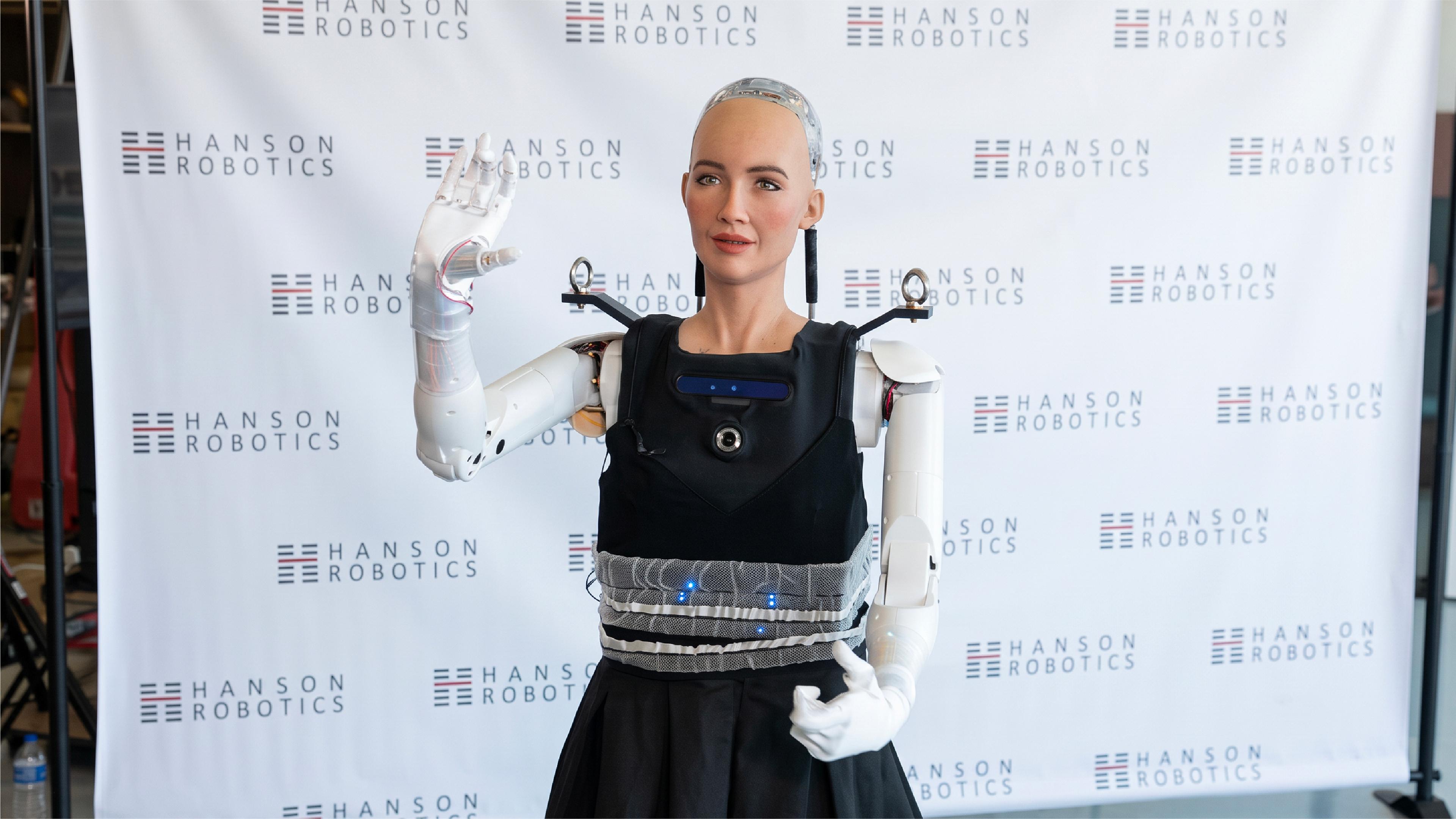
Hanson Robotics says humanoid demonstrations should clearly disclose what a robot generated autonomously, what was prepared beforehand and what humans did behind the scenes, as companies including Hanson and Engineered Arts turn expressive social robots into more clearly defined commercial offerings.
The issue is particularly relevant to robots designed to interact and speak with people. Hong Kong-based Hanson is offering its Sophia Utility platform to researchers and businesses, while British robot maker Engineered Arts sells and rents its Ameca robots for uses including research, exhibitions, hospitality and education.
The companies take different approaches to commercialize expressive humanoids, but both combine expressive robot hardware with artificial intelligence and software intended to support human interaction. Their products also raise a basic question for customers and audiences: how much of what they see during a demonstration is being generated by the robot itself?
“The clearest way to describe a demonstration is to say what was generated, what was prepared, what the robot perceived, and what people were doing behind the scenes,” David Hanson, founder and CEO of Hanson Robotics, told ROBOT24.com in written responses. “We should make those distinctions explicit rather than expect an audience to infer them from a video.”
Sophia is not limited to one operating mode, according to Hanson. The robot can engage autonomously, read from a script, be partly controlled, or run as a hybrid. Which approach is used depends on the event, application and software configuration.
That distinction has sometimes been difficult to see from Sophia's public appearances. Hanson cautioned that a convincing conversation is not evidence of human-level cognition. It also said Sophia's expressions and conversational behavior do not imply consciousness or human-level artificial general intelligence. At the same time, the use of authored or rehearsed material does not mean there is no underlying robotics or AI.
FROM DEMONSTRATIONS TO PRODUCTS
Hanson launched Sophia Utility, an 'early product' available for purchase for use in research, education, events, retail and other business contexts. The platform combines the company's expressive face technology with conversational and perceptual AI, an SDK and an optional autonomous mobile base.
The shift comes as advances in conversational AI make interactions with social robots increasingly fluent, while leaving other problems of embodied interaction unresolved.
“The challenge is not simply putting a chatbot in a face; it is making the whole interaction coherent and useful,” Hanson said.
He noted an embodied system must integrate language with perception and memory while also ensure reliability, safety and maintainability. Hanson said current development includes facial materials and mechanisms, conversational and perceptual AI and work on Sophia Utility and the Hanson SDK.
Its broader hardware strategy centers on expressive heads, faces and modular humanoids, using third-party bodies where appropriate rather than developing every locomotion system internally. Hanson declined to provide an active-fleet number.
Engineered Arts takes a more conventional product model. Its full-size Ameca is offered through quotes and lease for exhibitions, research, hospitality and education, while the third-generation Ameca Desktop, released June 22, is available for purchase and rental.
The company’s Tritium AI software integrates language understanding and models. The 525-millimeter Ameca Desktop has 32 actuated degrees of freedom, three cameras and the same software environment shared across the company's robots.
The comparison shows two approaches to commercializing expressive humanoids. Engineered Arts offers a range of full-size and desktop machines for sale or rent, with customer support. Hanson is still describing Sophia Utility as an early product and has not disclosed public pricing, its active fleet or the number of Utility systems delivered to customers.
Hanson now says conversational fluency and expressive behavior should be presented separately from claims about machine perception or autonomy.
More articles on this topic
12 articles ReportRLWRLD Expands Physical AI Push for Industrial Robots
 ReportRobot Vacuum Shipment Growth Nears 30% for Second Straight Quarter After Acceleration
 ReportCognex Strikes $500 Million Deal for Robot Vision Company RealSense
 ReportUnity Opens Simulation Pro Early Access for Robotics Developers
 ReportCircus SE Partners With Royal Prestige for UAE Food-Robot Launch
 ReportGenisom AI Raises ’Hundreds of Millions’ of Yuan for Embodied Robotics
 ReportViabot Raises $24 Million to Expand Outdoor Cleaning Robots
 ReportGeek+ Opens Düsseldorf Lab for Live Warehouse Robot Demonstrations
 ReportMatter Venture Partners Closes $450 Million Fund for Robotics and Hard Technology
 ReportExein Raises $270 Million to Secure Robots and Connected Devices
 ReportJungheinrich Expands Automation Range, Challenging Linde and Toyota
 ReportGoogle's DeepMind AI Can Switch Robot Bodies
BUSINESS NEWS WEEKLY LETTER
The Weekly Letter for Robotics Professionals, Summarizing the Most Important Industry Moves, Launches, Deals and Signals.