UBTECH Opens Southern China Factory With Planned Capacity for 10,000 Robots a Year
The 14,000-square-meter facility is designed to produce Walker S and Cruzr robots, but UBTECH has not disclosed its current output or order backlog.

September 14, 2026 by Artem
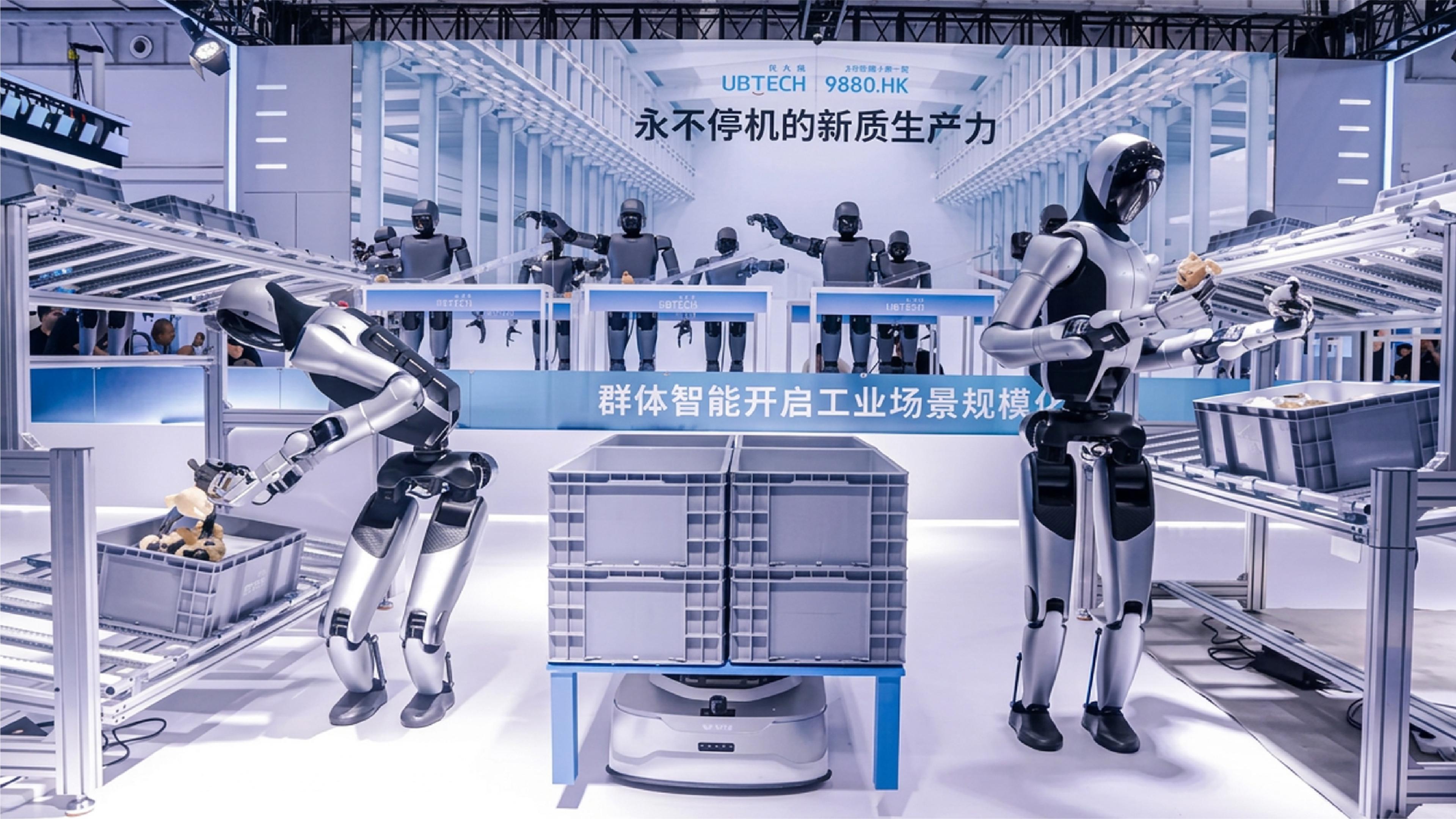
LIUZHOU, China — UBTECH Robotics has started production at a factory in southern China designed to make more than 10,000 industrial robots annually, giving the company substantially more capacity to produce its Walker and Cruzr systems.
The factory began operating Sept. 12 in Liuzhou, Guangxi, according to a report published by the Guangxi regional government (Chinese-language report). The 14,000-square-meter facility is designed to complete one robot every 10 minutes when operating at its planned production rate.
That rate is a design target, not verified current output. UBTECH and the local government have not disclosed how many robots the plant has produced, its utilization rate or whether the company has enough orders to use its annual capacity.
The factory will primarily make UBTECH’s bipedal Walker S series and wheeled Cruzr series. The Walker S2 (Chinese-language report) is an industrial humanoid designed for material handling and other factory work. UBTECH says the robot can carry a 15-kilogram payload and exchange its own batteries.
The company classifies the Cruzr Y1 as a wheeled industrial humanoid. It is designed for depalletizing, palletizing, sorting and loading machinery rather than walking on two legs.
Some robots will also work inside the factory. Cruzr systems are being used for pallet handling, loading and material transport, while collaborative robot arms tighten screws during assembly, according to an iLiuzhou report (Chinese-language report) carried by Tencent News. Automated guided vehicles and driverless forklifts move materials through the plant.
UBTECH worked with Siemens on digital systems for factory planning, production scheduling and quality control, according to the government account. A plant-wide management system coordinates equipment and material movement, while digital-twin software was used to simulate factory logistics before operation.
The new facility moves UBTECH beyond small-batch assembly, but its planned capacity should not be treated as production or deliveries. The company has not disclosed the factory’s cost, current staffing, confirmed customer orders or a schedule for reaching its full production rate.
More articles on this topic
12 articles ReportMaven Robotics Plans 250 Industrial Robots After $100 Million Raise
 ReportGalaxea AI’s Hong Kong IPO Plan Faces Tighter Regulatory Scrutiny
 ReportAIDIN Robotics Raises $11.6 Million From HD Hyundai and Samsung
 ReportGreenfield Robotics Seeks Up to $18.6 Million in Public Share Offering
 ReportVention, Richtech to Bring Agentic and Physical AI Systems to IMTS 2026
 ReportJapan Backs MW Project for Robot-Equipped Homes
 ReportKyrgyzstan Unveils "Country's First" Surgical Robot
 ReportChina 'Dominates Humanoid Robot Production'
 ReportVecna Robotics Raises $31 Million to Expand Warehouse Automation
 ReportRichtech Plans a Robot Double Act with DEX and Titan
 ReportPanasonic Connect Plans Multi-Vendor Control Service for Mobile Robots
 ReportAI cuts time of robot setup to just two hours
BUSINESS NEWS WEEKLY LETTER
The Weekly Letter for Robotics Professionals, Summarizing the Most Important Industry Moves, Launches, Deals and Signals.