Beijing Targets 200,000 Robots a Year Under 2028 Plan
The Chinese capital also wants more than one million hours of robot training data and improvements in reliability, battery life and domestic component production.

November 12, 2026 by Artem
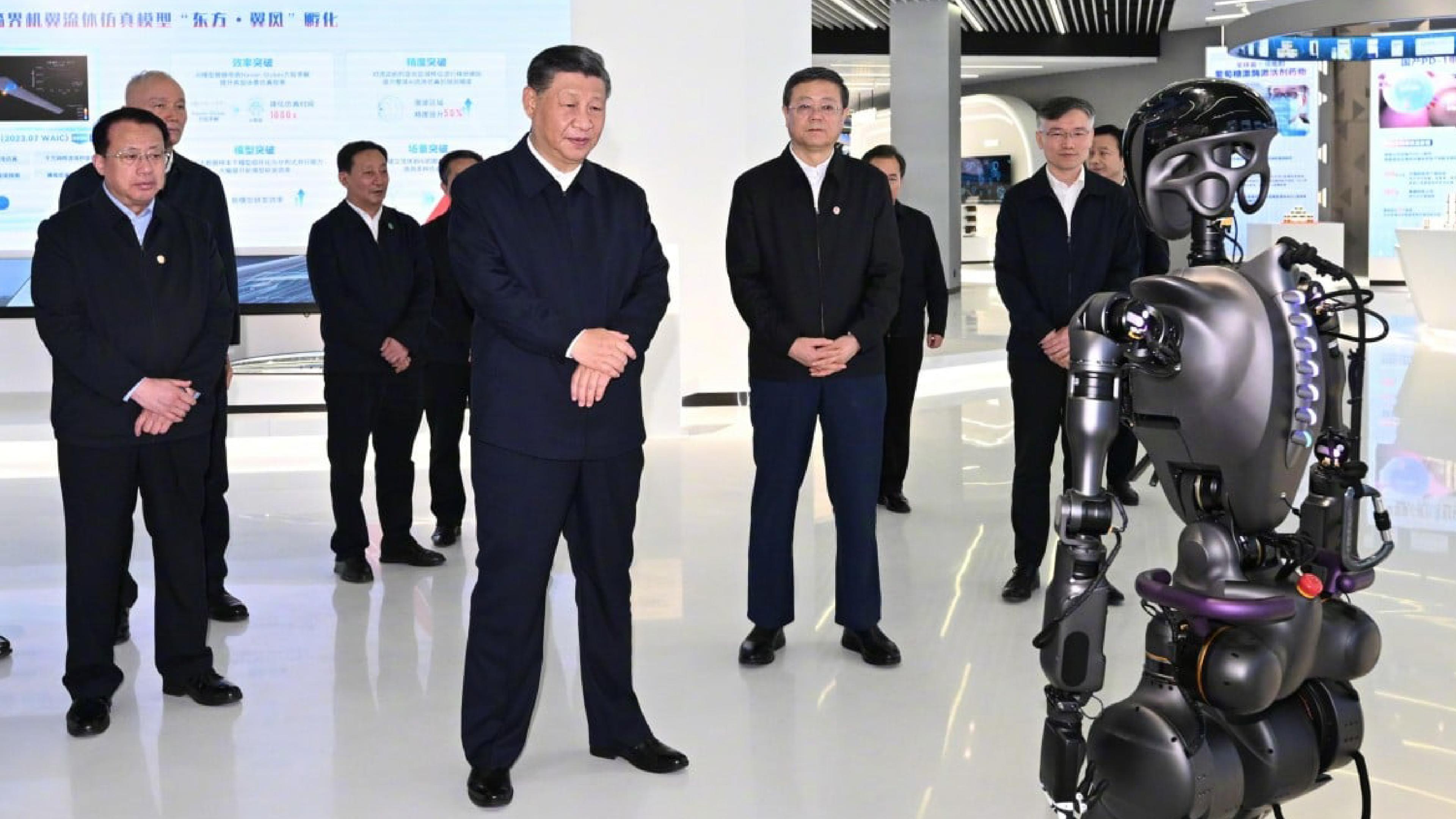
BEIJING -- Beijing intends to build up its annual production capacity of 200,000 robots by 2028 as part of an industrial development action plan that includes production targets for humanoid robots, AI training data, and robot performance.
The plan was released by Beijing Municipal Bureau of Economy and Information Technology Nov. 11 and includes various initiatives that will help the city in developing its embodied AI and robotics industry until the end of 2028.
As per the target set out, at least five internationally competitive humanoid robot manufacturers and 10 leading domestic manufacturers will be developed by the deadline. As many as 25 percent of China’s robot production capacity will come from the Beijing-Tianjin-Hebei region while more than 60 percent of its critical components will come from this region.
The number of 200,000 units relates to annual production capacity and does not reflect production, orders or deliveries.
Robot Performance Targets
The document also outlines technical objectives that aim to render the robots suitable for commercial application on an ongoing basis.
Specifically, by 2028 the city aims to have robots able to carry loads exceeding 40 percent of their weight capacity, operate for more than 2,000 hours on average before failing, and run for more than four hours using battery power alone.
Other objectives include a lifespan above five years and annual failure rate of less than 10 percent for motion actuators and end-effectors.
The government also plans to create three to five modular robot platform designs suitable for widespread applications.
More Physical AI Data
Beijing is planning to create the national-scale embodied AI data infrastructure, gathering more than 1 million hours of high-quality training data from no less than 100 actual environments by 2028.
The program will include support for first-person video data collection, simulation-generated data, as well as human motion to robot action conversion methods.
In addition, the authorities are planning to boost computing power of the embodied AI-specific data center and build evaluation centers for actual operation testings of the robot models.
For business purposes, the program will include at least 20 benchmark use cases in industry sector, additional 20 use cases in services sector, and 10 cases for special operations. There is also proposed robot identification and tracking system for all robots along the entire life cycle.
This city level policy follows other initiatives made in China. As was reported by ROBOT24.com earlier, the central government has already promoted the use of robots in retail and logistic activities, and there are six voluntary national standards for humanoid robots set for April 1, 2027.
Beijing claims to implement the program with dedicated policies, government-led investment funds, and collaborations with robot makers and research organizations. No budget estimate
More articles on this topic
136 articles ReportCalifornia Startup Offers $18 to Film Tasks for Robot Training
 ReportCorvus Drones Help ASICS Cut Inventory Recovery Time 60%
 ReportBritish Royal Mail Partner Raises €14.5M for Delivery Robots
 ReportEurope Urged to Launch €11 Billion Physical AI Partnership
 ReportSharpa Supplier Hesai Reports 51% Growth in Lidar Shipments
 ReportIndia’s Humro Secures $5.47 Mln Order for 103 Warehouse Robots
 ReportChina’s UniX AI Raises $75 Million to Expand Robot Deployments
 ReportUBTECH Looks Beyond Industry With China Telecom Partnership
 ReportDexterous Robot Hand Sales in China May Triple in 2026
 ReportNvidia Plans Investment in Robot AI Developer RLWRLD
 ReportCarnegie Mellon Develops Pixel Humanoid for Under $15,000
 ReportFrance’s Physicl Raises $10 Million for AI Training Data
BUSINESS NEWS WEEKLY LETTER
The Weekly Letter for Robotics Professionals, Summarizing the Most Important Industry Moves, Launches, Deals and Signals.