AGIBOT Deploys Dozens of G2 Robots on Lens Technology's Smartphone Testing Lines
AGIBOT's G2 robots now load and unload smartphone test stations at Lens Technology, extending an existing manufacturing partnership into the factory.

November 23, 2026 by Dr Maulik Vyas
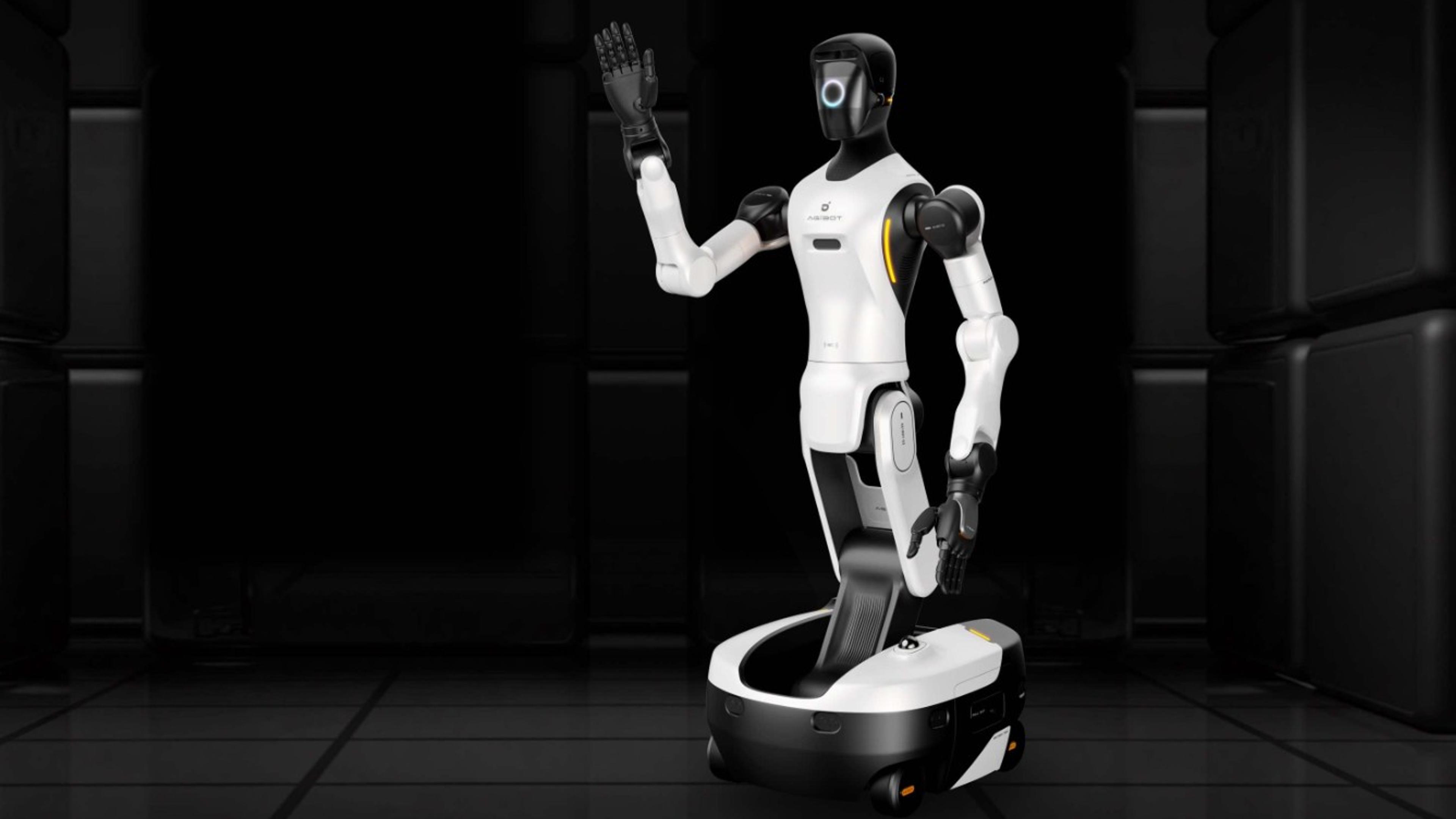
AGIBOT has deployed dozens of its G2 robots on smartphone testing lines at Lens Technology, a deployment that was disclosed on Nov. 20 and that gives the company's industrial robot platform another setting for repetitive handling work. The machines load and unload test stations and interact with the testing equipment, and the deployment covers the MMI, ANT, CAM and CAMCV testing steps instead of replacing every stage of smartphone manufacturing.
The project is aimed at repetitive station operations and at the need to accommodate changing phone models. A testing station requires more than a successful grasp, since a phone must arrive in the correct orientation, enter its fixture, complete the required interaction with the equipment and leave the station ready for the next unit, so the timing and handover between those steps determine whether a robot actually helps the wider line.
That makes the deployment a useful test of process integration. A robot can handle an object accurately in isolation and still need adjustments to fixtures, software interfaces or recovery routines before it performs the same job reliably in production, and the number of G2 units involved, which the companies describe only as dozens, is large enough to show whether those adjustments hold up across many stations.
Lens Technology is already part of AGIBOT's manufacturing network. Its annual report describes a robot manufacturing business and cooperation with AGIBOT, including the production of Lingxi-series robots and a joint innovation center established in 2025, so the new application places AGIBOT equipment inside an existing relationship and is not the first collaboration between the companies.
AGIBOT describes G2 on its product page as an industrial embodied-operation robot with force-controlled manipulation and with deployment tools built around Genie RL. These are descriptions of the platform by its manufacturer and not measured results from the Lens installation, and the deployment is separate from AGIBOT's earlier retail demonstration, in which six G2 robots worked in a convenience store for 24 hours.
The companies have not disclosed the exact fleet size, the throughput, the rate at which people have to intervene or the financial return, so the deployment does not yet establish a measured labor saving. Cycle counts, failed attempts, changeover time for a new phone model and the human work needed to keep stations running would show how much useful production the robots deliver.
More articles on this topic
282 articles ReportWhat it Really Costs to Own a Personal Assistant Robot at Home
 ReportTürkiye Launches State Grant Program Covering 50% of Industrial Humanoid Robot Development Budgets
 ReportInlif Secures More Than $10 Million in Agreements for Its New Six-Axis Industrial Robots
 ReportSingapore's Botsync Raises $11 Million to Expand Its Factory Robotics Platform
 ReportHumyn Labs Raises $47 Million to Build Real-World Training Data for Robotics
 ReportBoston Dynamics Selects GlobalFoundries as First Semiconductor Customer for Atlas Humanoid Trials
 ReportGenesis AI Raises $500 Million at a $3.5 Billion Valuation to Scale General-Purpose Robots
 ReportMultiway Robotics Showcases Intralogistics Solutions and Wheeled Humanoid at CeMAT ASIA
 ReportFORT Robotics Files Registration Statement for Public Listing Partnership
 ReportRobot Baristas are Learning to Reproduce the Art of Professional Coffee Making
 ReportTARSBOT and Aptiv Plan to Deploy 100 Industrial Robots Across 33 Factory Applications
 ReportSouth Korea Proposes $39 Million for Robot Actuators, Humanoid Batteries and AI Sensors
BUSINESS NEWS WEEKLY LETTER
The Weekly Letter for Robotics Professionals, Summarizing the Most Important Industry Moves, Launches, Deals and Signals.