Spirit AI Founder Predicts Robot-Brain Breakthrough by Mid-2027
Gao Yang, Spirit AI's co‑founder and chief scientist in Beijing, predicts embodied-AI models to reach GPT‑3 levels by next year, but useful household robots probably won't arrive for another eight years.

September 21, 2026 by Artem
Spirit AI Founder Predicts Robot-Brain Breakthrough by Mid-2027
Gao Yang, Spirit AI's co‑founder and chief scientist in Beijing, predicts embodied-AI models to reach GPT‑3 levels by next year, but useful household robots probably won't arrive for another eight years.
BEIJING — Spirit AI co-founder and chief scientist Gao Yang expects robot intelligence to reach a significant technical threshold by mid-2027, when he predicts humanoids could begin responding reasonably to a wide range of task instructions rather than relying on narrowly trained behaviors.
Gao compared that prospective stage with GPT-3, an important step in the development of general-purpose language models. The timing is more of a prediction than something Spirit AI has already done, Reuters quoted Gao as saying.
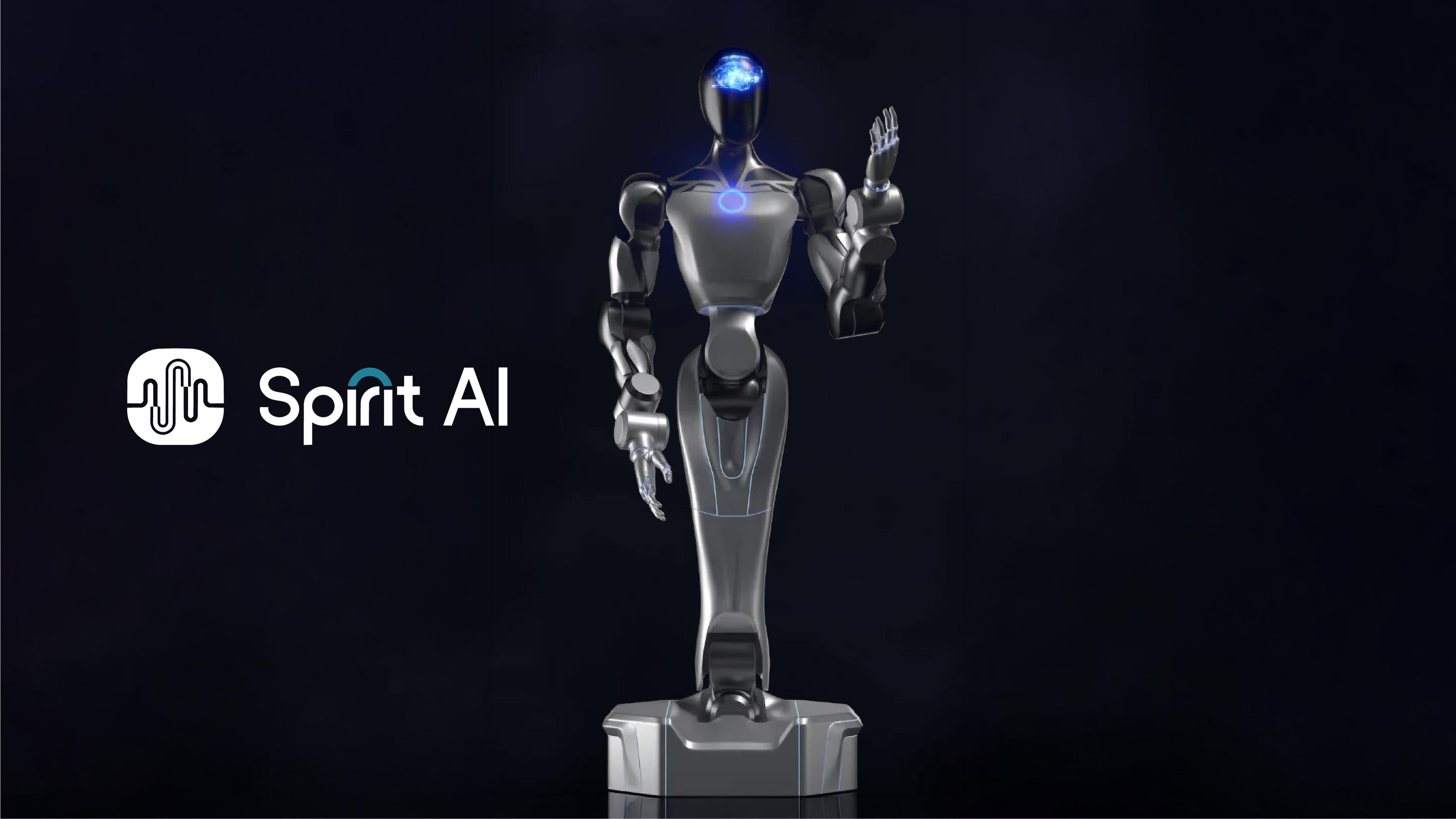
Spirit AI develops embodied-AI models intended to let robots interpret their surroundings and translate instructions into physical actions. Gao said its robots currently achieve about a 90% success rate on simple tasks in structured living-room environments. The robots continue to struggle with complex tasks like opening bottles.
Data is one constraint. Gao says Spirit AI's roughly 1,000 contractors have collected hundreds of thousands of hours of real-world movement data. The company also collects data from robot tasks and uses it to train models.
Spirit AI's strategy differs from approaches that rely primarily on carefully curated robot demonstrations. The company said in February that it trains models using a broader mix of videos, wearable‑sensor data, and human-robot interactions, an approach it calls “dirty data.” The company reports strong results; independent evaluation is pending.
Commercial use will be phased in. Gao predicts industrial applications will be practical within two years when simpler commercial service tasks will begin to appear. Homes' diverse layouts create less structured environments that complicate deployment; household adoption will take more than eight years, Gao forecast.
Reuters reported that tens of Spirit AI's Moz1 wheeled humanoids are operating on production lines at battery maker CATL and retailer JD.com. Spirit AI separately says its robots perform battery-connector insertion at CATL, but its performance figures, including a claimed success rate above 99%, come from the company.
Founded in 2024, Spirit AI has raised more than $670 million, according to Reuters. The company employs about 300 people, its website lists operations in Beijing, Hangzhou and Shenzhen.
The organization's primary objective remains aligned with Gao's mid‑2027 prediction. Spirit AI has not established a technical benchmark that would determine when a “GPT-3 moment” for robotics has occurred, and a reported 90% success rate that applies only to basic tasks in controlled environments, not to complex general‑purpose tasks.
More articles on this topic
60 articles ReportUnitree Adds $6,500 Dex5-S to Dexterous Hand Lineup
 ReportSOMA Launches Dual-Arm Research Robot Starting at $8,999
 ReportCognex Strikes $500 Million Deal for Robot Vision Company RealSense
 ReportUnity Opens Simulation Pro Early Access for Robotics Developers
 ReportCircus SE Partners With Royal Prestige for UAE Food-Robot Launch
 ReportRichtech Robotics Lands 200-Robot Cleaning Order From Unnamed Retailer
 ReportHumanoid Robot Sales Hit 7,000 Worldwide In 2025, Data Reveals
 ReportChina Tactile Robotics Firms Raise New Funding as Suppliers Target Robot Hands
 ReportGenisom AI Raises ’Hundreds of Millions’ of Yuan for Embodied Robotics
 ReportTreble Raises $18 Million to Expand Acoustic Simulation Into Robotics
 ReportD-Robotics Raises $400 Million to Expand Robot Chips and Software
 ReportViabot Raises $24 Million to Expand Outdoor Cleaning Robots
BUSINESS NEWS WEEKLY LETTER
The Weekly Letter for Robotics Professionals, Summarizing the Most Important Industry Moves, Launches, Deals and Signals.