Jungheinrich Expands Automation Range, Challenging Linde and Toyota
New model targets elevated load transfers in mixed-use warehouses, where imprecise pallet placement and human traffic can complicate automation.

September 16, 2026 by Artem
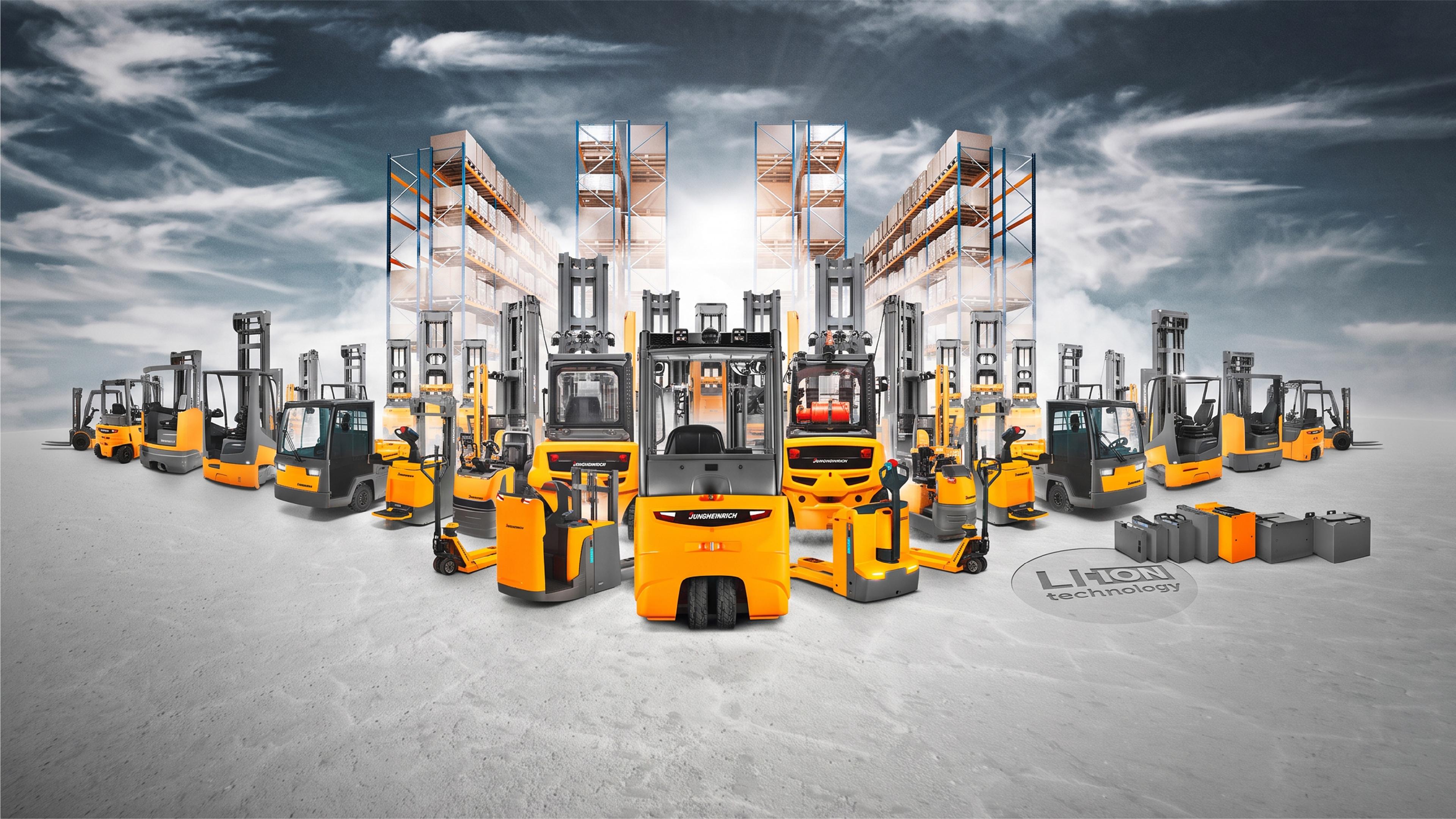
HAMBURG, Germany — Jungheinrich plans to begin taking orders for its EAC 212a mobile robot in October, a company representative told Robot24. The launch expands the company’s automated pallet-handling lineup, connecting floor-level storage with conveyors and other automated systems.
The EAC 212a can transport loads weighing up to 1,200 kilograms, travel at speeds of up to 6 kilometers per hour and transfer loads at heights of up to 1,200 millimeters, according to an earlier company announcement. It can handle pallets and stillages, or mesh containers, at floor-level storage positions, conveyor interfaces and buffer lanes.
A central feature is the company’s 3D pallet-detection system. The Hamburg -based company says the system can handle loads positioned up to 100 millimeters off center or rotated by up to 10 degrees.
That capability addresses a common problem in mixed-use warehouses, where employees and manually operated forklifts may position pallets less precisely than fully automated conveyors or storage systems.
The vehicle can handle loads positioned up to 100 millimeters off-center or rotated 10 degrees, and its 360-degree LiDAR detects obstacles down to 70 millimeters, Jungheinrich says.
The EAC 212a also supports VDA 5050, a communications interface intended to connect mobile robots and fleet-control software from different suppliers. Compatibility alone doesn't guarantee mixed fleets will work without extra integration.
Power comes from a battery with a capacity of 130 ampere‑hours. A supervisory system guides the vehicle to charging stations during downtime, allowing it to continue working without manual charging. Jungheinrich also plans to provide over-the-air software updates.
In written responses supplied to Robot24, the company said it generally prefers starting with repetitive transport tasks before full warehouse conversion. It identified labor availability as a frequent trigger, but said customers value predictable material flow and stable service levels.
Jungheinrich did not provide customer-level data on pallet throughput, operating costs or downtime, nor did it supply studies or customer surveys to support its claim. The company says workers tend to accept mobile robots when the systems remove repetitive or physically demanding transport tasks.
The EAC 212a fits within the company's larger strategy to sell connected vehicles, software and automated storage equipment rather than stand-alone trucks.
The company reported €5.5 billion in revenue and 21,438 employees in its 2025 annual report. The EAC 212a is part of the firm's broader push to offer connected vehicles, software and automated storage equipment rather than stand-alone trucks.
For comparison, Robot24 selected two established suppliers with directly comparable automated pallet-handling equipment produced by Linde Material Handling and Toyota Material Handling Europe.
Linde’s L-MATIC matches the EAC 212a has the same rated capacity of 1,200 kilograms and reaches a travel speed of six kilometers per hour. Linde features a maximum lift height of 1,924 milimeters and offers natural-feature navigation, automatic fleet control and a manual operating mode. The wide range of automation covers low-lift platforms, counterbalanced stackers, reach trucks and narrow-aisle vehicles.
The Toyota’s SAE160 has a rated capacity of 1,600 kilograms, a maximum lift height of 4.7 meters and a listed maximum speed of 2.2 meters per second, or about 7.9 kilometers per hour. Toyota offers three navigation options — reflector-based, natural-feature, or a hybrid via T-ONE automation software.
The specifications alone won't predict pallet throughput; transfer height and max lift height refer to different tasks, and speed is often limited by load, travel direction, traffic or safety rules. None of the three manufacturers provides standardized throughput results from identical warehouse conditions.
More articles on this topic
53 articles ReportTreble Raises $18 Million to Expand Acoustic Simulation Into Robotics
 ReportViabot Raises $24 Million to Expand Outdoor Cleaning Robots
 ReportD-Robotics Raises $400 Million to Expand Robot Chips and Software
 ReportGeek+ Opens Düsseldorf Lab for Live Warehouse Robot Demonstrations
 ReportInOrbit Open-Sources Fleet Management Software for Mobile Robots
 ReportMatter Venture Partners Closes $450 Million Fund for Robotics and Hard Technology
 ReportExein Raises $270 Million to Secure Robots and Connected Devices
 ReportTravis Kalanick’s Atoms Taps Meta Scientist for Top AI Role
 ReportGoogle's DeepMind AI Can Switch Robot Bodies
 ReportAgility’s Digit 5 Humanoid Can Work Alongside People
 ReportUniversal Robots Launches Gen 7 Platform With Three New Cobot Arms
 ReportDriverless Tractors Driving Force for Farming Industry
BUSINESS NEWS WEEKLY LETTER
The Weekly Letter for Robotics Professionals, Summarizing the Most Important Industry Moves, Launches, Deals and Signals.