China Tactile Robotics Firms Raise New Funding as Suppliers Target Robot Hands
Synapath AI and Xense Robotics disclosed new financing, while Tuopu Group expanded an investment in Ensuring Technology into a technical partnership focused on dexterous hands.

September 21, 2026 by Artem
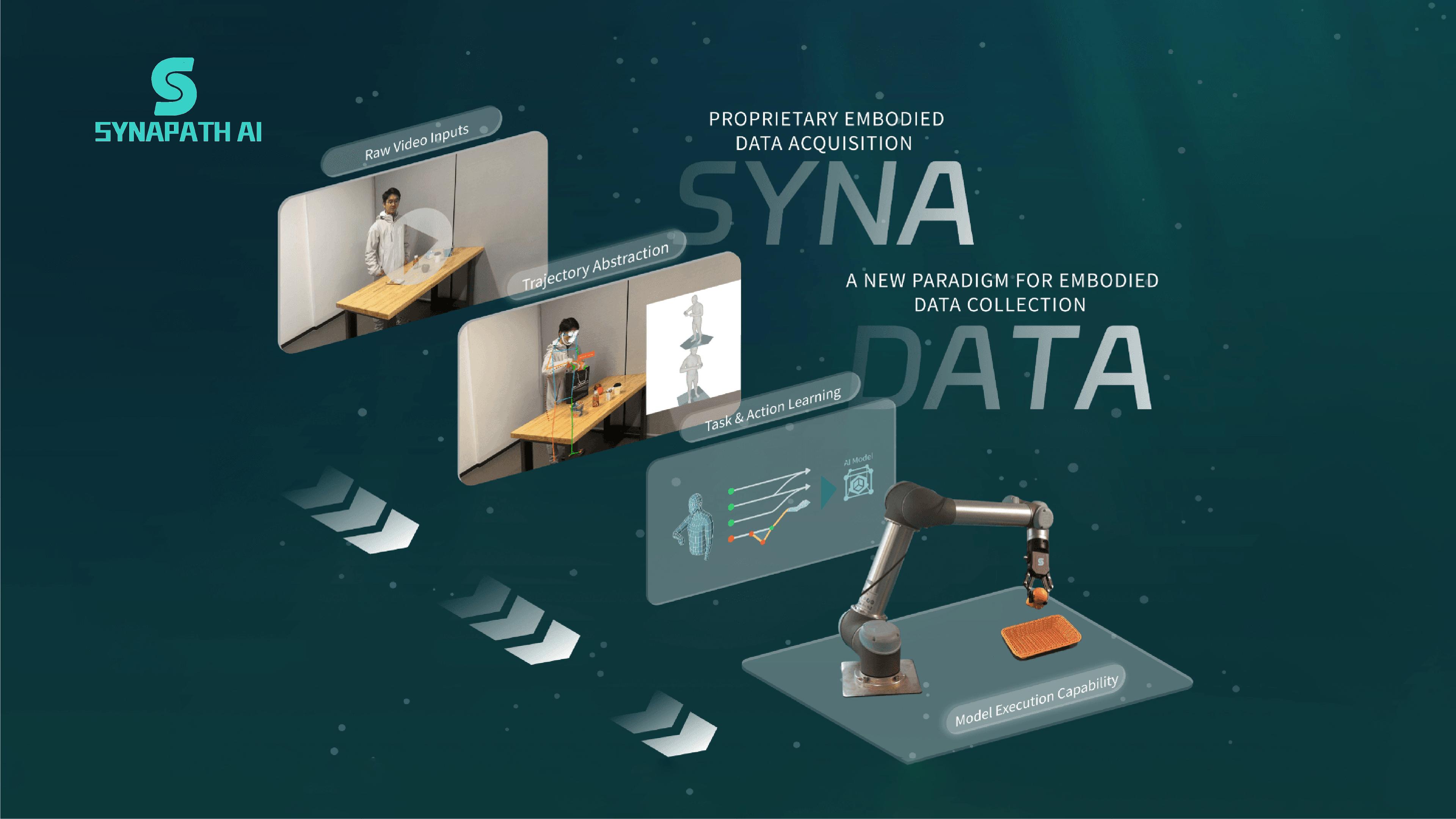
SHANGHAI — Shenzhen-based Synapath AI raised nearly 100 million yuan in pre-Series A financing as Chinese companies direct new capital toward tactile sensing, training data and components that give robots greater awareness and sensitivity to touch.
CDH Baifu and Kunpeng Fund led the round, joined by Guangzhou Industrial Investment, Yihe Capital and returning investor Trend Investment, according to Gasgoo.com (Chinese-language source). The Sept. 18 financing was Synapath's third round within a month, the publication reported.
The company said it will use the latest capital for research and development, technical validation and commercialization. Synapath is developing SynaTac, technology intended to help robots learn contact strategies, control the applied force and respond when objects slip. Its SynaData operation converts recorded human behavior into a dataset that can be used to train embodied AI models.
Claims about the performance and customer adoption of its systems have not been independently verified.
The financing was was among several actions last week involving Chinese firms developing robotic touch technology. Xense Robotics, based in Shanghai and also known as Qianjue Robotics, announced it secured two back-to-back strategic financing rounds worth several hundred million yuan. The latest investors include BlueRun Ventures, a fund managed by CICC Capital and Vitalbridge Capital, according to a Sept. 19 report by 36Kr.
Xense will use the funds to boost sensor production, expand interaction datasets and build tactile-simulation tools and embodied-AI models.
Visuotactile sensors use small cameras to watch a contact surface deform, letting software estimate force, motion, slippage and surface geometry. Software can use those images to estimate force, motion, slippage and surface geometry, giving a robot information that external cameras cannot provide during contact.
Xense said it has produced tens of thousands of sensors and served more than 300 paying customers since its founding in May 2024. Those figures come from the company and have not been independently verified. Public information does not show how many customers use the sensors in routine production or the size of their purchases.
The company is developing more than sensor hardware. Its XTac UMI G1 wearable system collects tactile data from human interactions, while its TacVerse dataset and simulation tools supplies training data and simulators for robots. Xense is also developing X-TouchMind V1, a model that combines vision, touch and language to guide robot actions.
The approach targets an issue that grows in significance as robots shift from identifying objects to manipulating them. Vision can identify an object and estimate its position, but tasks such as component insertion, flexible-material handling, and slip detection can require information about force and contact conditions.
Xense says its sensors have been integrated into robot systems and tested in manufacturing and other applications. Public information, however, provides limited detail about contract values, production-line uptime or the economics of scaling the sensors. RecodeX also noted that durability, manufacturing consistency and cost remain important questions for visuotactile technology.
Investment has reached component suppliers: Tuopu Group invested last month in Ensuring Technology, a tactile‑sensor firm, to develop multidimensional sensors for dexterous robot hands, according to Gasgoo.
Under the agreement, the companies plan to cooperate on research and development, manufacturing and customer support, combining Tuopu's work on robot actuators with Ensuring's tactile-sensing hardware and software. The document does not establish that systems developed through the partnership are in regular commercial operation.
Together, the news cover different layers of robot touch: collecting human interaction data, sensing physical contact, training models to use that information and integrating sensors into dexterous robot hands.
The harder test is outside the laboratory. Public information from the companies provides considerably less evidence about long-term production performance, costs, repeat orders and routine industrial use than about financing and technical development.
More articles on this topic
60 articles ReportUnitree Adds $6,500 Dex5-S to Dexterous Hand Lineup
 ReportSOMA Launches Dual-Arm Research Robot Starting at $8,999
 ReportCognex Strikes $500 Million Deal for Robot Vision Company RealSense
 ReportUnity Opens Simulation Pro Early Access for Robotics Developers
 ReportCircus SE Partners With Royal Prestige for UAE Food-Robot Launch
 ReportRichtech Robotics Lands 200-Robot Cleaning Order From Unnamed Retailer
 ReportSpirit AI Founder Predicts Robot-Brain Breakthrough by Mid-2027
 ReportHumanoid Robot Sales Hit 7,000 Worldwide In 2025, Data Reveals
 ReportGenisom AI Raises ’Hundreds of Millions’ of Yuan for Embodied Robotics
 ReportTreble Raises $18 Million to Expand Acoustic Simulation Into Robotics
 ReportD-Robotics Raises $400 Million to Expand Robot Chips and Software
 ReportViabot Raises $24 Million to Expand Outdoor Cleaning Robots
BUSINESS NEWS WEEKLY LETTER
The Weekly Letter for Robotics Professionals, Summarizing the Most Important Industry Moves, Launches, Deals and Signals.