Bigwave Robotics Connects a Walking Humanoid to an Automotive Production Line
Bigwave says its bipedal humanoid loaded a straightening machine, walked about 10 meters and stacked engine parts at a Korean auto-parts plant, coordinating with factory equipment through a PLC.

November 27, 2026 by Dr Maulik Vyas
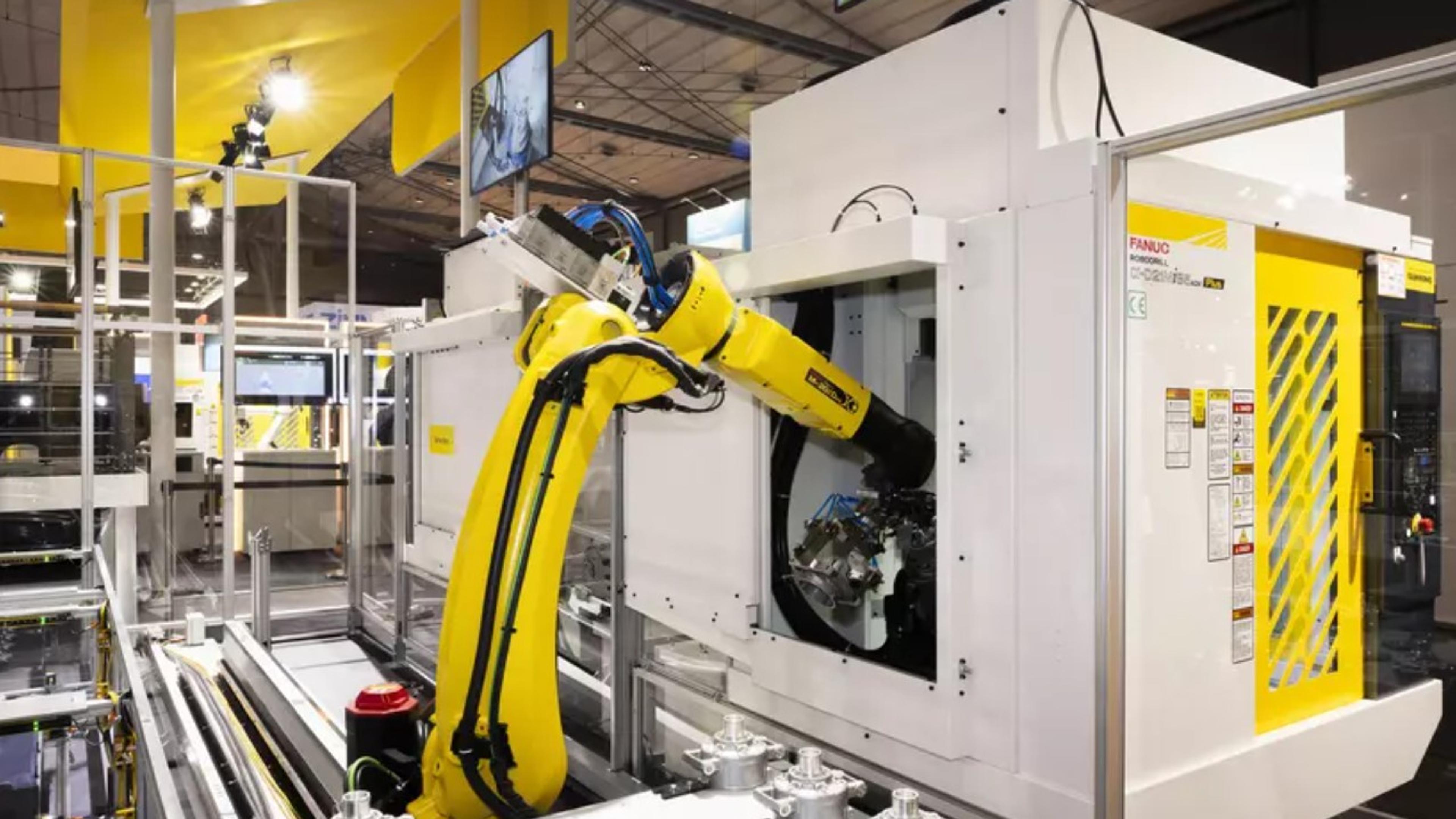
Bigwave Robotics announced on Nov. 24 that its bipedal humanoid robot has completed a connected engine-part handling process at an automotive parts plant in South Korea, working together with the factory's existing equipment instead of performing a stand-alone demonstration. The company has not named the plant or the robot model, and it described the work as a completed pilot and not a rollout into regular production.
According to Bigwave, the process contained four steps. The robot picked engine parts and loaded them into the infeed of a straightening machine, waited while the machine completed its straightening cycle, walked about 10 meters, or 33 feet, to the outfeed work area, and then picked up the finished parts and stacked them on a transfer cart. During the sequence it exchanged work signals with the machine through its programmable logic controller so that each load and each move followed the machine's own sequence.
Bigwave said that humanoid demonstrations in industrial settings have often relied on wheeled bases to travel between work areas, or have kept the robot in one position while it works with both arms, whereas this project required a robot walking on two legs between two stations while staying synchronized with equipment that runs on its own timing. Bigwave described it as the first case in Korea of a walking humanoid carrying out two linked processes with existing production equipment.
Bigwave stated that its physical AI platform, Hyper Foundry, controlled the walking and the handling of parts and was connected to NVIDIA's robot simulation and training tools. The walking behavior was learned through millions of simulations runs with reinforcement learning, while grasping was learned from demonstrations through imitation learning and supported by an AI model that recognizes part positions. The company stated that deploying models trained in simulation to the physical robot shortened on-site setup time.
Chief Technology Officer Junbong Song stated that a bipedal humanoid integrated closely with production equipment, including its programmable logic controller, and completing a real process continuously is a rare and difficult achievement even among global robot makers. Bigwave stated that a video of the validation line will be released on its official channels soon.
The announcement does not give cycle times, success rates or the length of the validation, and it does not say whether the robot will move into regular production at the plant.
More articles on this topic
167 articles ReportNEURA, XPeng Step Up Humanoid Research and Training
 ReportPudu to Showcase D9 Humanoid Outside China for First Time
 ReportVolvo Follows BMW, Schaeffler in Testing Humanoid Robots
 ReportSouth Korea Backs Yuil Robotics in $11M Humanoid Projects
 ReportHow Chef Robotics Turns Food Production Into AI Training Data
 ReportASRock Industrial Launches RBK-100 Robotics-in-a-Box for Physical AI Development
 ReportRoboSense Quadruples 3Q Lidar Sales for Robotics and Other Uses
 ReportOversonic Robotics Adds Angelini Technologies as Shareholder
 ReportXPeng Delays Humanoid Robot Mass Production to 2027
 ReportRobotics Stocks Retreat as Nvidia-Led Tech Rally Fades
 ReportChina's NOETIX Launches $3,599 Humanoid Crowdfunding Campaign
 ReportEnhanced Robotics Raises Over 100M Yuan for Sports Robots
BUSINESS NEWS WEEKLY LETTER
The Weekly Letter for Robotics Professionals, Summarizing the Most Important Industry Moves, Launches, Deals and Signals.